Well-Being Life - Education Migration / Blog
The Real Costs and Honest Truths of Education Migration in 2026
The Real Costs and Honest Truths of Education Migration in 2026
Hi, I'm Saori. It's been three and a half years since my family moved to Penang, Malaysia. My eldest daughter, Hikari, is now in second grade, and my son, Zen, is in his final year of kindergarten. Both attend international school every day. And my youngest, Yukari, is one and a half years old—still a little clingy, but it melts my heart when she tries to sing English songs just like her big sisters.
Recently, I came across a news story about "Education migration in 2026?" that caught my attention. It mentioned specific costs, like rent for apartments over 100 square meters with pools and gyms, and I read it with great interest.
How Much Does a 100m² Apartment Actually Cost?
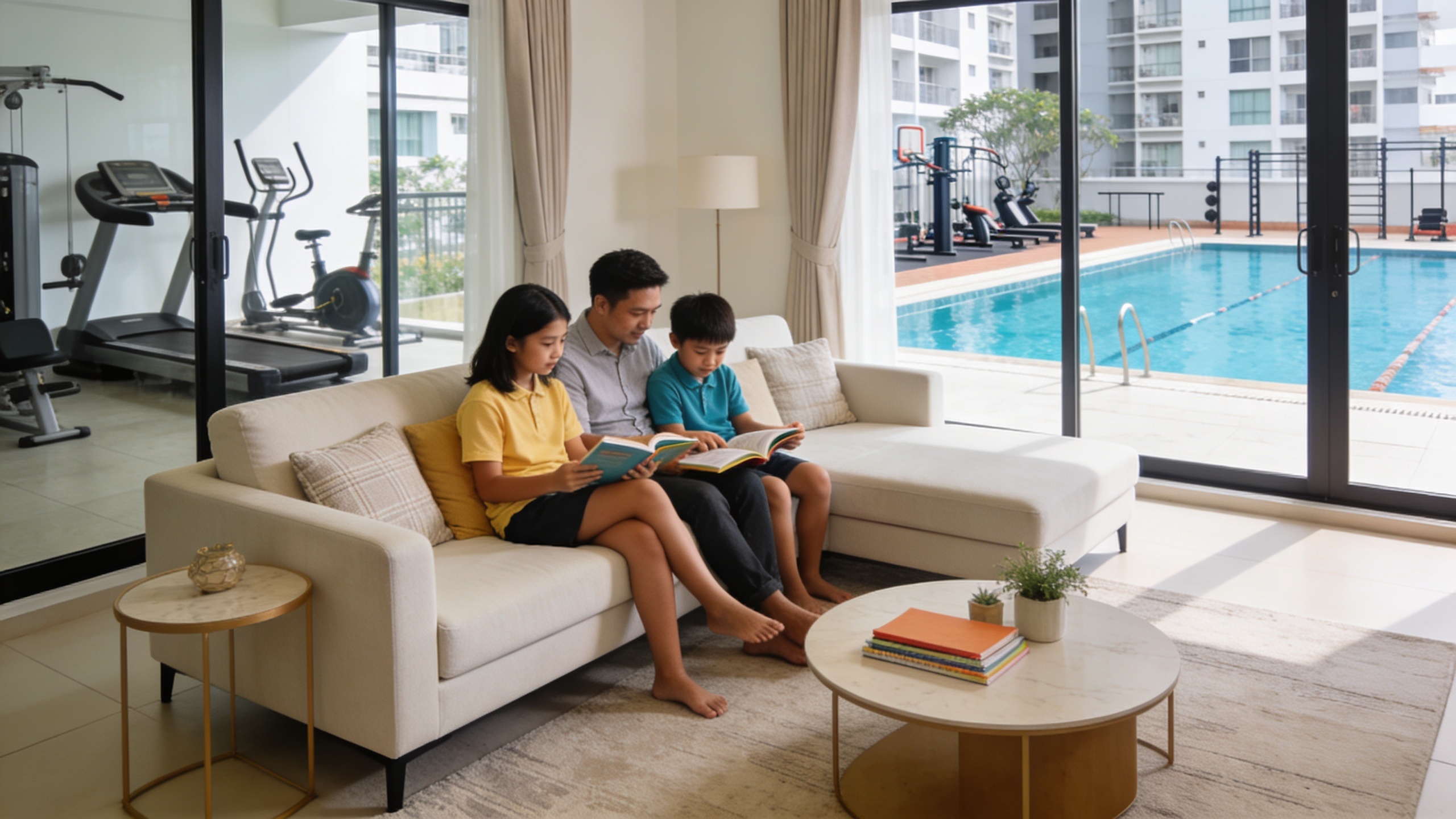
According to the article, a high-end condominium in Malaysia with a pool and gym, over 100 square meters, rents for around 3,000 to 5,000 ringgit per month. At the latest exchange rate (1 MYR = 40.15 JPY as of May 18, 2026), that's roughly ¥120,000 to ¥200,000 (approximately $800 to $1,300 USD). Compared to a similar property in Tokyo, many would find this a real bargain.
Our family lives in a similar place in Penang, and honestly, having a pool and gym is a bigger perk than I ever imagined for a family with kids. On weekends, Hikari and Zen swim in the pool, and after school, they play in the kids' room next to the gym. Our quality of life has clearly improved.
A Real Breakdown of Education Costs
The big question is education costs. For international schools in Penang, annual tuition generally ranges from 40,000 to 80,000 ringgit (about ¥1.6 million to ¥3.2 million, or $10,500 to $21,000 USD). That's less than half the cost of an international school in Tokyo, but it's still not cheap.
For our family, with both Hikari and Zen, the total is around 120,000 ringgit per year (about ¥4.8 million, or $31,500 USD). On top of that, there are additional fees for materials, school bus, and extracurricular activities. Still, I feel it's cheaper overall than sending two kids to a private elementary school in Japan.
Why "2026" Matters
Why is everyone talking about "2026"? I believe it's tied to a major turning point in Japan's education system. The International Baccalaureate (IB) is being introduced more widely, and English education is being strengthened even in public schools. But the pace of change is far from fast.
From my experience as a teacher in Japan, change on the ground is very slow. The idea of "choosing your own education" still hasn't really taken root.
In contrast, at international schools in Malaysia, children have daily opportunities to choose what they want to learn. When Hikari tells me, "Today I looked up dinosaur books in the library," I'm struck by the difference from Japan's rote-learning approach.
What You Really Need: "Resolve" and "A Plan"
When people think about education migration, they often focus on "costs" and "school choice." Of course, those are important. But after three and a half years of living this life, I believe the most crucial things are "family resolve" and "a concrete plan."
Especially for business owners, thinking about an exit strategy will feel familiar. Migration isn't a simple "success" or "failure." Changing course along the way is just another strategy.
For us, the plan was to spend three years in Penang to see how things went. Now, we're starting to consider the next step: moving to Kuala Lumpur. By changing environments gradually, we reduce the adjustment burden on our kids and help them grow steadily. That's our family strategy.
Conclusion: Education Migration Is an Investment
Education migration isn't just a "luxury" or an "escape." It's a rational hedge against Japan's structural risks. And above all, it's an investment in your child's future.
Whether 2026 becomes the "starting year" for your family depends on how much concrete information you gather and how realistic your plan is.
If you're even slightly interested, I encourage you to come visit Malaysia. Feeling the real atmosphere is the best way to make up your mind.