Well-Being Life - Education Migration / Blog
The Truth About Education Migration: Why Parents Who Focus Only on Their Children Fail
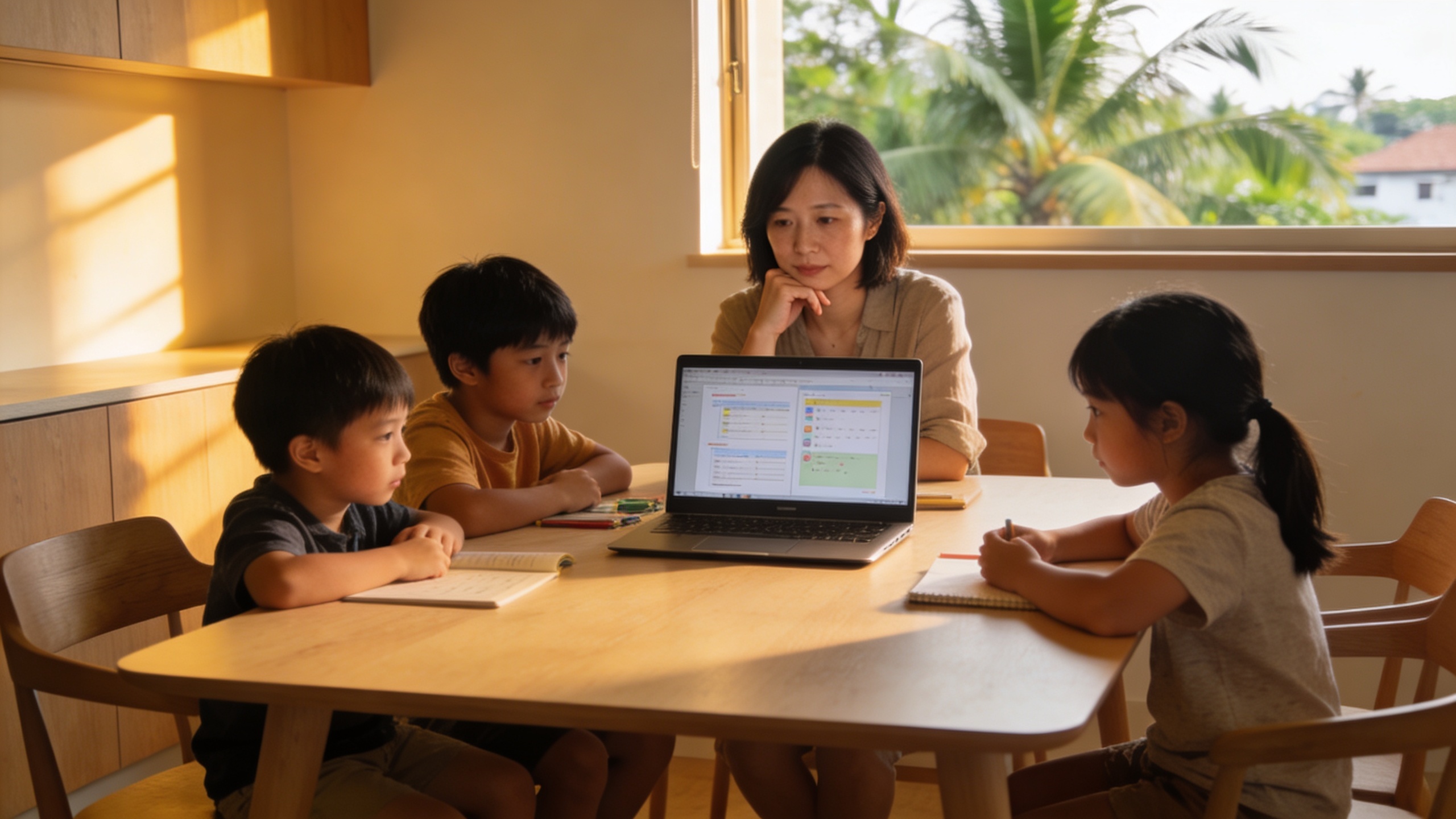
It Doesn't Last When It's "Just for the Kids"
Recently, I read an article on Toyo Keizai Online titled "Common Traits of Parents Who Fail at Education Migration." The theme was "The Miscalculation of Parents Who Only Think About Their Children."
Honestly, it hit close to home. I've been living in Malaysia for over three and a half years now, and I've seen several families around me decide, "We're going back to Japan after all."
While sending Hikari and Zen to an international school, I feel every day how crucial "parental resolve" is. But if that resolve is misdirected, it ends up exhausting both the children and the family.
Three Common Traits of Families That Struggle
The article listed several characteristics of parents who fail at education migration. From what I've observed, there are clear commonalities.
Bringing Japanese Expectations Along
If you still think of school as "a place to drop off your kids," you won't get far at a Malaysian international school. Instead of a PTA, parent volunteers are expected, and participation in school events is almost mandatory.
My husband is busy as a management consultant, but our whole family—myself included—needs to be involved with the school. Families where parents don't commit, despite saying it's "for the children's education," tend to see their kids become isolated.
Leaving Language Learning to the Kids
I often hear people say, "Kids pick up English quickly, so it'll be fine." And it's true—within a year, both Hikari and Zen had no trouble with everyday conversation.
But if parents can't speak English, handling school communications, helping with homework, or having honest discussions during parent-teacher meetings becomes incredibly difficult. I worked hard to reach a business level of English after arriving in Malaysia, but those first six months were really tough.
When parents' English skills lag behind, they can't accurately grasp what their children are struggling with at school. As a result, many families end up choosing to return to Japan, saying, "It wasn't what we expected."
Having No Exit Strategy
The more determined you are to "make education migration a success at all costs," the more you neglect risk management. Before we moved, my husband and I agreed: "If we don't see clear results within two years, we'll go back to Japan."
Having an exit strategy allows us to calmly evaluate our children's progress. Without one, you keep thinking, "Let's try a little longer," and the family's stress eventually reaches a breaking point.
Parents' Life Plans Are What Make Education Migration a Success
The more parents sacrifice themselves "for the children," the less sustainable the migration becomes. Because when parents are unhappy, children pick up on it keenly.
Parents' Careers in Malaysia
Malaysia offers a great environment for parents to work. In my case, I leveraged my experience in Japan to build a Malaysian company from scratch. Negotiating and handling contracts in English was intimidating at first, but now it's part of my daily routine.
For business owners, Malaysia's low tax rates and growing market offer opportunities for expansion. As of May 17, 2026, with 1 MYR at 40.15 JPY and the yen remaining weak, earning income locally can help mitigate currency risk.
I've found that viewing migration not just as "for the children's education" but as "an upgrade for the parents' careers" makes it much more sustainable.
Redefining Roles as a Couple Is Key
Education migration often tests a couple's unity. In our family, my husband stabilizes our income as a management consultant, while I handle school communications and run our local company. We move forward by respecting each other's roles.
The old model of "the wife takes care of the kids, and the husband earns the money" puts too much burden on one person. In a new country, flexible role-sharing is essential.
Putting "For the Children" into Perspective
Watching Hikari (born 2018) and Zen (born 2020), I'm reminded that children learn by watching their parents.
If parents show they can take on new challenges and bounce back from failure, children learn that "it's okay to try." On the other hand, if parents suppress themselves and endure "for the children," kids might end up feeling guilty.
Education migration isn't just a journey for the kids. It's an upgrade for the entire family's life. I firmly believe that when parents grow and enjoy the process, it maximizes the educational benefits for their children.
I'm not here to criticize families who decide, "We're going back to Japan after all." Knowing when to step back is also a strategy. What matters is having your own criteria and making a choice you won't regret.
Life in Penang, Malaysia, isn't always easy. But because this environment allows both parents and children to grow together, I truly feel that choosing education migration here was the right decision for us.