Well-Being Life - Education Migration / Blog
The Reality of Passing Tokyo Metropolitan Kokusai High School's IB Program: A 4x Competition Rate
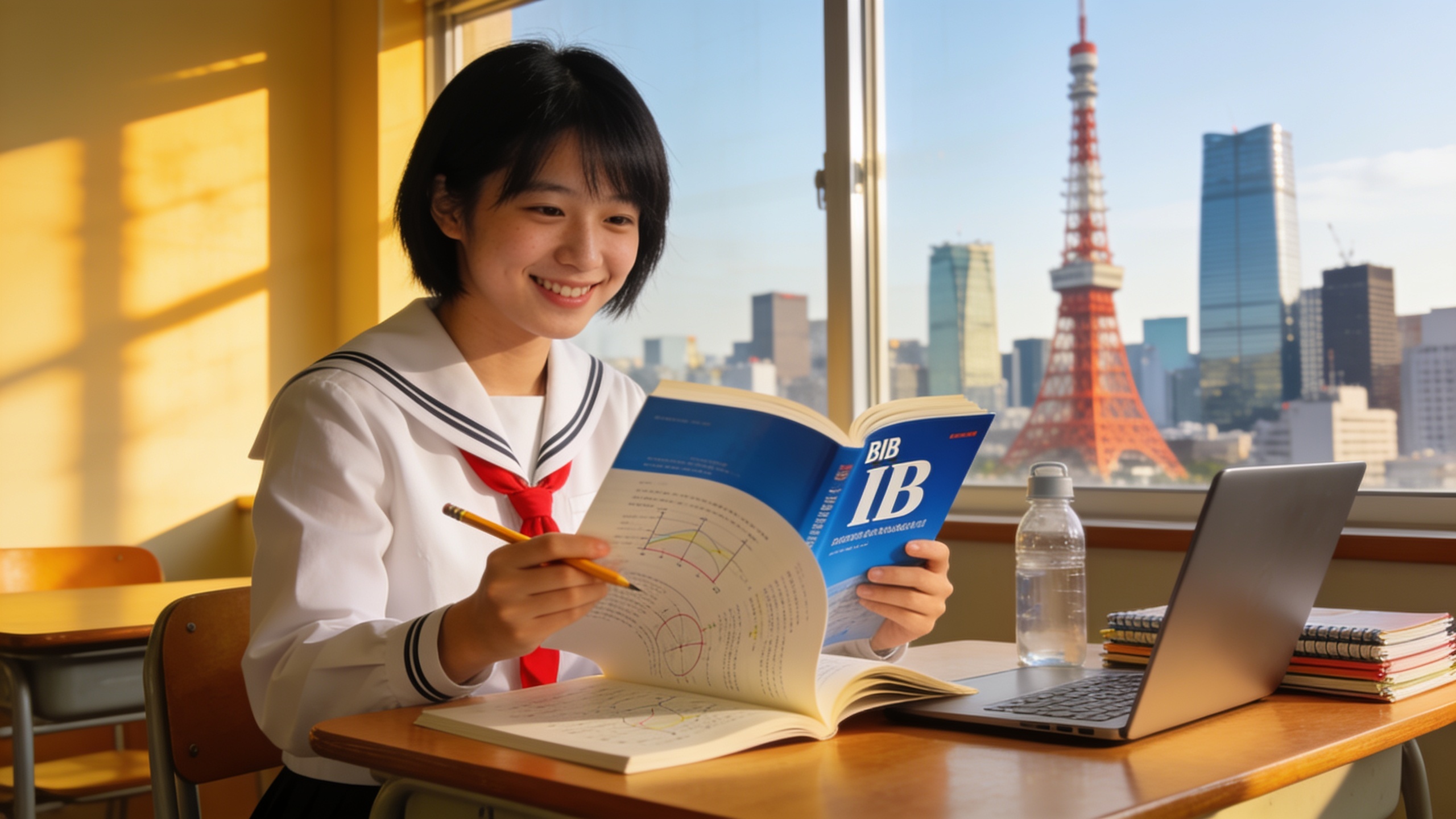
What the Competition Rate for Tokyo Metropolitan Kokusai High School's IB Program Reveals
Hello everyone, it's Saori.
Recently, news about the IB program at Tokyo Metropolitan Kokusai High School caught my attention. Interviews with students who successfully navigated this highly competitive program—with a 4-6x application rate—were reportedly released.
This is great news for those in Japan interested in IB education. But beyond the fact that "IB is now an option at a Japanese public school," what really stood out to me was the high competition rate.
4 to 6 times. This isn't just a number for a popular school. It's evidence that more and more families in Japan are recognizing the value of "studying IB at a public school."
How to Tackle a Challenging Exam with Limited Information
What struck me in the interviews was that successful students described the exam as "an entrance exam with little information available." The IB program at Tokyo Metropolitan Kokusai High School is relatively new, having launched in 2019. There simply isn't a wealth of past exam papers or preparation strategies accumulated yet.
What I felt here was the importance of "parental preparation" when taking on IB education.
As a parent with children attending an international school in Malaysia, I've come to realize that IB entrance exams and learning demand a "family's overall management ability." It's not just about making your child study; it's about choosing the right curriculum and figuring out how to support them. When information is scarce, a parent's research skills are truly put to the test.
The Difference Between IB Education in Japan and Malaysia
While looking at the competition rate for Tokyo Metropolitan Kokusai High School's IB program, I reflected on the environment of learning IB at an international school in Malaysia.
Uplands, a well-known school in Penang, has a long history as an IB school, allowing children to be exposed to the IB philosophy from a young age. My kids, Hikari and Zen, naturally develop inquiry-based learning skills through their daily classes.
In contrast, Japan's public IB program is a three-year course starting from high school. Mastering the IB way of thinking in such a limited time is no easy path. Yet, there are children who overcome this 4-6x competition rate. I truly respect their efforts.
However, I'd like to consider one thing here: "cost performance."
Balancing Educational Investment
Since Tokyo Metropolitan Kokusai High School is a public school, annual tuition is around ¥120,000 (approx. $800 USD). On the other hand, international schools in Malaysia cost between ¥800,000 and ¥1,500,000 (approx. $5,300 to $10,000 USD) per year. At first glance, the Japanese public school is overwhelmingly cheaper.
But we need to consider the exchange rate. As of June 14, 2026, the rate is 1 MYR = 39.48 JPY. If this trend of a weak yen continues, the cost of international schools in Malaysia may start to feel relatively more affordable.
In fact, even including living expenses in Penang, the total cost is often lower than sending a child to a private, all-through school in Tokyo. It's important to view education migration not as a "luxury," but as a way to hedge risks for the entire household budget.
How to Bridge the Information Gap
What concerned me most in this news was that the successful students themselves pointed out the "lack of information" as a challenge.
Information about the entrance exam for Tokyo Metropolitan Kokusai High School's IB program is still limited. The publication of these successful students' experiences will be a valuable resource for families preparing to take on this challenge.
However, the essence of IB education is not just "passing the entrance exam." The real value lies in how students can cultivate their curiosity and broaden their international perspective through the subsequent learning.
Experiencing IB Daily Life in Penang
At Hikari's school, the habit of asking "why?" is ingrained in daily lessons. The other day, a simple question like "Why is seawater salty?" evolved into a discussion about ecosystems.
This inquiry-based learning is a different approach from Japan's exam-focused studying. The same kind of learning should be happening at Tokyo Metropolitan Kokusai High School's IB program. I'm very much looking forward to seeing how these successful students will grow from here.
If You're Considering Education Migration, Now is the Time
The fact that IB is now an option at a Japanese public school is definite progress. However, as the high competition rate shows, supply simply isn't keeping up with demand.
If you're thinking about providing a full-fledged IB education from an early age, why not consider options like Malaysia?
We've been living in Penang for over three and a half years now. Hikari and Zen are completely used to classes in English and happily spend time with their local friends. Our youngest daughter, Yukari, is only one and a half and not yet in school, but considering she'll grow up in this environment, language barriers will likely be minimal.
Education migration is a big decision. But by gathering information and actually visiting places, new possibilities can emerge. Use the interviews with successful students from Tokyo Metropolitan Kokusai High School's IB program as one step in that journey.