Well-Being Life - Education Migration / Blog
Awaji Island’s IB School Opens New Educational Horizons
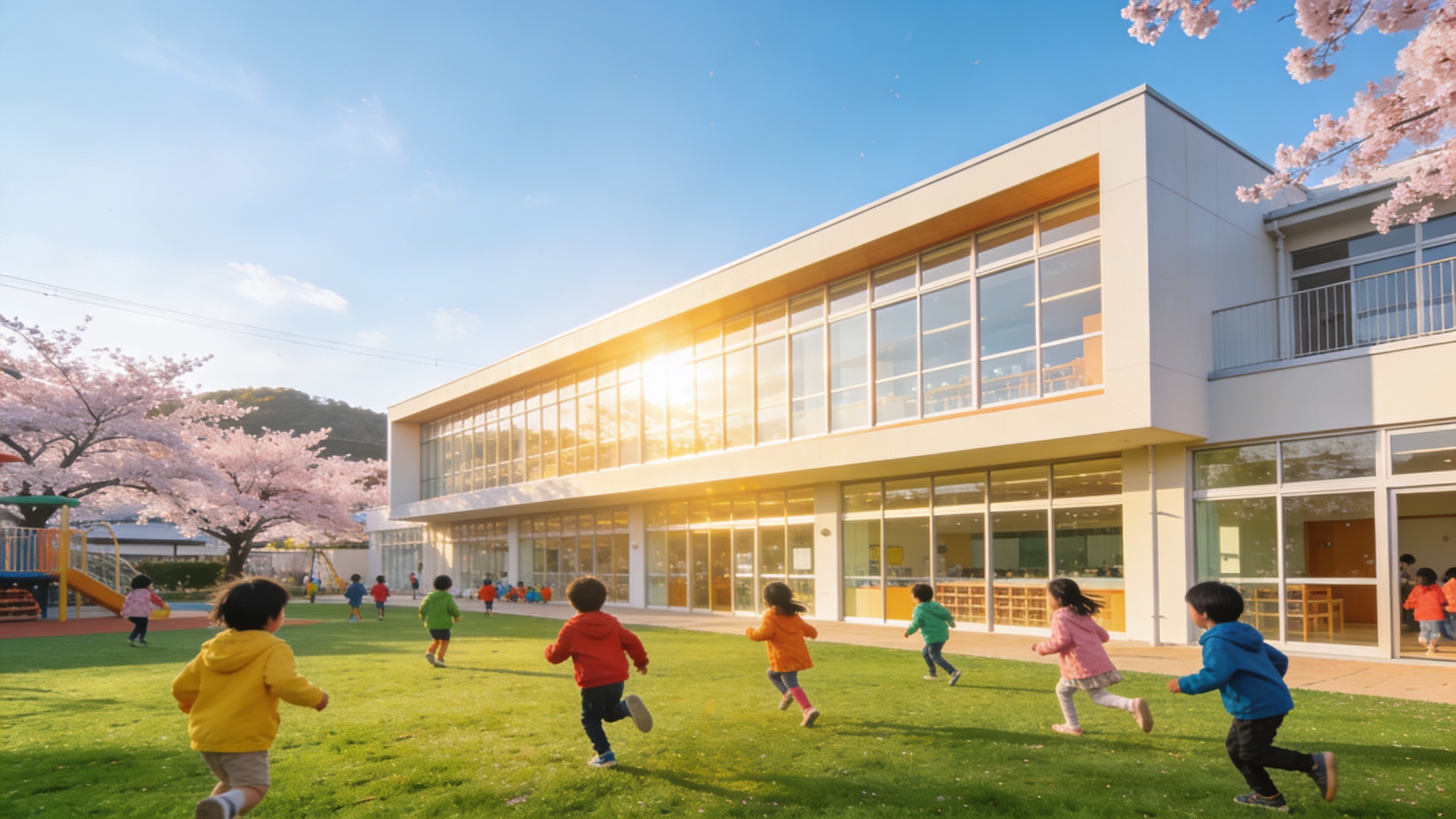
Reflections on the News from Awaji Island
Hello everyone, it’s Saori here.
The other day, this news caught my attention: Awaji Island International School, operated by the Pasona Group, has received accreditation for the International Baccalaureate (IB) Primary Years Programme (PYP).
IB education on Awaji Island. Honestly, I was a bit surprised. But thinking about it, the combination of a nature-rich environment and cutting-edge education makes perfect sense.
As a mother of three living in Penang, Malaysia, with Hikari and Zen attending international schools, this news really drove home the fact that we’ve entered an era where genuine IB education is available in Japan.
The Essence of IB Education Lies in “How to Learn”
The IB PYP is a program for children aged 3 to 12. Rather than rote memorization and cramming, it emphasizes “inquiry-based learning.”
For example, at Hikari’s school, there was a unit themed around “water.” Instead of memorizing the water cycle from a textbook, they went outside during Penang’s rainy season to observe, tested river water quality, and discussed local water issues. That’s the kind of learning it is.
Valuing the question “why?” is at the core of the IB. I feel this approach is ideal for nurturing a child’s critical thinking skills.
At the school on Awaji Island, similar inquiry-based learning will likely take place. Surrounded by the sea and mountains, the environment itself is a “living textbook.”
What the Rise of Domestic IB Schools Means
In fact, the number of IB-accredited schools in Japan is increasing year by year. Japan’s Ministry of Education, Culture, Sports, Science and Technology (MEXT) is also actively promoting IB education, and as of 2024, nearly 200 schools have received accreditation.
This represents a significant expansion of options for families considering education migration. With more choices to “receive an IB education without going abroad,” new paths open up for households that find the hurdle of relocation daunting.
However, this brings up an important point: what exactly is “authentic international education”?
Differences Between Domestic and Overseas IB Schools
The IB curriculum itself is standardized worldwide. So, the quality of learning itself doesn’t differ greatly whether you’re in Japan or abroad.
But the difference in environment cannot be ignored. In Malaysian international schools, classrooms gather children from over ten different nationalities. The languages heard during break time include English, Chinese, Malay, and sometimes Tamil. Diversity is woven into daily life.
This “natural multicultural coexistence” is something difficult to experience within Japan. For fostering “internationally minded individuals,” a core IB principle, a multinational environment holds great significance.
On the other hand, the advantages of domestic IB schools include “access to support in Japanese,” “learning within Japanese culture and customs,” and “easier for parents to continue working.” Especially for families worried about their child’s language skills, this can be a reassuring option.
Cost Comparison is Also Crucial
When considering education migration, cost is an unavoidable factor.
Based on the latest exchange rates (as of May 24, 2026), 1 MYR = 40.10 JPY. Annual tuition fees at international schools in Penang generally range from approximately 800,000 to 1,500,000 JPY (approx. $5,300 to $10,000 USD). Living expenses are added on top of that.
In contrast, domestic IB-accredited schools typically charge between 2,000,000 and 3,000,000 JPY (approx. $13,300 to $20,000 USD) per year. For the school on Awaji Island, costs including boarding fees could be even higher.
While a simple comparison isn’t possible, it’s fair to say that Malaysia offers better cost performance. However, relocation involves initial costs like airfare, moving expenses, and visa fees.
The key is to consider the “overall return on investment” based on your family’s specific situation.
A New Option for Education Migration
I believe that choosing between a domestic IB school and an overseas international school isn’t about “one being the right answer.”
For instance, you could build a foundation at a domestic IB school and then transfer to an overseas international school from middle school. Or, spend elementary school abroad and return to a domestic IB school for secondary education. Such phased choices are possible.
In fact, at Penang’s international schools, you’ll find children who have just arrived from Japan, as well as families moving on to Japan or other countries after several years in Malaysia.
Education doesn’t have to be completed in one place. We live in an era where we can flexibly choose options according to a child’s growth and family circumstances.
The new IB school on Awaji Island is, I believe, a very valuable addition to these “options.”
In Conclusion: Thinking About What’s “Best” for Your Child
Several years have passed since Hikari started attending an international school. I can see her English skills improving, of course, but also her ability to view things from multiple perspectives and her willingness to cooperate with friends from different backgrounds.
On the other hand, there must be a sense of missing out on Japan’s four seasons, its culture, and time with her grandparents.
Every choice has its pros and cons. What’s important is not deciding based on “what’s generally considered good,” but thinking about what is truly best for your own child and the happiness of your entire family.
The news from Awaji Island reminded us that educational options are definitely expanding. I encourage you all to discuss this with your family.
Until next time!