Well-Being Life - Education Migration / Blog
Rethinking the Essence of Education Investment in an Era of a Weak Yen
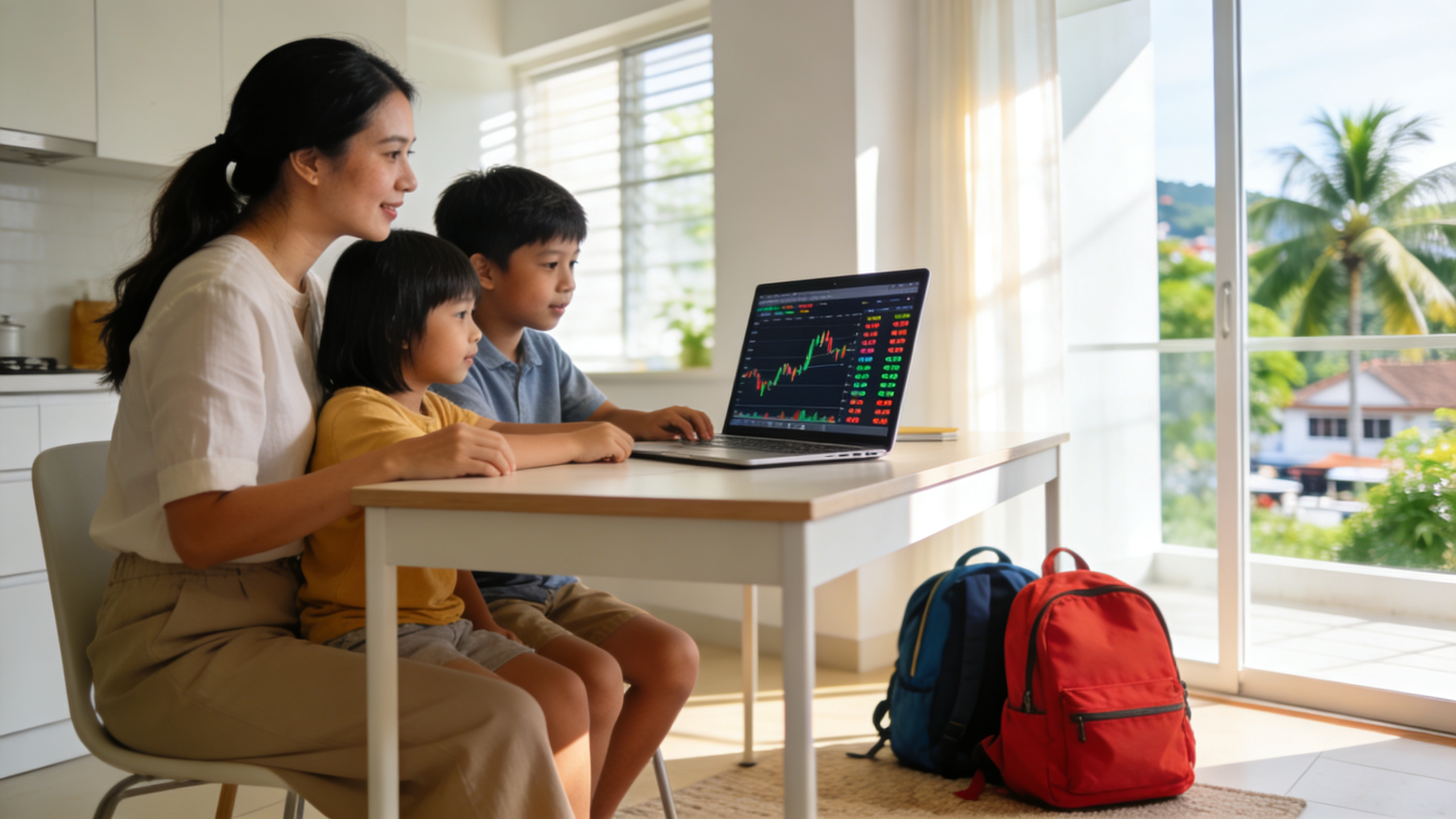
The Inseparable Link Between Education Investment and Currency Exchange
Hello everyone, it's Saori.
The other day, I had an end-of-semester meeting at my eldest daughter Hikari's school. My heart swelled when her teacher praised her, saying, "Hikari has improved so much in her English presentations."
At the same time, I found myself thinking: how much are we actually spending on this education when converted to Japanese yen?
At the latest exchange rate (as of June 7, 2026), 1 Malaysian ringgit equals 39.75 yen. When we first came to Malaysia three and a half years ago, it was around 26 yen per ringgit. Simply put, even if the tuition fee stays the same, it's now about 1.5 times more expensive in yen terms.
It's Not Just About "Weak Yen = Loss"
Many people feel that a weak yen has increased the cost of an education migration. It's true that it places a heavy burden on families earning income in Japanese yen.
However, the situation is different for families like ours, who run a business in Malaysia and earn income in ringgit. In fact, a weak yen can sometimes work in our favor.
This is a crucial point when considering an education migration. How you view education investment changes depending on whether you think in yen or in the local currency.
Reframing Education Costs as an "Investment"
In Japan, there's a strong tendency to view education costs as "consumption." But the cost of sending a child to an international school abroad is an upfront investment in their future.
The annual tuition at the international school Hikari attends in Penang is about 50,000 ringgit. That's roughly 2 million yen. Compared to private elementary schools in Japan, the difference isn't that significant.
However, the key point here is "what you're paying for."
Private elementary schools in Japan often require additional fees for English education, right? In contrast, at an international school, the tuition fee alone covers a complete English-language learning experience.
What My Son Zen's Growth Taught Me
My eldest son, Zen, was born in 2020 and is now 6 years old. He started at the international school when he was 3.
For the first six months, he couldn't understand a word his teachers said, and there were many days he came home crying. As a physical therapist who has observed children's development, I often worried, "Is this the right environment for him?"
But after about a year, my perspective changed when I saw Zen chatting with friends in English. Children absorb language at an astonishing speed when the environment is right.
I truly feel that deciding whether to invest in this "golden period for language acquisition" is a choice that can dramatically expand a child's future options.
Three Ways to Turn Currency Risk into an Advantage
Now that the yen continues to be weak, controlling currency risk is more important than ever. Here are three methods we practice.
Create a Local Income Stream
Establishing a company in Malaysia and earning income in ringgit is the most reliable way to hedge against currency risk.
In addition to work from Japan, we are gradually expanding our business within Malaysia. While we're not fully there yet, we've managed to cover a portion of our living expenses in ringgit.
Diversify Yen-Denominated Assets into Local Currency
When considering an education migration, converting a certain amount of funds into ringgit in advance is another option. You don't have to convert everything at once, but it's advisable to gradually diversify when the exchange rate is favorable.
Think Long-Term
Exchange rates fluctuate significantly in the short term, but over a span of 10 or 20 years, some degree of normalization can be expected. A child's education is a long-term endeavor. It's important not to get overly excited or discouraged by short-term exchange rates and to stay committed for the long haul.
Thinking About My Younger Daughter Yukari's Future
My younger daughter, Yukari, was born in August 2024 and is now one and a half years old. She doesn't attend school yet, but influenced by her older siblings, she's naturally started to say English words at home.
Seeing her point at a cup and say, "Mama, water," reminds me once again of the incredible power of a child's absorption.
By the time Yukari starts elementary school, how will the global situation, including exchange rates, have changed? Honestly, I can't predict it.
But one thing is certain: the importance of equipping her with the "ability to adapt to any environment." I truly feel that learning at an international school is building that foundation for her.
Education Migration as Part of a "Family Strategy"
As I mentioned at the beginning, an education migration is not a "luxury"; it's a risk hedge for the entire family. It's a way to prepare for macro-level risks like Japan's prolonged stagnation and the weak yen, using our children's education as a starting point.
We didn't come to Penang simply because we "wanted our children to speak English." It was a deliberate choice to provide an environment that would raise them into globally competent individuals.
No matter how exchange rates fluctuate, investment in a child's education is never wasted. In fact, this era of a weak yen might be a good opportunity to seriously consider "what we truly value."
If you're interested in an education migration, please come and visit Penang. Experiencing the real atmosphere here will surely give you a new perspective.