Well-Being Life - Education Migration / Blog
How to Nurture Individuality in Siblings Just One Year Apart at an International School
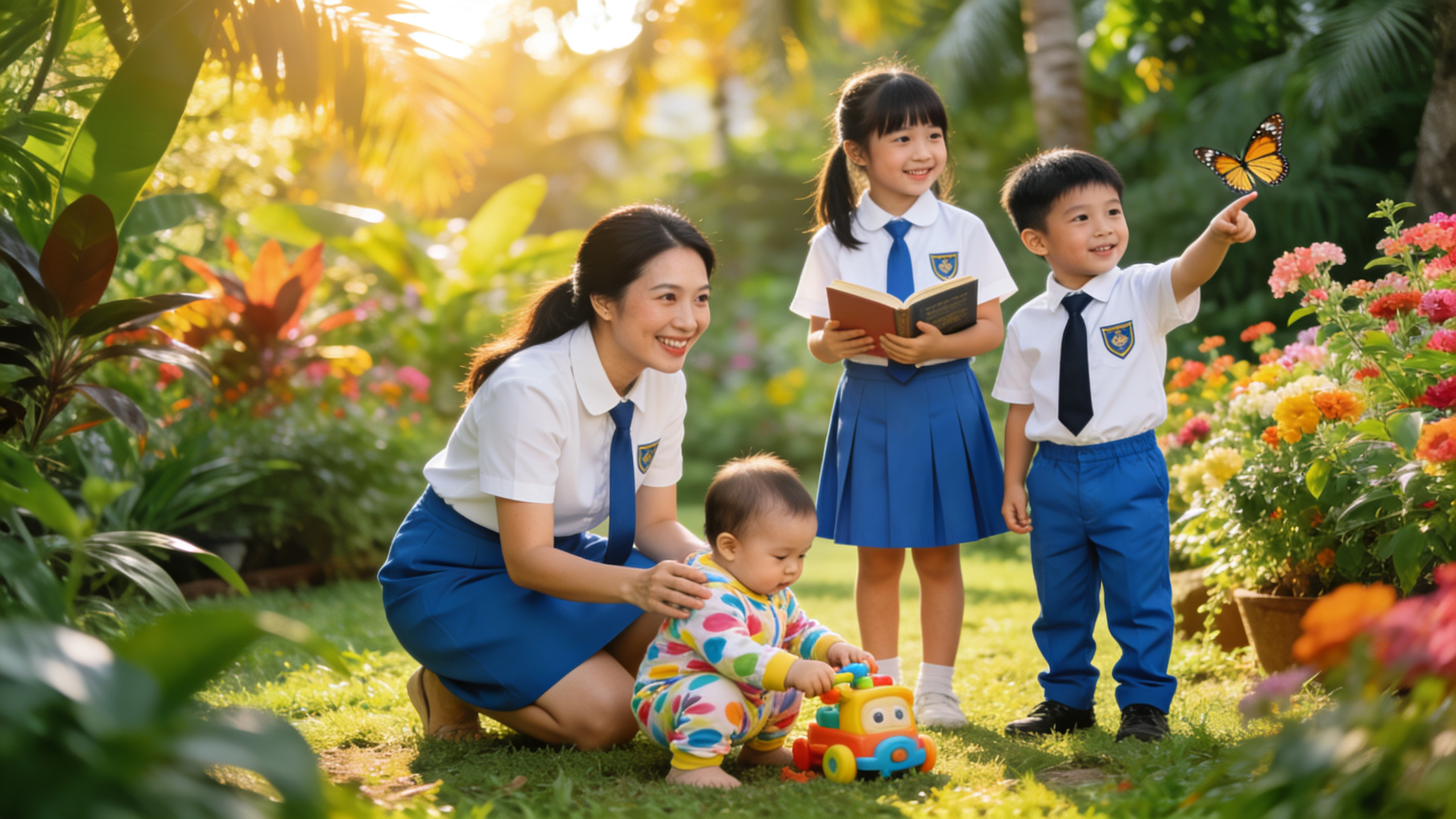
Same School, Different Growth
My eldest daughter Hikari (born 2018) and eldest son Zen (born 2020) attend the same international school. They're just one year apart in age, started school around the same time, and share the same environment, teachers, and curriculum.
Yet, how they spend their time at school and how they grow are completely different.
Hikari absorbed English right after starting school and now speaks at a near-native level. She's the type to raise her hand actively in class, has many friends, and shows leadership.
Zen, on the other hand, went for the first six months without speaking a single word in the classroom. His teacher would sometimes say, "Zen didn't smile today." Even now, he's more cautious and values his own pace.
It amazes me every day how two children from the same parents, attending the same school, can be so different.
It's Not About "Can or Can't," But "How They Grow"
When considering education migration, many parents tend to focus on "how much their English will improve" or "what their grades will be." I was the same at first.
But after actually sending my children to school, I realized that even in the same environment, the speed and direction of growth vary completely from child to child.
Hikari is the type whose progress is easy to see—like "she can speak English now." But Zen has grown significantly in areas that are harder to quantify, such as "the ability to express his feelings" and "a focused approach to tasks."
Especially at international schools, learning is project-based rather than lecture-based. Because children can progress according to their own interests and pace, differences in individuality become more apparent.
The Challenge of Not Comparing Your Children
Still, comparing is only natural for a parent. I sometimes catch myself thinking, "Hikari can already speak this much, but Zen..."
However, after three and a half years of education migration in Malaysia, I've come to one realization:
"This child has their own timing."
Recently, Zen happily explained a math game he learned at school to us at home. His English is also increasing slowly but steadily. Above all, I feel that having an environment where he can learn at his own pace is building his confidence.
The advantage of education migration is having an environment that respects each child's individuality, rather than a one-size-fits-all evaluation standard. This is an experience that's hard to come by in Japan's education system.
The Same Environment for Yukari
My second daughter, Yukari (born August 2024), is only one and a half years old. For now, she spends most of her time at home with me.
But watching Hikari and Zen grow, I can't help but look forward to seeing what unique individuality Yukari will show us.
Even if she attends the same school, I'm sure all three will grow in their own ways. Being able to witness that from the sidelines is one of the greatest joys of education migration.
The "Power to Wait" That Parents Need
There's one thing I want to share with those considering education migration:
Parents need the "power to trust and wait for their child."
Sending your child to an international school doesn't automatically make them fluent in English. Their grades won't skyrocket overnight. But the great value of education migration is being able to provide an environment where your child can grow at their own pace.
Especially in Malaysia, tuition fees are more reasonable compared to international schools in Japan. Considering the exchange rate of 1 MYR = 40.20 JPY (as of May 27, 2026), the cost-performance is very high.
Choosing an Environment That Nurtures Individuality
Finally, here's one tip for choosing a school:
Even among international schools, curricula and educational philosophies differ. Choosing a school that matches your child's personality is the shortcut to nurturing their individuality.
In our case, our children attend Uplands in Penang. The balance between academic load and adjustment load is good, and I feel it suits cautious Zen as well.
If you're thinking, "I want to visit a school" or "I don't know what criteria to use for choosing," please let me know in the comments or messages. I can share insights based on my actual experience.
Education migration is a big challenge for both children and parents. But I believe that being able to choose an environment where each child's individuality shines is the greatest gift of all.