Well-Being Life - Education Migration / Blog
How Inquiry-Based Learning Transforms Children's Futures
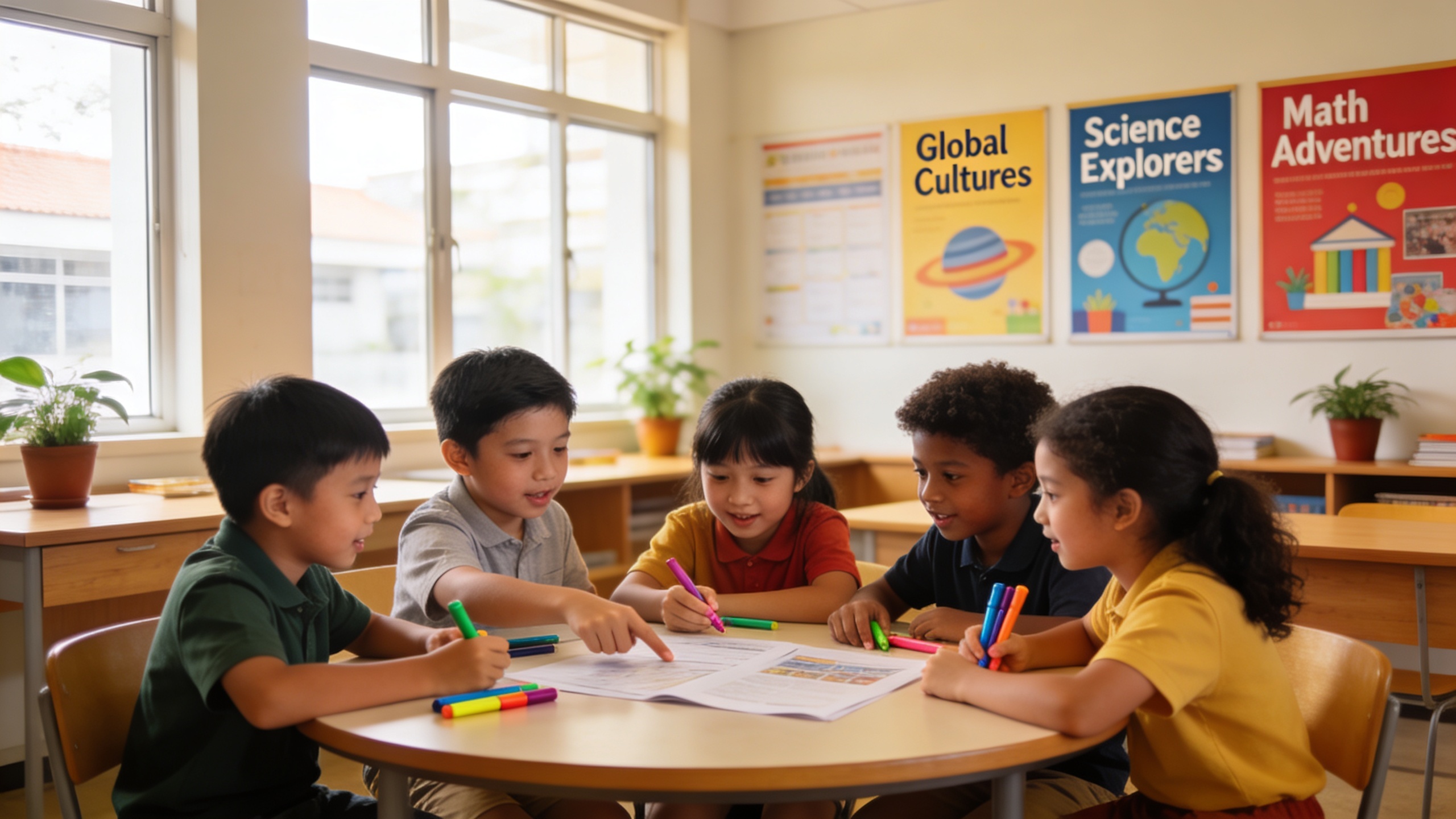
Have you heard of inquiry-based learning?
The other day, I read an article about inquiry-based learning at international schools and the International Baccalaureate (IB). The term "inquiry-based learning" has become increasingly common in Japan recently. But many of you might find it hard to picture what it actually looks like.
I'm Saori, and I've been living in Penang, Malaysia for three and a half years. While sending my eldest daughter Hikari (born 2018) and eldest son Zen (born 2020) to an international school, I witness inquiry-based learning in action almost every day.
Today, I'd like to share how IB inquiry-based learning impacts children's growth, along with our family's experiences.
IB inquiry-based learning: Building the ability to face "questions without answers"
A key feature of the IB is its cross-disciplinary inquiry-based learning that goes beyond subject boundaries. For example, a single theme like "Where does water come from?" can integrate science, social studies, language, and even the arts.
At Hikari's school, one semester focused on the theme of "community." The children started with the question, "What does our town need?" They walked through the streets of Penang, researched the roles of shops, hospitals, and schools, and finally created a model of their ideal town in class.
The crucial part of this process is that teachers don't provide answers. The children themselves formulate questions, research, think, and present. This truly cultivates the ability to grapple with "questions without answers."
The changes we've seen in our children
Hikari's case: Her ability to ask questions has grown
When Hikari was in first grade, she came home from school and asked, "Mommy, why is the sky blue?" She had developed the habit of valuing "why?" in her lessons.
At first, I was a bit taken aback, but we looked up picture books together and did simple experiments. Then Hikari found her next question on her own: "Then why is the sunset red?" Inquiry-based learning has also changed the quality of our conversations at home.
Zen's case: He's no longer afraid of failure
Zen was born in 2020 and is five years old. He's still young, but the influence of inquiry-based learning is definitely there. When his block tower collapsed, instead of just saying "Oh no," he started thinking on his own: "How can I make it not fall down?"
When I asked his teacher, she said there's a culture in the class of "It's okay to make mistakes. You can learn from them." Inquiry-based learning naturally fosters an attitude of seeing failure as part of the learning process.
The difference from Japanese education: How "independence" is nurtured
I myself hold a Japanese elementary school teaching license. Japanese lessons are, of course, wonderful, but the decisive difference lies in "how independence is nurtured."
In IB inquiry-based learning, children take the lead in their learning. Teachers act as facilitators, helping to draw out and deepen children's interests. Many parents are initially confused by this style, but seeing their children's growth makes it all make sense.
For example, one semester, Hikari's class explored the "ocean plastic problem." The children themselves suggested, "What's the situation on Penang's beaches?" and actually planned a beach cleanup activity. They recorded the amount of trash and presented it at school.
It's not "doing it because the teacher said so," but "noticing and taking action on our own." I truly feel that this experience builds the skills needed to thrive in the future global society.
The "priceless" value that inquiry-based learning brings
I often hear from business owners considering an education migration, "Can I get a good education just by spending money?"
Yes, international school tuition fees are significant. In Penang, they range from about 80 to 150 man (Japanese yen) per year. Converted to Japanese yen, it's certainly not cheap (approximately $5,300 to $10,000 USD per year, based on an exchange rate of 1 MYR = 40.16 JPY as of May 28, 2026).
However, the "ability to think and act independently" that inquiry-based learning cultivates is something money can't buy. This skill will be invaluable no matter what field a child enters in the future.
Recently, Hikari gave a presentation at school on the theme of "creating an elderly-friendly town." I'll never forget one thing she said.
"It's not that elderly people are struggling because their bodies don't work well. It's because there are barriers in the town."
The fact that a second-grader can think this deeply is proof that inquiry-based learning is nurturing the "ability to see the essence of a problem."
Tips for using inquiry-based learning at home
Finally, I'd like to share some tips for inquiry-based learning that you can do at home, even if you're not attending an international school.
Value "why?"
When your child asks "why?", instead of immediately giving the answer, try asking back, "What do you think?" This helps your child develop the habit of thinking for themselves.
Don't rush for answers
The process is important in inquiry-based learning. Watch over them with an attitude that it's okay to make mistakes and it's okay to take time.
Increase real-life experiences
Not just books and videos, but actually going outside and experiencing things is the driving force behind inquiry. Using Penang's unique nature and culture is also a great idea.
For those considering an education migration, inquiry-based learning will likely be a major deciding factor. Is it an environment that can fully draw out your child's desire to "know"? When you visit schools, be sure to check out the lessons in action.