Well-Being Life - Education Migration / Blog
Universities in Motion: A New Era for IB Teacher Training
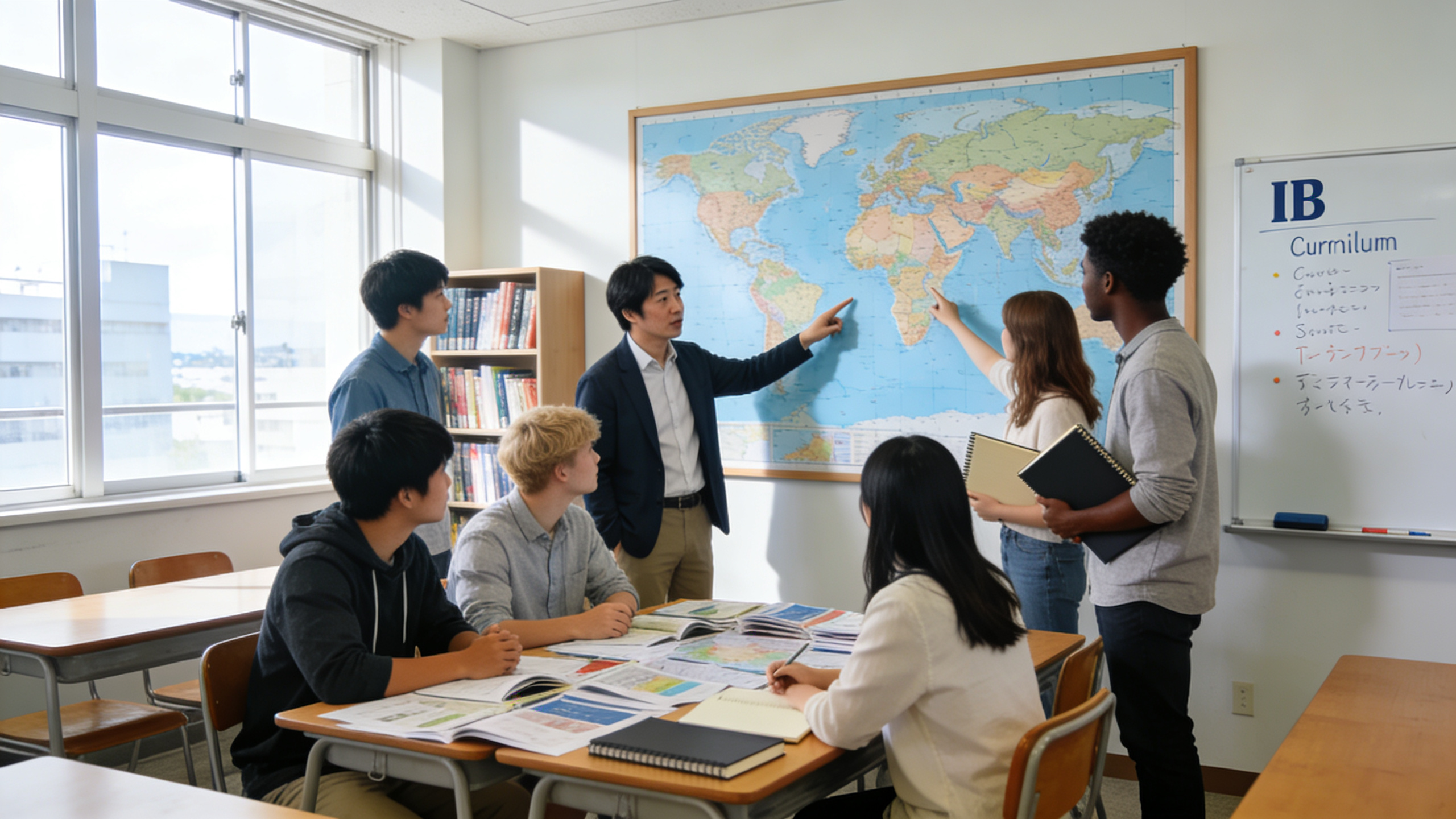
Is the IB Teacher Shortage About to Change?
Hello everyone, it's Saori.
The other day, this news caught my eye: Sagami Women's University has received official certification for its International Baccalaureate (IB) teacher training program.
If you're interested in IB education, you've likely heard about the teacher shortage at least once. Living in Malaysia and sending Hikari and Zen to school here, I truly understand how difficult it is to secure excellent IB teachers.
Japanese universities are now seriously stepping into IB teacher training. This is news that those of us considering education migration simply cannot ignore.
Why IB Teacher Training Now?
The IB is an international curriculum implemented in over 160 countries worldwide. While the number of IB-authorized schools is increasing in Japan, the teaching infrastructure hasn't kept pace.
According to a survey by Japan's Ministry of Education, the domestic supply of IB teachers falls far short of demand. Bilingual teachers who can instruct in both Japanese and English are especially in high demand.
Sagami Women's University's program addresses this challenge. It allows aspiring teachers to learn IB teaching methods and earn certification while still enrolled in university.
The Connection Between Education Migration and IB Teachers
Let's consider this from an education migration perspective.
At international schools in Malaysia, the quality of IB teachers is a key criterion for choosing a school. In fact, prestigious schools like Uplands and ISKL recruit experienced IB teachers from around the world.
When I chose Hikari's school, the teachers' years of IB experience was a major deciding factor. Schools with many inexperienced teachers tend to have more variation in lesson quality.
If more IB teachers are trained in Japan in the future, we could see an increase in Japanese IB teachers at Malaysian international schools. This would create a better environment for children who need Japanese language support.
The Value of Japanese IB Teachers
For children whose native language isn't English, having Japanese IB teachers is reassuring. They can provide more nuanced academic support.
Also, the IB is characterized by "inquiry-based learning." For children accustomed to the Japanese education system, having teachers with a Japanese perspective can be very helpful for a smooth transition.
The International School Scene in Malaysia
According to the latest exchange rates, 1 MYR = 39.95 JPY (as of May 20, 2026). At this rate, international school tuition in Malaysia feels more affordable compared to Japan.
At Uplands in Penang, annual tuition is roughly 80,000–120,000 MYR (approximately $17,000–$25,500 USD). At ISKL in KL, it ranges from 120,000–180,000 MYR (approximately $25,500–$38,000 USD).
Compared to attending an IB-authorized school in Japan, Malaysia offers better cost performance. The difference is especially noticeable when you consider teacher quality.
Global Demand for IB Teachers
The demand for IB teachers isn't limited to Japan. Across Southeast Asia, the number of IB schools is on the rise.
New IB-authorized schools are opening one after another in Singapore, Thailand, and Vietnam. The competition for top IB teachers will only intensify.
If initiatives like Sagami Women's University's spread nationwide, it will create more opportunities for Japanese teachers to work globally. In the long run, this is also a positive development for families considering education migration.
For Those Considering Education Migration
The movement toward IB teacher training could broaden the options for education migration.
For example, a career path where you earn an IB teaching qualification in Japan and then work at an international school in Malaysia is becoming more realistic. In fact, I know someone who works as a Japanese IB teacher in KL.
Also, when considering your child's educational environment, teacher quality is one of the most important factors. An increase in IB teachers will also widen your choices when selecting a school.
Differences Between Penang and KL
The depth of the IB teacher pool differs between Penang and KL. KL is more internationally diverse and tends to attract more experienced teachers.
On the other hand, Penang's relatively lower cost of living makes it attractive for families with children. Teacher quality is improving year by year, making it a recommended destination for initial migration.
Summary
Sagami Women's University's IB teacher training program certification may be a small step. However, it's a sign that Japanese education is beginning to move toward internationalization.
For those of us considering education migration, teacher quality is a non-negotiable point. This news gives us reason to be hopeful about the future of IB education.
Even at the school Hikari and Zen attend, Japanese IB teachers are a valuable asset. I hope that many more excellent teachers will be nurtured in the years to come.
Education migration is an investment in your child's future. Let's gather information carefully and make the best choices.