Well-Being Life - Education Migration / Blog
IB Expansion in Vietnam Signals a New Normal in Education
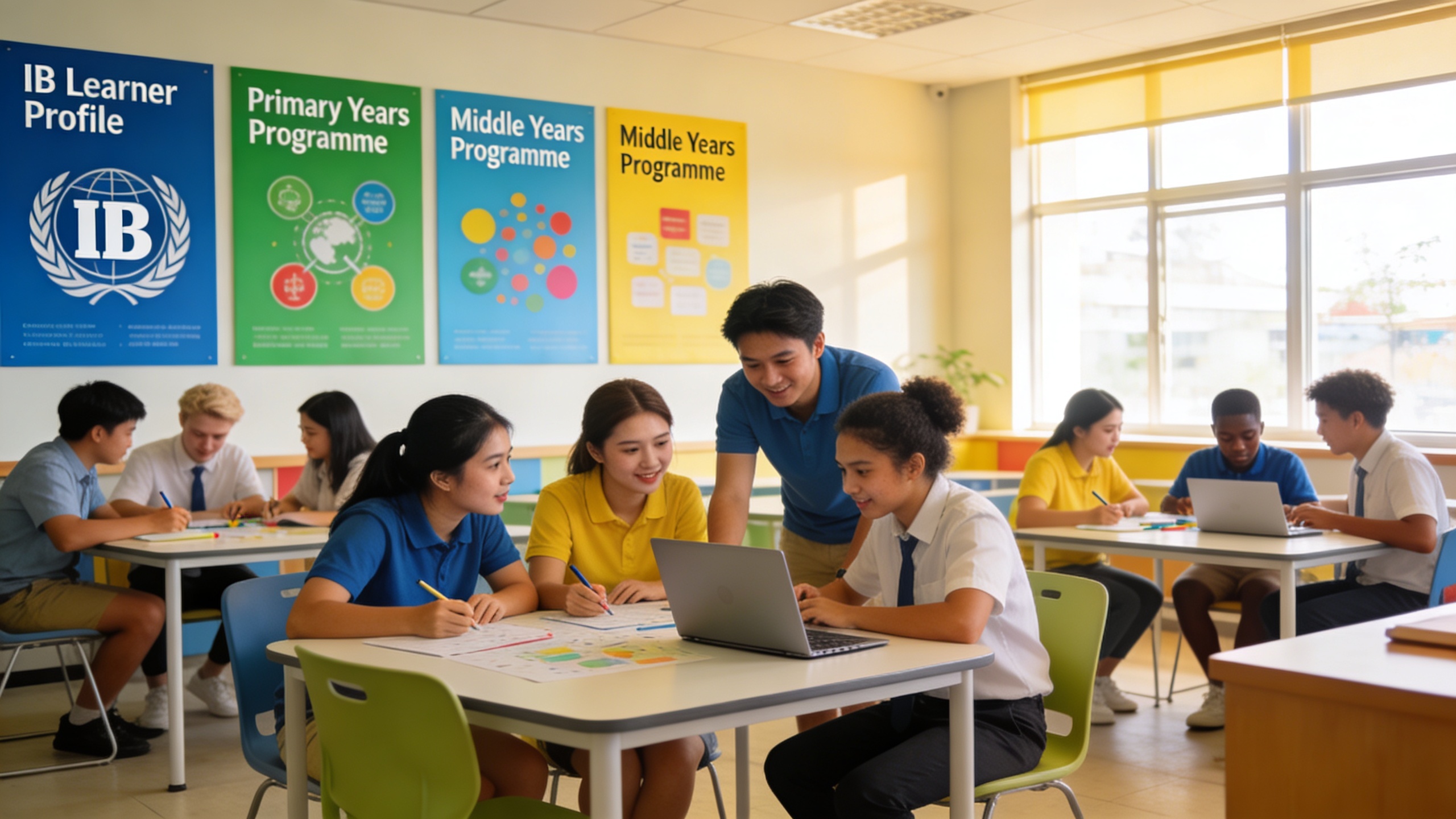
Today, a piece of news from Vietnam caught my eye. Tesla School, a private school in Hanoi, has expanded its International Baccalaureate (IB) program options. In Vietnam, of all places.
You might be thinking, "Wait, why Vietnam?" But this news is actually very insightful for those of us considering education migration.
The Accelerating Standardization of IB Across Asia
Tesla School is a private school in Hanoi, Vietnam. With this expansion, more students will have the opportunity to choose the IB program. Vietnam has seen remarkable economic growth in recent years, and investment in education is booming.
This trend isn't limited to Vietnam. Thailand, Singapore, Indonesia, and Malaysia are all seeing a rise in the number of IB-accredited schools across Asia.
The reason is clear: more families are aiming for international university admissions. The IB is highly regarded by universities worldwide, especially top-tier institutions in Europe and the US, which consider it one of the most rigorous preparatory curriculums.
Re-evaluating Malaysia's Position
Seeing this news made me reconsider Malaysia's standing. Malaysia is one of the countries in Asia with a very high number of IB schools.
For example, Uplands School in Penang has a long history and a wealth of accumulated IB expertise. In Kuala Lumpur, options like ISKL and Alice Smith School are even more abundant.
My children, Hikari and Zen, are also studying the IB curriculum at an international school in Penang. At their school, inquiry-based learning is a daily practice, and they naturally develop the habit of asking "why."
The expansion of IB in Vietnam is evidence that the quality of international education is being raised across Asia. Within this landscape, I feel Malaysia holds an advantage in its balance of cost-effectiveness and quality.
The Era Where "Just Speaking English" Isn't Enough
The news from Tesla School teaches us something more fundamental.
It's no longer enough to just "speak English" to compete in the international community.
The IB's inquiry-based learning demands the ability to construct arguments in English, engage in discussions, and synthesize ideas into academic papers. It's not just about language skills; it's about testing your critical thinking and expressive abilities.
When Hikari was in first grade, I was amazed by a project she brought home: "Research your favorite animal and present it to the class." She had just learned the alphabet, yet she was looking through encyclopedias, drawing pictures, and summarizing her findings in simple sentences.
In a typical Japanese elementary school, first graders rarely get this kind of "inquiry" experience. I can see this gap widening as they get older.
Why "Now" is the Time to Consider Education Migration
Let's look at the latest exchange rates. As of May 12, 2026, 1 MYR = 39.99 JPY. While the yen continues to weaken, education costs in Malaysia are still far more reasonable than international schools in Japan.
International schools in Japan typically cost between ¥2 million and ¥3 million per year. In contrast, international schools in Penang, Malaysia, cost around ¥800,000 to ¥1.5 million per year. Despite exchange rate fluctuations, it's often less than half the price.
And the quality of the IB is by no means inferior. In fact, learning in a multicultural environment naturally fosters cross-cultural understanding and adaptability.
Zen recently told me a classmate asked him, "How come you can speak Japanese, English, and Malay?" He replied, "Because everyone speaks different languages." This perspective at age 6 is, to me, one of the greatest values of education migration.
Lessons from Vietnam's News: A New Perspective on Choosing a Destination
The news of Tesla School's IB expansion offers us, as we consider education migration, a new perspective.
It's not just about "where to move," but about thinking more long-term about "what kind of education is available in that country."
If Vietnam's economic growth continues, the quality of its education will likely improve further. The same goes for Thailand. Singapore is already at the top, but its costs are incomparable to Japan's.
Malaysia's strength lies not only in its balance of quality and cost but also in the ease of "gradual migration." You can first get settled in Penang, then move to KL as your child grows, and if needed, to Singapore or the West. This kind of step-by-step environment is rare in Asia.
In Conclusion: Investing in Your Child's Future
Our youngest daughter, Yukari, is only 1.5 years old. She doesn't go to school yet, but she's started humming English songs, influenced by her older siblings. I'm amazed every day by how much children absorb.
Education migration is never an easy choice. There are language barriers, cultural differences, and the challenge of building a support system for the family.
Still, with the rising standard of international education across Asia, I believe that "raising a child normally in Japan" is no longer the only correct path.
The news from Tesla School reminds us that the globalization of education is no longer just for a select elite. I hope this gives you some hints for choosing the best educational environment for your family.
Until next time.