Well-Being Life - Education Migration / Blog
Educational Migration "Success" Begins with a Child's "Failure"
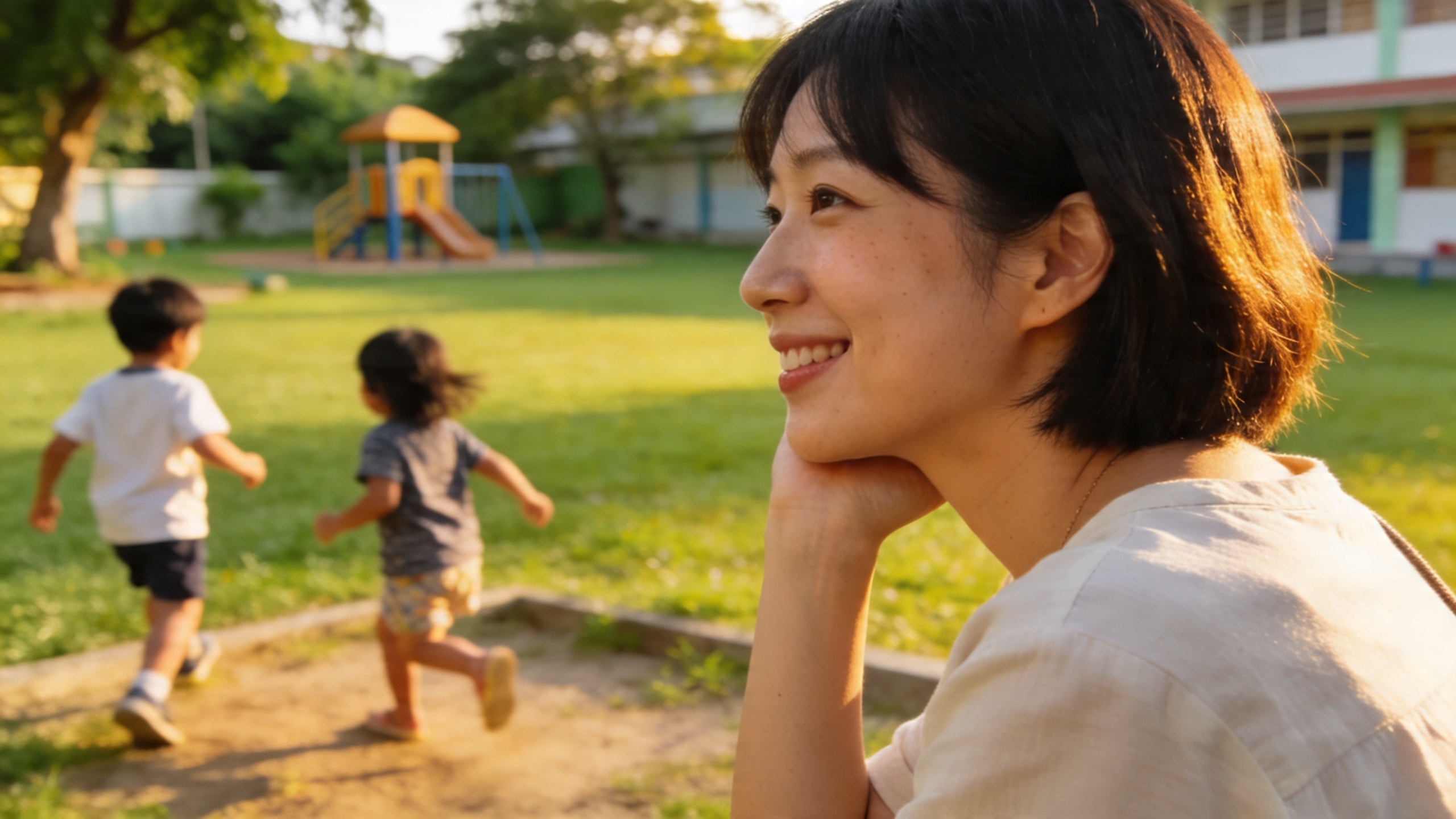
An Environment Where Children Grow Unafraid of "Failure"
Hello. I'm Saori, living in Penang, Malaysia, raising three children.
The other day, my eldest daughter, Hikari, came home from school feeling a bit down.
During a class group project, the idea she proposed wasn't chosen.
"Nobody listened to my opinion," she said, looking a little frustrated.
I remember feeling secretly relieved inside.
This "small failure" is precisely part of the reason we chose educational migration.
The Difference Between Japan's "Tolerance for Failure" and Overseas
I have experience teaching at a Japanese elementary school in the past.
Looking back on that time, there's something I can't help but feel.
The Japanese educational environment sometimes has too low a tolerance for "failure."
The shortest route to the correct answer is overly emphasized.
The risk of making mistakes or holding a different opinion is too great.
Especially sensitive children start avoiding challenges altogether.
At the international school in Penang that Hikari and Zen attend, it's different.
During class, it's not uncommon for a child to raise their hand and say, "I have a different idea."
The teacher also first acknowledges it with, "That's an interesting perspective!"
Even if the idea isn't adopted, it ends as just "one option," not a "failure."
They can receive real-world feedback without damaging their self-esteem.
"Pre-empting Failure" as a Wealthy Family's Generational Strategy
If you're a business owner, you'll understand.
In business, small failures are valuable learning opportunities.
In fact, experiencing inexpensive failures early on prevents major disasters.
I believe children's education is fundamentally the same.
It's a strategy to maximize a family's human capital in the long term.
We let them experience "ideas not being accepted" or "plans not working out" in a safe environment.
Those experiences become the foundation for future business and leadership.
A multicultural environment like Malaysia is ideal for this training.
Classmates come from various nationalities and backgrounds.
It's an everyday occurrence that your common sense doesn't apply.
What's needed there is not the ability to find the right answer quickly.
It's the ability to find common ground with people who have different opinions and move forward.
This is a uniquely human ability that is even more necessary in the age of AI.
How Children's Resilience Grows in Malaysia
My son, Zen, dropped the baton during a relay on Sports Day.
His team's ranking dropped, and he was very upset.
However, the coach and his teammates' reactions were surprisingly positive.
"Next time you'll do better!"
"It was just bad luck."
The focus is more on how to get back up from the failure than on the failure itself.
This environment is steadily building the children's resilience.
If I were back in Japan, I might have instinctively asked, "Why did you drop it?" focusing on the cause.
Now, I consciously ask future-oriented questions like, "What do you think will help you succeed next time?"
The impact this small difference in communication has on a child's spirit of challenge is immeasurable.
The Value of Penang as a "Safe Zone"
When considering educational migration, many people first think of Singapore or Western countries.
However, jumping straight into a fiercely competitive environment carries high risks.
Especially when tolerance for failure hasn't been developed yet.
This is one reason we chose Penang.
The international schools in Penang maintain high academic standards.
But they aren't the intensely competitive environments found in KL's top-tier schools.
There's a gentle atmosphere that embraces diversity.
This makes it an ideal "safe zone" for children to adapt to an overseas educational environment for the first time.
Here, they accumulate small failures and strengthen their resilience.
Then, if necessary, they can move on to the next stage, like KL.
This is the essential advantage of a phased migration strategy.
Measuring the ROI of Educational Investment Through "Failure Experience"
When considering educational investment for wealthy families, the focus tends to be only on tuition and living costs.
However, the real ROI (Return on Investment) lies elsewhere.
It's in "how safely and diversely they can accumulate failure experiences."
Types of failure not attainable in Japan.
Misunderstandings in cross-cultural communication.
The difficulty of asserting oneself amidst diverse values.
These experiences will undoubtedly prove valuable on the international stage in the future.
According to the latest exchange rate information (as of April 22, 2026), 1 Malaysian Ringgit = 40.19 Yen.
Even at this exchange rate, the cost of education and living in Malaysia is overwhelmingly more efficient compared to attending a private school in Japan.
With the same investment amount, you can provide your child with richer "learning opportunities through failure."
This is one of the structural advantages of educational migration to Malaysia.
Parental Resolve: The Courage to Stand By
The most difficult part of educational migration is witnessing your child's failure.
The urge to intervene or help is strong.
I felt that too when Hikari came home after her idea wasn't chosen.
For a moment, I thought about suggesting, "Shall we talk to the teacher?"
But I held back.
This is an important learning process she must overcome herself.
What parents can do is prepare a safe network (the school and home environment).
And to show that we are an absolute safe base, even when they fail.
"Your attempt is valuable, even if it doesn't work out."
It's crucial to consistently convey this message through words and actions.
Small Failures Create Big Future Options
My second daughter, Yukari, is only one and a half and doesn't go to school yet.
But she always watches her older sister and brother intently.
Watching Hikari and Zen experience small setbacks and rise from them.
For Yukari, that is the best possible real-life teaching material.
The results of educational migration cannot be measured by test scores or acceptance rates alone.
It's about whether the child truly believes, "It's okay to fail."
Whether they can take a step forward without fear, even in unknown situations.
This inner strength becomes the greatest asset for navigating turbulent times.
Life in Malaysia is not always easy.
However, the "freedom to fail" that this environment gives our children has immeasurable value.
The secret to making educational migration a success.
Perhaps it lies not just in wishing for our children's smooth success, but more so in preparing a place where they can safely experience meaningful failure.