Well-Being Life - Education Migration / Blog
Focus on the "Future of Education" as Told by School Heads: The New Criterion for Choosing a Migration Destination
Hello. I'm Saori, living in Penang, Malaysia, and raising three children.
The other day, two news items caught my eye. One was that Japan's Ministry of Education, Culture, Sports, Science and Technology (MEXT) is holding a "Training Session on the International Baccalaureate (IB)." The other was the announcement that Principal Kun of Musashi International School Tokyo (MIST) will be speaking at the international education conference "Cambridge East Asia Schools Conference 2026."
When I looked at these two pieces of news side by side, I felt a very insightful "difference" for us parents considering educational migration. It's a difference in the "approach" to education.
The Gap Between "Receiving Training" and "Broadcasting to the World"
Japan's MEXT holding an IB training session. This is an initiative for domestic educators to learn and deepen their understanding of the IB as an "international standard." Of course, it is evidence of growing interest in international education.
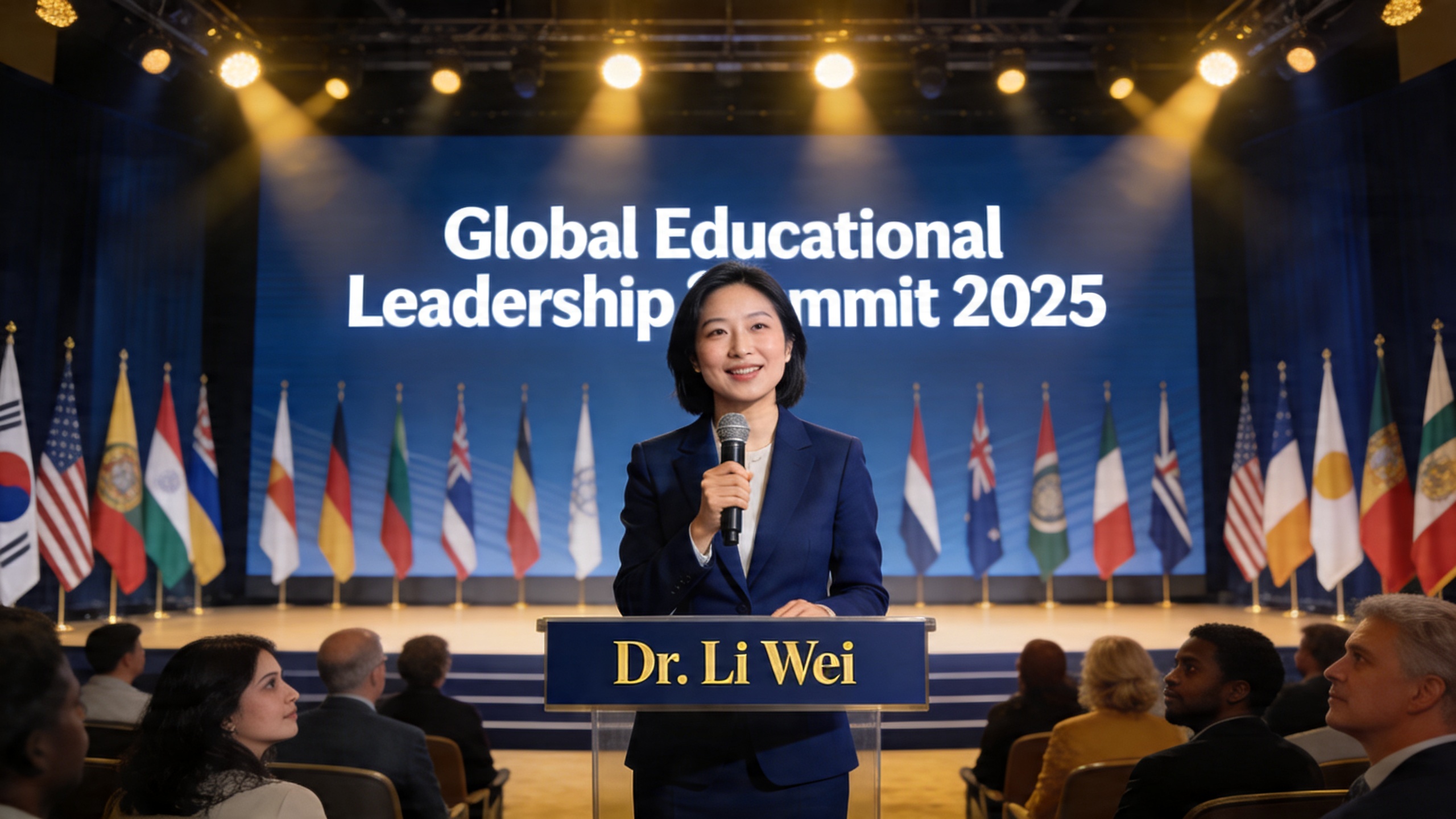
However, the other news is about the principal of an overseas international school taking the stage at an international conference as an educator representing Asia. There is a clear "difference in position" here.
One is the stance of "learning and trying to catch up" with international educational trends. The other is the stance of "taking part in and broadcasting" those trends themselves. When considering educational migration, I feel that "what position the school and its principal occupy" will become an increasingly important factor in decision-making.
A Principal's "Visibility" Speaks Volumes About a School's Quality
At the international school in Penang that my children attend, the movements of the principal and senior management are also a major concern for parents. What educational philosophy does the principal hold, and what network do they have? This determines whether the school is merely a place to complete a curriculum or a place that connects children to the "world."
For example, a principal serving as a board member for an international educational organization or giving a speech at a conference indicates that the school is at the "core" of the global educational community. This means that intangible resources—like the latest educational trends, university admission information, and high-quality training opportunities for teachers—flow into the school.
At the school of my eldest daughter, Hikari (born 2018), the principal regularly holds briefing sessions for parents, explaining the educational policy and global trends. From these talks, you can see the face of an educational "visionary," not just a school administrator. This "quality of leadership" is often overlooked in school selection, but it is actually an element directly linked to the "depth" and "breadth" of the education children receive.
Educational Migration is an Investment in the "Environment" Itself
If we view educational migration as an "investment" rather than a "consumption," what we are purchasing is not just the "curriculum" as a product. It is the "entire environment": how that curriculum is taught, the values with which children are enveloped, and what doors to the world are opened for them.
The principal is the "overall leader" and culture creator of that environment. A school whose principal actively engages with the outside world and brings back new insights can inevitably adapt to change and continue to evolve. Conversely, under inward-looking leadership that fears change, even if it adopts excellent curricula like IB or IGCSE, it may not realize their true potential.
At the school my eldest son, Zen (born 2020), attends, the principal actively supports overseas training for the teaching staff. As a result, the teachers who return to the classroom have a sparkle in their eyes about new teaching methods, and that passion is transmitted to the children. This is a prime example of how a principal's "outward orientation" directly changes the atmosphere in the classroom.
The New Criterion for School Selection: How to Evaluate Leadership
So, when actually selecting a school, how should we evaluate the principal and the school's leadership? While there are aspects that are difficult from Japan, I recommend adding the following points to your checklist.
1. Scrutinize the School's Website and Social Media
See how the principal's messages are communicated. Are they merely administrative notices, or do they articulate the philosophy and vision of an educator? Also, check if information is disclosed about international events the school hosts or participates in, or the principal's external activities (speeches, writing, committee work, etc.).
2. Ask Questions at Online Information Sessions
Many international schools hold online information sessions. On such occasions, try asking questions like, "Could you tell us about the principal's educational philosophy?" or "How does the school enhance the international expertise of its teachers?" The way they answer and the specific examples they give can reveal the school's "orientation."
3. Seek Out Opinions from Current/Past Parents
If possible, use your network to contact parents of current or former students and ask about the principal's leadership. Firsthand experiences—such as "Does the principal listen to parents' voices?", "Are they unafraid of change?", or "What impact do you feel they have on the children?"—are extremely valuable information.
Malaysia's Advantage: A Place Where Diverse Leadership Coexists
One of the strengths of Malaysia's international school environment lies in this "diversity of leadership." Not only the curricula—such as British, American, or full IB schools—but also the backgrounds of the principals leading the schools are diverse.
Malaysia is inherently a multi-ethnic nation. It's a society where Malays, Chinese, Indians, and many foreign residents coexist. Therefore, there is fertile ground for school leaders with diverse cultural backgrounds and international perspectives to gather. The presence of educators like Principal Kun who are active on the international stage can also be said to be unique to this environment.
One of the reasons we chose Penang was also this "open environment." Being rooted in the local community while being conscious of the world. The fact that there are several schools with such balanced leadership provides a great sense of security as a first step in educational migration.
Latest Exchange Rate Information and the Perspective of Educational Investment
When viewing the educational environment as an "investment," exchange rates are an important factor. The current rate is 1 MYR = 40.21 JPY (as of April 17, 2026).
Considering this rate, tuition fees at international schools in Malaysia still offer excellent cost performance compared to some international schools in Japan or tuition fees in Europe and America. In other words, with the same budget, you have a higher possibility of obtaining "higher quality leadership" and a more "international environment."
Schools whose principals speak at international conferences are not necessarily exorbitantly expensive. Rather, it is proof that passion and vision for education are ingrained in the school's culture. In making decisions about educational migration, an investor-like perspective that looks not only at the "numbers" of tuition fees but also at the "quality" of the principal's vision and the school's "orientation" will likely become increasingly important.
Choosing the "Environment" That Opens Up Your Child's Future
My youngest daughter, Yukari (born August 2024), is only one and a half years old. By the time she goes to school, the world will have changed even more. I believe what we parents can do is not to fear change itself, but to prepare an "environment" for our children that helps them understand change and even ride its wave.
At the center of that environment is an excellent "leader." The news about MEXT's training session shows Japan's will to change as well. However, those of us considering educational migration are in a position where we can already choose locations that are sites of "practice" and "broadcasting."
When selecting a school, please pay attention not only to the curriculum, facilities, and tuition fees, but also to "who is leading this school." The "orientation toward the future" that you can sense from the principal's words and actions. That may become the most reliable quality guarantee for your child's educational environment.