Well-Being Life - Education Migration / Blog
The Era of the Wealthy "Creating" Schools: The Next Stage of Education Migration
Hello. I'm Saori, living in Penang, Malaysia, and raising three children.
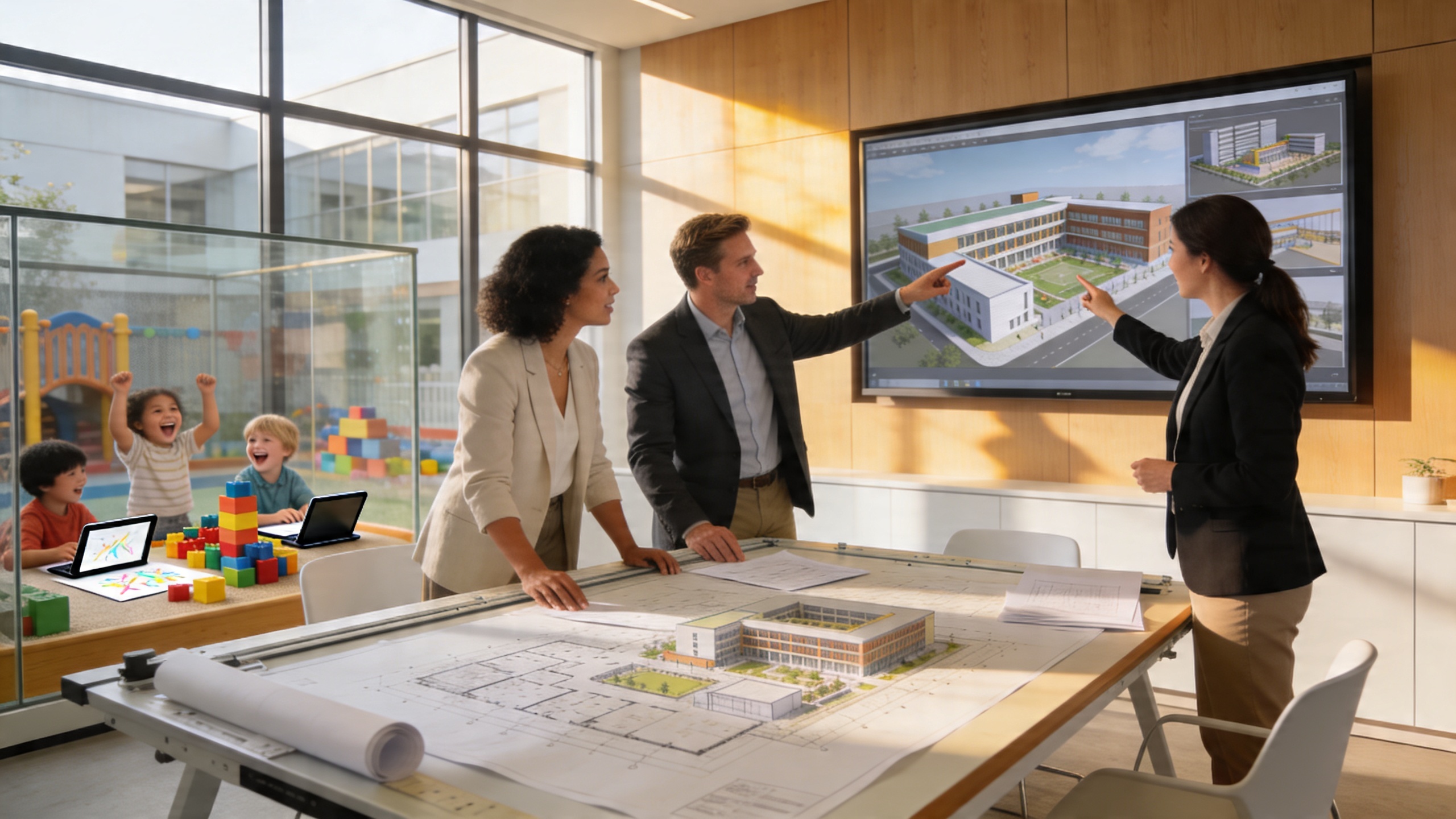
The other day, an interesting news article caught my eye. In the US, wealthy families who moved from California to Florida, unable to find an educational institution that matched their ideals, took the initiative to establish a school themselves. As the number of migrants increases and existing schools become overcrowded, this represents a move to create their own "options."
This news is not just an anecdote about the wealthy. For those of us considering education migration, I felt it points to a very suggestive "next stage." Today, using this news as a starting point, I'd like to explore the idea of shifting from "choosing a school" to "creating a school," drawing from my real-life experiences in Malaysia.
The Limits of "Choosing" and the Logic of the Wealthy
Traditional discussions on education migration have almost always converged on "school selection." Which international school in which country is right for my child? Curriculum, tuition, location, community. We compare vast amounts of information to find the optimal solution.
I myself, before moving to Penang, thoroughly researched information on various schools, including The Uplands School. Even now, with my eldest daughter Hikari and eldest son Zen enrolled, school selection remains our family's top priority.
However, the actions of the wealthy families in Florida go beyond this "choosing" stage. They judged that the existing options in the market did not align with their "vision." Therefore, they made a more proactive and strategic choice: to "create" a school that realizes their ideals.
This is an extremely wealthy mindset that views education not merely as "consumption," but as an "investment" in a child's future and a "creative act" of passing down family culture and values to the next generation. What they seek is not just a good educational service, but the "platform" itself that reflects their community and values and reliably guides their children to the next stage.
Glimmers of "Creating" Felt in Malaysia
This trend is not just a story from distant America. Within Malaysia's education migration community, I sometimes sense the beginnings of similar "creating" movements.
For example, Parent-Teacher Association (PTA) activities at certain international schools are very active. Beyond proposals for school management, it's not uncommon for parents to plan and run after-school extracurricular programs themselves. I heard from one entrepreneurial family that, regarding robotics their child was interested in, they organized a program with an external instructor among parents because the school didn't offer it.
Also, within migrant communities, small homeschool groups or tutoring centers sharing specific educational philosophies sometimes emerge naturally. These are attempts to meet niche, high-level educational needs that cannot be fulfilled within the existing "box" of a school.
Through my own children, what I feel is that the best educational environment is a state where the hardware of the "school" and the software of "family and community values" blend seamlessly. Merely "choosing" a pre-made school may have its limits in achieving this fusion.
The Practical Hurdles to "Creating"
That said, for an individual or a small group of parents to establish an international school from scratch is no easy feat. The Florida case was likely only possible because multiple wealthy families collaborated, bringing large-scale capital and networks.
In Malaysia, establishing a school first requires approval from the Ministry of Education. To operate as an international school, even stricter standards are set. Land acquisition, school building construction, curriculum development, teacher recruitment and visa procurement, and above all, sustainable operating funds. This is an undertaking far beyond the scope of a personal household budget.
Even considering the latest exchange rate information (as of April 20, 2026), 1 Malaysian Ringgit = 40.21 Japanese Yen. Land and construction costs are substantial, and the salaries for high-quality foreign teachers are at international standards. If a new school aims to provide education at the same level as prestigious institutions, tuition will inevitably be high. It also involves a long time and risk until the initial investment is recouped.
What "Small Creations" Can We Manage?
So, for those of us for whom creating a school itself is not realistic, can we do nothing? I don't think so. The essence shown by the Florida case is the attitude of "proactively designing the environment." This is a way of thinking that can be practiced regardless of scale.
I consider this "small-scale creation" on three levels.
1. Designing a Home Curriculum
Education not left entirely to the school. International schools certainly provide excellent curricula. However, it is possible to design "our family's unique learning" to complement it at home.
In our family, according to our children's interests, we go on nature observation trips on weekends or learn math while shopping at the local market. Our youngest daughter, Yukari, is only one and a half years old, but through playing with her older sister and brother, she is naturally exposed to both English and Japanese environments. This is a learning environment we have "created" as a family, not part of the school's curriculum.
2. Utilizing and Creating Community Resources
Malaysia gathers families with diverse backgrounds. This community itself is a valuable learning resource. It is entirely possible to "create" informal learning spaces, like study sessions where parents teach each other their areas of expertise or potluck parties to deepen cross-cultural understanding.
For example, a family with an engineer father might host a simple programming workshop for children, or an artist mom might open an art class. The accumulation of these small things greatly broadens children's horizons.
3. Active Engagement with the School
Viewing the school not as a place to "consume" but as a place to "co-nurture." Participating in PTA activities is a given, but also proposing topics you'd like covered in class to teachers, exploring opportunities for extracurricular activities to develop your child's strengths together with the school. Such proactive engagement becomes a step towards "re-creating" the school environment into something better for your child.
In Hikari's class, there was a time for parents to introduce their professions, providing an opportunity to hear firsthand about various jobs. This was realized thanks to a proposal from one parent.
The Essence of Education Migration: From "Gaining Options" to "Creating Options"
Traditionally, the value of education migration has been said to lie in "gaining options" not available in Japan. That is certainly true. However, the Florida news points even further ahead.
In places where diverse people gather from all over the world, not everyone seeks the same "existing options." Especially for families with high aspirations and clear visions, existing frameworks can sometimes feel restrictive.
The true potential of education migration lies not merely in enrolling children in a good school, but in selecting, sometimes participating in, and gradually "creating" the very "ecosystem" that allows family values and a child's potential to blossom to the fullest, wouldn't you say?
Malaysia, as an experimental ground for that "creation," is a very tolerant and possibility-filled place. It's a multicultural society with relatively low barriers to entrepreneurship and new endeavors. We migrants, too, can utilize this environment to "create" better learning environments for our children—from large school establishments to small home-based innovations—at various levels.
The news story seems to tell us that an era is coming where future education migration will involve not just the question of "where to move to," but also "what to create there."