Well-Being Life - Education Migration / Blog
Tokyo Metropolitan High School Introduces IB: A Major Shift for Public Schools
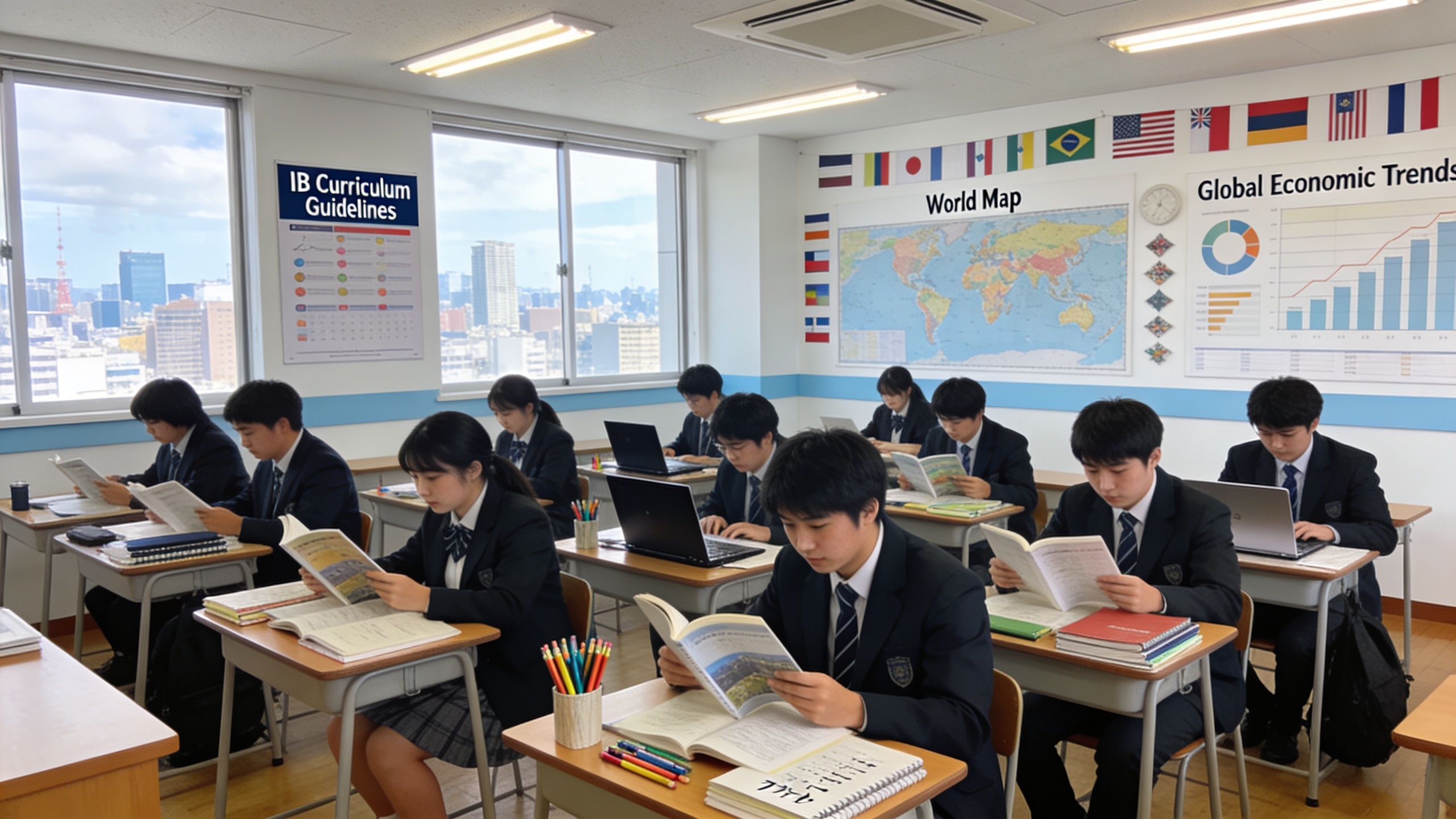
IB Comes to Public High Schools
The other day, this news caught my attention: Tokyo Metropolitan First Commercial High School will be restructured in 2028 to introduce an International Baccalaureate (IB) program and an international finance course.
A public commercial high school offering IB and finance. Honestly, I was surprised. When I was a teacher in Japan, this was an option I never could have imagined.
It's been three and a half years since I moved to Malaysia. Watching Hikari and Zen attend an international school, I experience the reality of IB education every day. That's why I want to dig deeper into what this news really means.
What It Means for IB to Take Root in Public Schools
The IB is a globally recognized university entrance qualification program. It emphasizes inquiry-based learning and critical thinking, with regular report submissions and presentations.
Until now, IB was mainly offered at private international schools and a few public schools (like those in Dubai). But now, a Tokyo metropolitan high school is establishing an IB course—proof that Japan's public education system is seriously beginning to adopt international standards.
The IB classes I see at Hikari's school are all about confronting "questions without answers." Instead of teachers lecturing one-sidedly, children research, think, and present on their own. This process cultivates both thinking and expression skills.
The Future Shown by the International Finance Course
Another point to note is the new international finance course. It leverages the specialized expertise of a commercial high school while aiming to equip students with global financial literacy.
Living in Malaysia, I can feel the presence of Singapore and Kuala Lumpur as Asian financial hubs. Exchange rates fluctuate daily, and with the yen remaining weak—currently at 1 MYR = 40.06 JPY (as of May 30, 2026)—financial knowledge is an essential literacy for the future.
Financial education starting at a Tokyo public high school. This could be a catalyst for children to naturally think about asset management and international business in the future.
Shared Values with Malaysian International Schools
Here, I noticed a shared value between Malaysian international schools and the IB course at the Tokyo metropolitan high school: "learning connected to the real world."
At Hikari's school, there are project-based learning initiatives in collaboration with local companies. For example, a class that develops business plans leveraging Penang's tourism resources. It's not just classroom theory; students actually conduct field research and create presentation materials.
The IB course at Tokyo's First Commercial High School likely envisions similar practical learning. How to apply financial knowledge to real economic activities—this perspective is essential for future education.
The Benefits of Expanding Public School Options
Among affluent families considering education migration, many feel that "Japanese education doesn't equip children with international competitiveness." Honestly, I was one of them.
However, this news shows signs of change in Japan's public schools. If IB education spreads to public schools, an environment for international learning will be available without going abroad.
Of course, Malaysian international schools offer unique value—a multinational environment and being immersed in English daily. On the other hand, if IB can be studied at a Japanese public school, a new option emerges: receiving an international education while keeping relocation costs down.
As a Factor in Deciding on Education Migration
This news serves as one factor to consider when thinking about education migration.
If your children are still young and you're choosing an educational environment, it's worth keeping the option of a Japanese public school's IB course in mind.
On the other hand, if you desire a daily life using English in a multicultural environment like Malaysia, the value of moving remains unchanged. What's important is choosing an option that aligns with your family's values and your child's personality.
Personally, seeing Hikari and Zen absorbed in IB inquiry-based learning makes me truly glad we came to Malaysia. But I'm also genuinely happy that similar options are expanding in Japan.
Summary
The establishment of an IB and international finance course at a Tokyo metropolitan high school is the first step in a major transformation of Japan's public education. The cultivation of global talent is now seriously beginning in public schools.
Education migration is just one means. The increase in options to receive an international education while staying in Japan is great news for parents raising children.
Going forward, I'll continue to compare educational situations in Malaysia and Japan, bringing you useful information.