- The Growing Wave of International Baccalaureate in Osaka
- What It Means to Start IB PYP at Age 3
- Expanding Options: Domestic IB Schools vs. Overseas International Schools
- Inquiry-Based Learning Fosters “Real Skills”
- Education Migration Is a “Means,” Not an “End”
- Conclusion: More Options Mean a Broader Future for Families
The Growing Wave of International Baccalaureate in Osaka
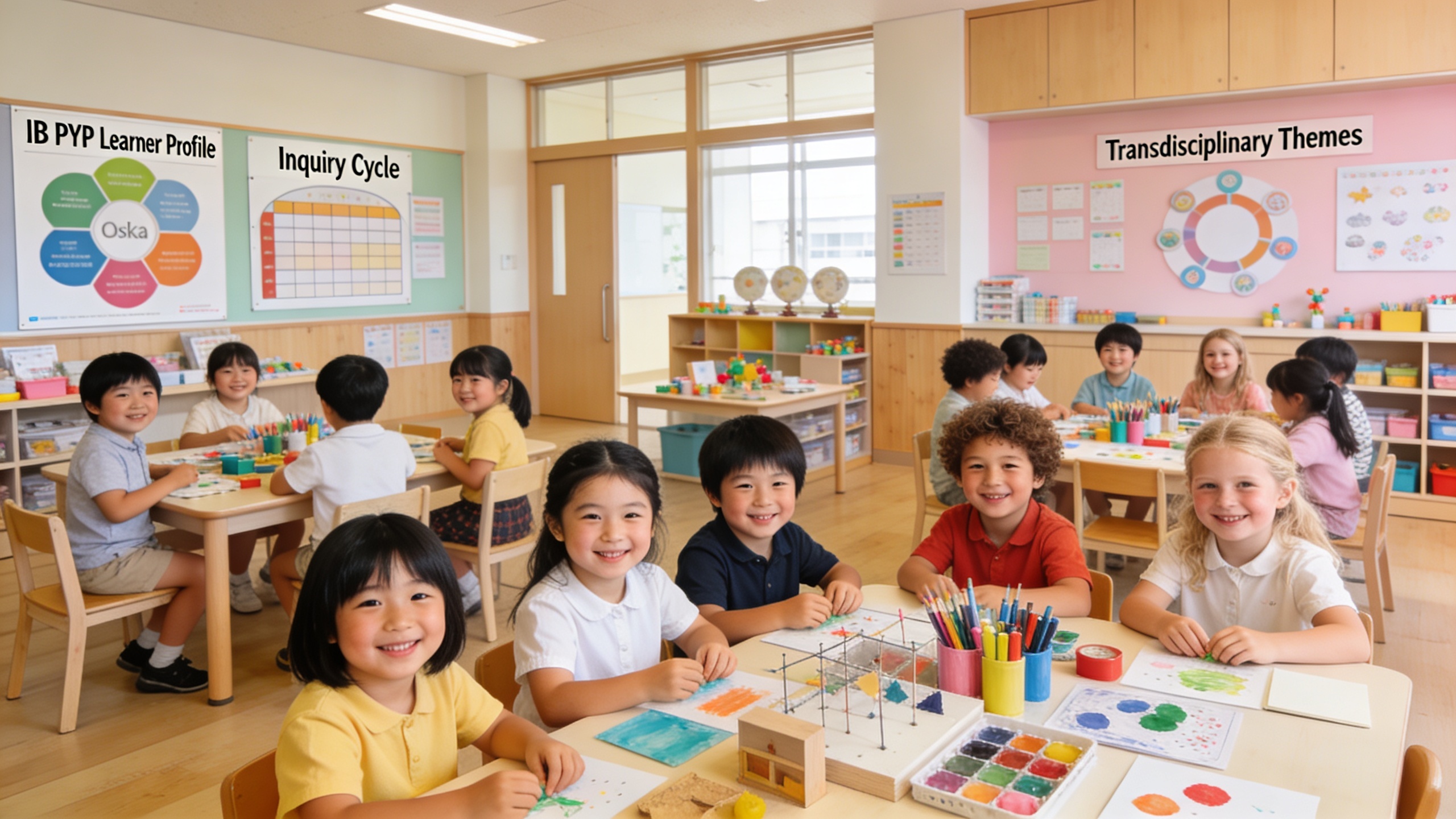
Recently, this news caught my attention: Aiwin International School in Toyonaka, Osaka, has officially received accreditation for the International Baccalaureate’s Primary Years Programme (PYP). This means inquiry-based learning is now recognized for children as young as three.
I’m Saori, a mother of three living in Penang, Malaysia, where I share the real story of education migration. My eldest daughter Hikari (7) and son Zen (5) attend an international school, while my youngest, Yukari (1.5), enjoys a relaxed home life.
The spread of the International Baccalaureate in Japan’s educational landscape is a fascinating topic for families like ours who have chosen education migration.
What It Means to Start IB PYP at Age 3
Aiwin International School introduces inquiry-based learning from early childhood. The PYP program doesn’t focus on “memorizing facts” but rather on developing the ability to “ask questions, research, and think independently.” Starting at age 3 is the perfect time to maximize a child’s natural curiosity.
At Hikari’s international school in Penang, the PYP philosophy is also foundational. When she was five, a project began from the question, “Why is the sky blue?” leading to research on primary colors and light reflection. Instead of the teacher providing answers, the children explored through experiments and reference books. At first, I thought, “She’s still so young,” but children learn with surprising independence.
While Japanese public schools are gradually incorporating “inquiry” elements, starting at age 3 with a structured curriculum like the IB offers a significant advantage.
Expanding Options: Domestic IB Schools vs. Overseas International Schools
With Aiwin’s accreditation, IB education options have increased in the Kansai region. If IB-accredited schools continue to grow not only in Tokyo and Osaka but also in rural areas, the choices for families considering education migration will certainly expand.
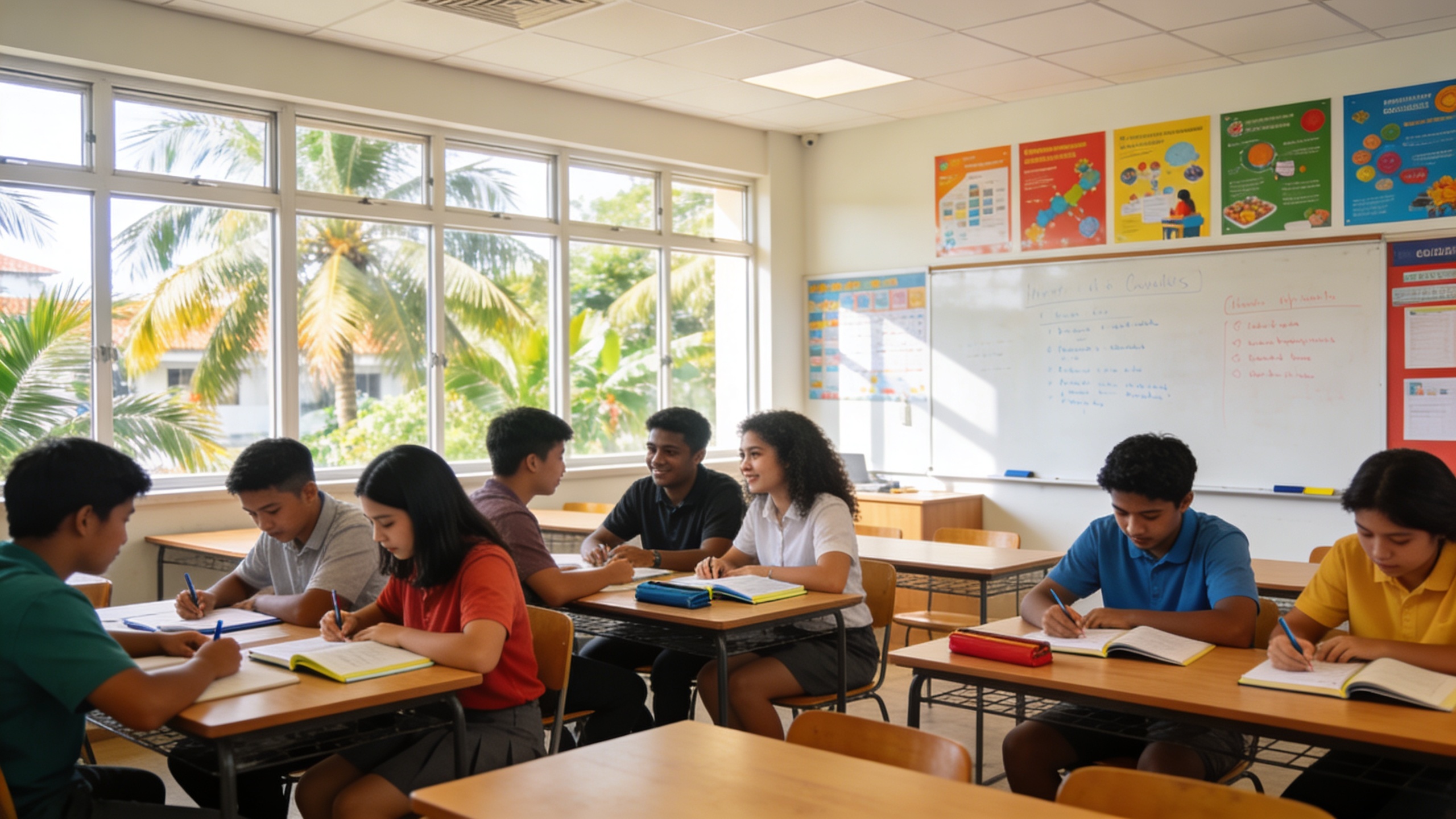
However, it’s worth considering the differences between “domestic IB schools” and “Malaysian international schools.” Tuition at domestic IB schools ranges from approximately $16,000 to $33,000 USD per year. In contrast, international schools in Penang cost between $10,000 and $20,000 USD annually (based on 1 MYR = 40.04 JPY as of May 9, 2026), offering the same IB education.
Considering exchange rates, Malaysian international schools can operate at less than half the cost of domestic IB schools. Additionally, the 24/7 English environment and daily life with multinational friends are experiences hard to replicate in Japan.
Inquiry-Based Learning Fosters “Real Skills”
What inquiry-based learning in the IB cultivates isn’t just English proficiency or knowledge—it’s the ability to “identify problems and find solutions independently.”
Recently, Zen researched the topic, “Why are leaves green but turn red and yellow in autumn?” at school. He borrowed books from the library, watched videos on a tablet, and finally presented to his class. At just five years old, he came home remembering the word “chlorophyll.”
Such experiences are hard to come by in Japan’s rote-learning-focused education system. If schools like Aiwin continue to grow domestically, more families will be able to access high-quality inquiry-based education without needing to move abroad.
Education Migration Is a “Means,” Not an “End”
That said, I don’t believe that “because IB schools are increasing in Japan, migration is unnecessary.” Education migration is one “means” of changing a child’s educational environment. Both domestic IB schools and Malaysian international schools have their own strengths.
What matters is choosing an option that aligns with your family’s values, financial situation, and your child’s personality. While seeing the news about Aiwin as a positive sign that “options are increasing in Japan,” I also hope you’ll learn about the cost-effectiveness and multicultural appeal that Malaysia uniquely offers.
When considering education migration, please compare multiple options. Visit domestic IB schools while also keeping international schools in Penang or Kuala Lumpur in mind. From there, you’ll find the best path for your family.
Conclusion: More Options Mean a Broader Future for Families
Aiwin International School’s IB PYP accreditation is proof that Japanese education is gradually moving closer to global standards. For our education migration family, it’s encouraging news that high-quality options are increasing domestically.
However, with the yen weakening (1 MYR = 40.04 JPY), the real value of Malaysian education is actually rising. Rather than choosing between domestic or overseas, I believe the approach for today’s era is to gather information on both and compare.
The “ability to learn independently” that Hikari and Zen are gaining in Penang is a lifelong asset that works both in Japan and abroad. I encourage you to explore educational environments that suit your child with a broad perspective.
Comments