Well-Being Life - Education Migration / Blog
The Truth About English Skills After 3.5 Years in Penang
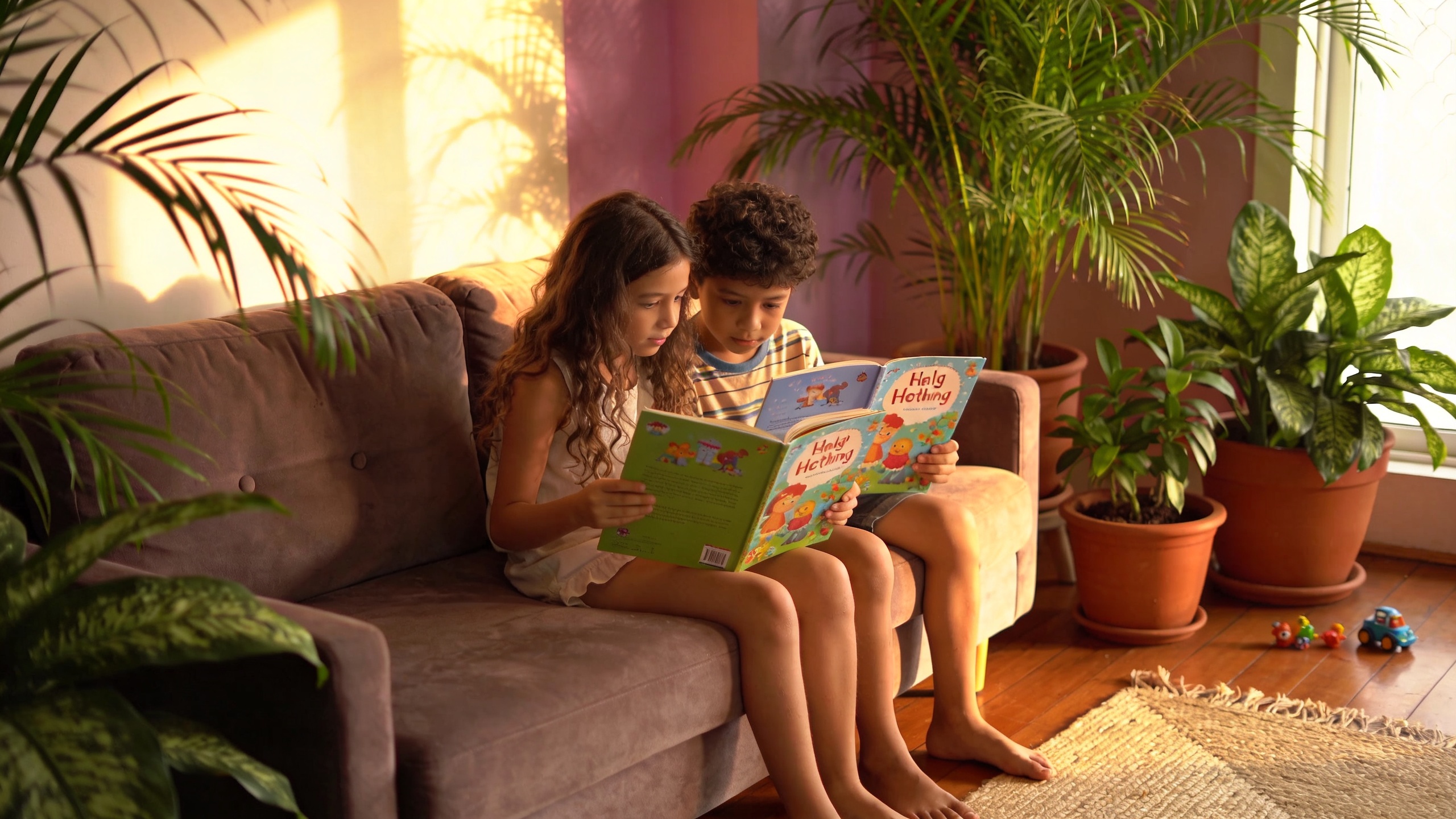
The Moment We Broke Through the Language Barrier
Hi, I'm Saori. It's been three and a half years since we moved to Penang, Malaysia. My eldest daughter Hikari is in first grade, and my son Zen is in kindergarten. Both attend a local international school.
Today, I want to answer a question I often get: "How long does it take for kids to pick up English?" Here's our real-life experience.
Starting from Zero English
Hikari started international school at age three. Growing up in Japan, she couldn't speak a word of English. On her first day, when the teacher asked, "Did you have fun today?" she just stared blankly and hid behind me.
The first three months were really tough. Every morning she cried, "I don't want to go," and came home exhausted. But kids have an amazing ability to adapt. Within six months, she was using simple words.
Zen picked it up faster, thanks to his sister. When he started at age two and a half, he could already say "Hello" and "Thank you."
Experiencing the Golden Age of Language Learning
Experts say there's a critical period for language acquisition, especially between ages 3 and 12—a golden window for absorbing new languages naturally. Watching my kids, I truly believe this.
Hikari is now seven. She takes all her classes in English and plays with friends in English. At home, we speak Japanese, but when she talks about school, English naturally mixes in. The other day, she excitedly said, "Mummy, look at this butterfly! It's so beautiful!"
Zen is five, and his pronunciation is especially good. He distinguishes between "L" and "R" just like a native speaker—something many Japanese learners struggle with. I believe this is because he was exposed to English from a very young age, before Japanese phonetics could influence him.
English Education at International School
Our school offers an EAL (English as an Additional Language) program for non-native speakers. A few times a week, small groups focus on English basics.
Hikari was in this program for two years. She started with the alphabet, gradually learned phonics (connecting sounds to letters), and eventually began reading simple sentences.
Now she's fully integrated into the regular class. Her homeroom teacher told me, "Hikari's English is almost on par with native speakers her age."
What We Do at Home
We don't leave everything to the school. We read English picture books every day—borrowing from the library or buying from bookstores. Hikari is currently obsessed with the Oxford Reading Tree series.
TV is mostly English shows. We use Netflix's kids' content, but we also let them watch Japanese anime, keeping a balance.
I also make an effort to use English myself. All school communications are in English, and parent-teacher meetings are in English too. It was tough at first, but now I can handle daily conversations. It's not just for the kids—it's for my own growth as well.
The Advantage of Malaysia's English Environment
Malaysia is a multi-ethnic country. While Malay is the national language, English is also an official language. English is widely spoken in public, and signs are mostly in English. So even outside school, kids naturally encounter English.
Penang, in particular, is a developed tourist destination with a strong English environment. You can use English at supermarkets, restaurants, and hospitals. This was a major reason we chose Malaysia for education migration.
Unlike English education in Japan, here kids learn "usable English" in daily life. The focus is on communication, not grammar. And the culture of not being embarrassed to make mistakes really supports children's growth.
Our Kids After 3.5 Years
Now, Hikari takes all her classes in English—math, science, social studies—everything in English. The other day, I watched her give a speech in English at a school event, and I was so moved I almost cried.
Zen naturally plays with friends in English. Sometimes he speaks a mix of Japanese and English—a kind of "Malaysian language" all his own—but that's a sign of growth.
Our youngest, Yukari, is one and a half. At home, we create an environment with both Japanese and English. I'm excited to see how she'll acquire language.
To Those Considering Education Migration
There are no guarantees in language learning. The pace varies by child and environment. But one thing I can say is that the benefits of immersing children in an English environment from a young age are immeasurable.
For reference, as of the latest exchange rate (May 3, 2026), 1 MYR = 39.62 JPY. Use this when calculating tuition and living costs.
Education migration is an investment in your child's future. Yes, there's a language barrier, but beyond it lies growth beyond imagination. I hope our experience helps you make your decision.