Well-Being Life - Education Migration / Blog
Holidays are Educational Opportunities! A Family Learning Journey Utilizing Malaysia's Holidays
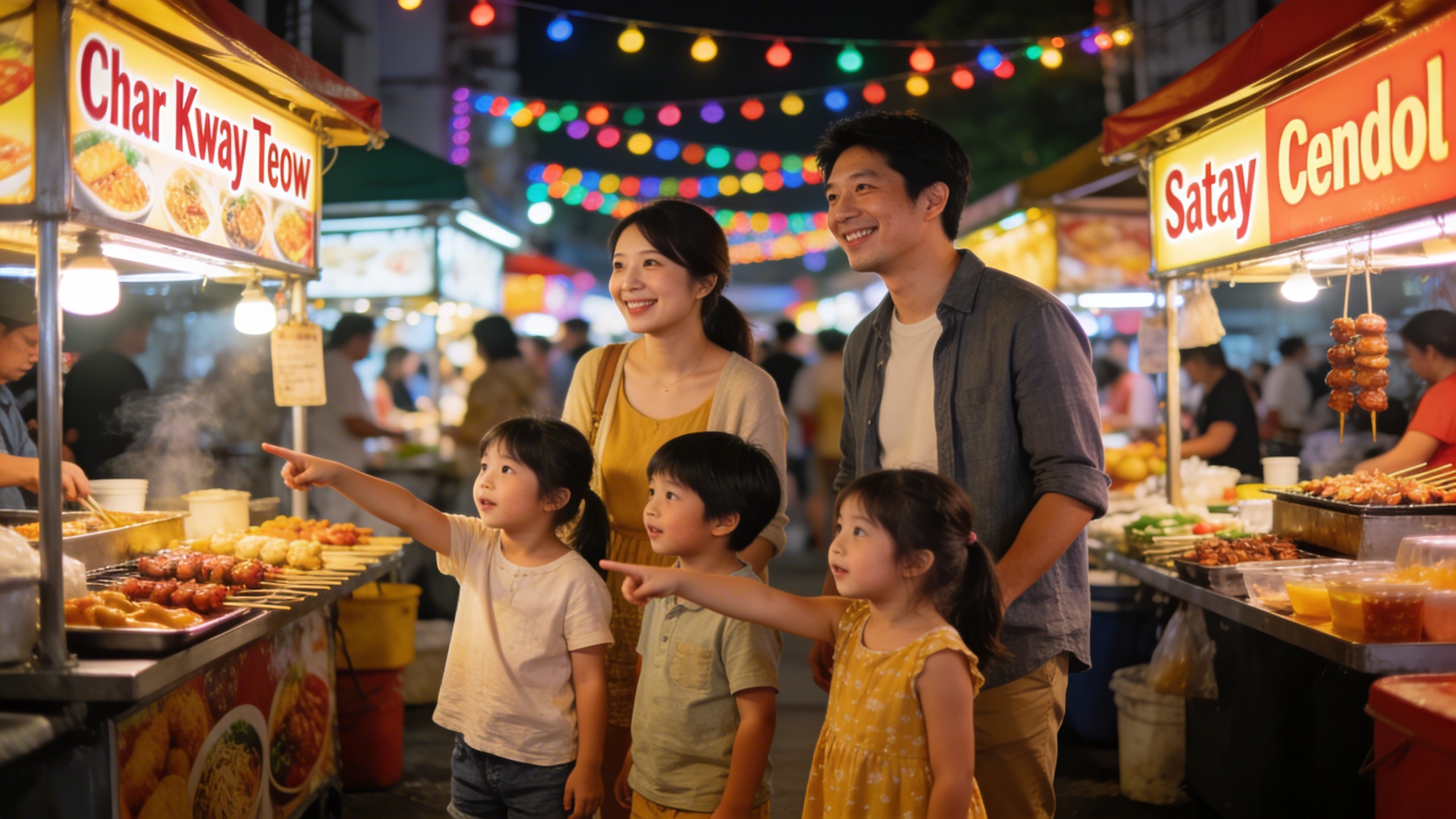
Hello. I'm Saori, a mother of three living in Penang, Malaysia. Recently, I saw news about Yuuki Maomi discussing Malaysian holidays. The phrase "a country full of holidays" was striking. Indeed, Malaysia has many holidays unique to its multi-ethnic society, and our family is blessed with opportunities to experience various cultures throughout the year. Today, I'd like to consider the unexpected benefits of education migration from this perspective of "holidays."
Holidays are the Perfect Opportunity for "Living International Education"
Malaysia's holiday calendar is a microcosm of its multicultural society. Islamic Hari Raya, Chinese Lunar New Year, Indian Deepavali, and Christian Christmas. In addition, there are various ethnic New Year celebrations and state-specific holidays. This is quite different from Japan, where "national holidays" are mostly uniform. This diversity is the best social studies material for children. At the international school attended by my eldest daughter Hikari (8) and eldest son Zen (6), there are special lessons on the cultural background of major holidays. However, I feel a great strength of life in Malaysia is the ability to complement school learning with real-world social experiences.
Our Family's "Holiday Utilization Strategy": Learning Through Mini-Trips
The "mini-trips" introduced by Yuuki-san are an important family time we also practice. Holidays that form long weekends are perfect for short nearby trips. For example, during Hari Raya (the Islamic festival marking the end of Ramadan). In KL (Kuala Lumpur), large open houses are held, where even strangers are welcomed with celebratory food. In Penang, mosque decorations are beautiful, and illuminations shine at night. The children ask, "Why does everyone eat a feast together?" They learn the answer not from a religious textbook, but from neighbors greeting them with smiles saying "Selamat Hari Raya!"
Lunar New Year (Chinese New Year) offers a different scene. Penang's George Town is filled with red lanterns, and lion dances parade through the streets. Walking with the children along Union Street and Lebuh Leith, we buy auspicious items and together mix and eat a raw fish salad called Yusheng (Lo Hei). It's said that the higher you toss it while shouting "Prosperous!", the better your luck, and we tried it amidst family laughter. This is not just event participation, but a valuable chance to touch upon Chinese business culture and customs for good fortune.
How You Spend Holidays Broadens Your Child's Worldview
These experiences add depth to learning at the international school. In Hikari's class, there are children from Malay, Chinese, Indian, and expatriate families like ours. After holidays, children naturally start conversations like, "At my house we did this," or "What did you do at your house?" This is the moment when classroom lessons about "understanding diversity" transform into living dialogue based on personal experience. I truly feel this fosters a much richer international sensibility than growing up in a homogeneous culture.
Holiday Experiences as "Educational Investment": Cost-Effectiveness
Let's consider this from our media's perspective of viewing education migration as an "investment." These experiences, of course, involve costs. Transportation, accommodation, and meal expenses for mini-trips. However, viewing this not as "consumption" but as "investment in human capital" changes how we measure value.
For example, visiting Little India in KL during Deepavali (Festival of Lights). At the latest exchange rate (as of April 6, 2026), 1 Malaysian Ringgit = 39.56 Japanese Yen. Even if a family of five eats, rents traditional clothing (saris) for photos, and experiences henna art, it often stays within a few tens of thousands of yen. What you gain for this cost is not just a tourist experience. It's a direct encounter with the colors of Indian culture, the philosophy of spices, and the spirituality of valuing family. This forms an unparalleled foundation of "cultural literacy" for future collaboration with people of Indian heritage in business or academic settings.
In our family, we position such experiences as "investment in non-cognitive skills." Curiosity, empathy, adaptability, intercultural communication skills. These skills cannot be measured by test scores but are essential qualities for thriving in a global society. Malaysia's diverse holidays and the good geographical and economic access to experience them dramatically increase the efficiency of this investment.
Three Concrete Steps to Turn Holidays into Learning
If you're living in Malaysia, you'll want to make meaningful use of the holidays. Here are three simple steps we practice.
Step 1: Share the Calendar as a "Learning Map"
At the start of the year, check Malaysia's holiday calendar as a family. Explain to the children in an age-appropriate way "whose celebration it is and what it's for." We tell Hikari and Zen, "Let's try experiencing our friends' culture on this day this year." Just marking the calendar builds the children's anticipation.
Step 2: Create Learning Time "Before and After" the Experience
It's a waste to just take them along. Do some simple preparation beforehand. For example, before Hari Raya, we research together the question, "Why don't they eat lunch for a month?" After the experience, we reflect: "What was similar to Japanese events? What was different?" In our family, "Today's Discovery" talk during dinner is a regular feature.
Step 3: Link it to School Learning
Help the children connect what they learned at school with their actual experience. For example, "You learned about Malaysia's three main ethnic groups at school this week, right? Let's go experience the culture of the [specific] people during the next long weekend." This helps knowledge take root as something personal.
The Essence of Education Migration Lies in "Designing the Environment"
I also saw news about an IB academy producing results for Japanese medical school entrance. This is a good example showing that an international curriculum is also applicable to Japanese higher education. However, the value of education migration cannot be measured by prestigious university admission results alone. Rather, it's about how many rich learning opportunities you can scatter throughout daily life. I believe the high degree of freedom in "designing that environment" is the greatest benefit.
Malaysia's environment "full of holidays" provides an excellent stage for families to learn about, experience, and discuss cultures. This is ideal soil for cultivating the "education beyond textbooks" and "practical sense" that affluent individuals and business owners seek for their children. Moreover, it's an environment where it's easier to create more temporal and financial leeway compared to Japan.
Of course, there's no need to actively participate in every holiday. Our family also has many relaxing holidays spent at home. What's important is being situated in a society where diverse cultures thrive and having the option to knock on that door when needed. Education migration might be less about choosing the "best school" for your child and more about the whole family choosing an "environment where they can continue learning."
Before the next long weekend arrives, please take a look at Malaysia's holiday calendar. It should be filled with countless learning opportunities that will shape your child's future.