Well-Being Life - Education Migration / Blog
The New Standard of IB: What a Preschool in Yoga, Tokyo Reveals
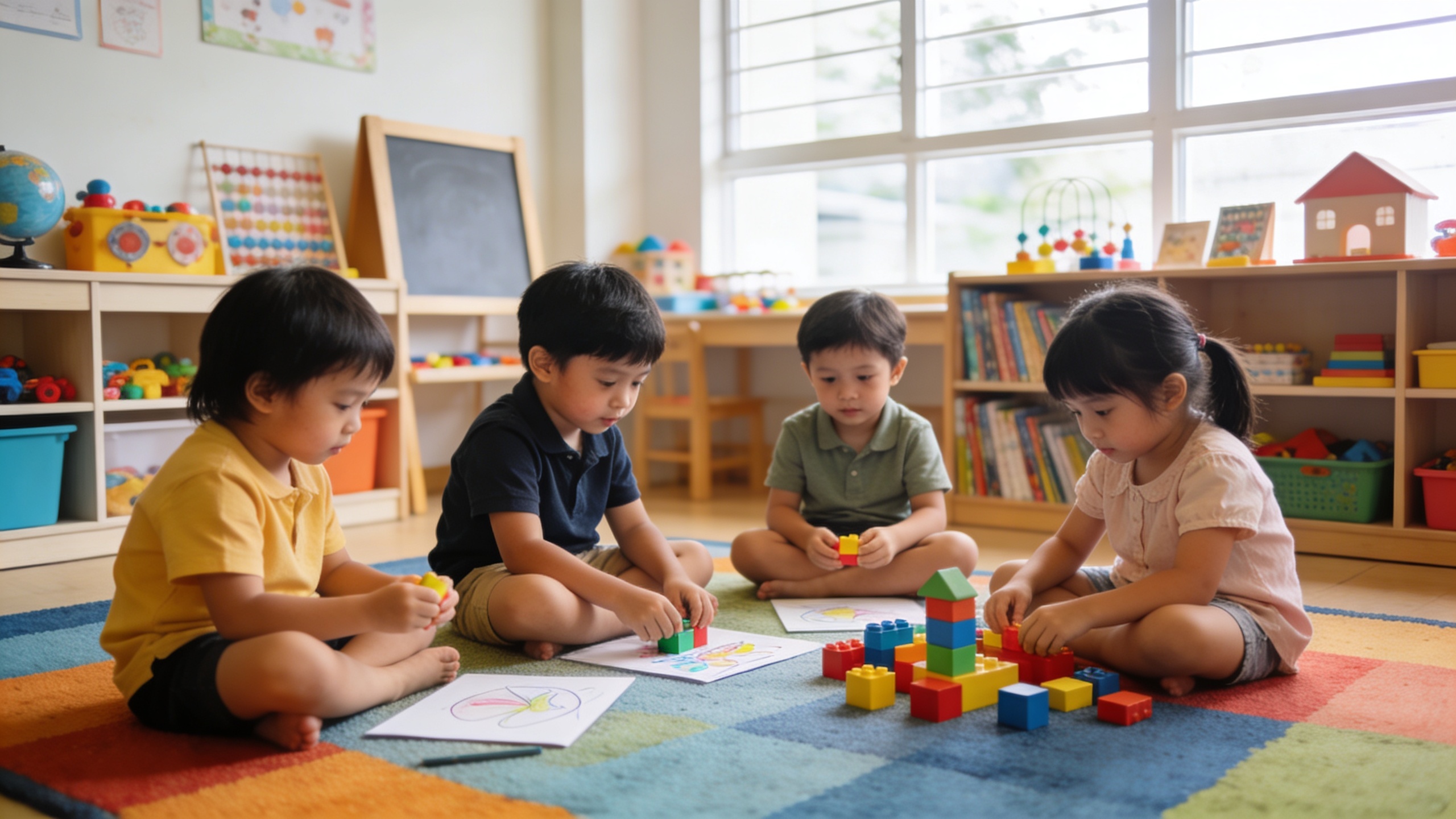
Why I Was Surprised by an IB-Accredited Preschool
Hello everyone, it's Saori. I'm raising three children in Penang, Malaysia, and sharing the realities of education migration.
The other day, this news caught my eye: "Aoba-Japan Bilingual Preschool Yoga Campus Earns IB Accreditation." A preschool—essentially kindergarten-level—had received International Baccalaureate (IB) accreditation.
Honestly, I was surprised at first. In my mind, IB was mainly about the Diploma Programme (DP) for high school students. But recently, the PYP (Primary Years Programme) for elementary school has also become more widespread. I never imagined IB would be introduced at the preschool level—it really shows how times are changing.
What IB Means in Early Childhood
The IB PYP is designed for children aged 3 to 12. So, in theory, children can start IB education from age 3. The Yoga preschool likely earned accreditation for this PYP.
My eldest daughter, Hikari, is now 7 and studying the PYP at an international school in Penang. At her school, each unit has an "inquiry theme," and the children research, think, and present their findings on their own. Recently, they worked together with classmates to build a model about the "water cycle."
Seeing Hikari explain, "Mom, do you know how rain falls?" with sparkling eyes, I truly feel the impact of the PYP. This inquiry-based learning might be something that becomes more natural the earlier you start.
Preschool in Japan vs. Malaysia: Key Differences
In Japan, the main focus of preschool is "teaching English." While more facilities are promoting bilingual education, many emphasize immersing children in English.
In contrast, the IB PYP focuses not on "what to learn" but on "how to learn." Instead of cramming knowledge, it cultivates curiosity and thinking skills. This difference is huge.
In Malaysia, it's not uncommon for international schools to introduce the PYP from preschool. In my son Zen's (age 5) class, they were exploring the theme "Our Community" by researching local shops and jobs. It's not just English education; it's an environment that fosters critical thinking.
The Cost Factor
Of course, the cost of Aoba-Japan's preschool is a concern. Given its location in Yoga, Tokyo, it's certainly not cheap. Let's compare it with international schools in Malaysia.
In Penang, the annual tuition for a preschool offering the PYP is roughly 500,000 to 1,000,000 yen (approx. $3,500 to $7,000 USD). In Japan, international preschools typically range from 1,000,000 to 2,000,000 yen (approx. $7,000 to $14,000 USD) per year, depending on the area.
At the latest exchange rate (as of May 15, 2026), 1 MYR = 40.15 yen. Education costs in Malaysia feel significantly more affordable compared to Japan.
The Benefits of Choosing IB from Early Childhood
Some might wonder, "IB for a 3-year-old?" I felt the same way at first. But after actually enrolling my children, I've seen clear benefits to starting the PYP early.
One is the naturalness of language acquisition. Placing a child in an English environment from age 3 allows them to absorb English just like Japanese. Hikari attended a Japanese kindergarten before coming to Malaysia, but now she thinks in English and can switch between Japanese and English when speaking.
Another benefit is that inquiry-based learning becomes second nature. The habit of asking "Why?" and "How?" is cultivated from a young age. This forms the foundation for the critical thinking skills required in the IB DP (high school program).
The Quality of Early Childhood Education in Malaysia
It's been three and a half years since we started living in Penang. I've learned a lot from the local preschool education. Teachers are skilled at drawing out a child's "I want to do this." I admire how they don't force-feed information but wait for the child to discover things on their own.
Recently, Zen's class had an activity themed around "plant growth." They watered the plants daily, kept observation journals, and shared any changes they noticed with the class. It wasn't just a science lesson; it was designed to nurture observation, expression, and cooperation all at once.
I'm convinced that having an environment where children can have these experiences from preschool is a huge asset for their future.
Changes in Japan and Expanding Options
Aoba-Japan's preschool earning IB accreditation is a significant shift in Japan's educational landscape. It's proof that alternatives to the traditional "exam prep" and "cramming" approaches are increasing, even domestically.
However, such preschools are still limited. The location in Yoga, Tokyo, means only families in that area can realistically access it. In contrast, Malaysia offers a wealth of options at a lower cost.
When considering education migration, many people think, "My child is too young for that." But in terms of building a foundation for language acquisition and thinking skills, early childhood might be the perfect time.
In Closing
IB accreditation for a preschool might seem like a distant concept. But it's part of the broader trend toward the "international standardization of education."
It's genuinely encouraging to see more options for receiving an international education while staying in Japan. At the same time, I hope you'll also keep in mind that Malaysia is a viable option.
The curiosity that Hikari and Zen developed in preschool continues to enrich our daily lives. "Why is the sky blue?" "Why do leaves fall?" The time we spend researching, thinking, and finding answers to these simple questions together—this, I feel, is the true essence of IB education.
If you're serious about your child's education, I encourage you to consider the options from early childhood with a broad perspective.