Well-Being Life - Education Migration / Blog
Setting Your "Exit Line" for Education Migration
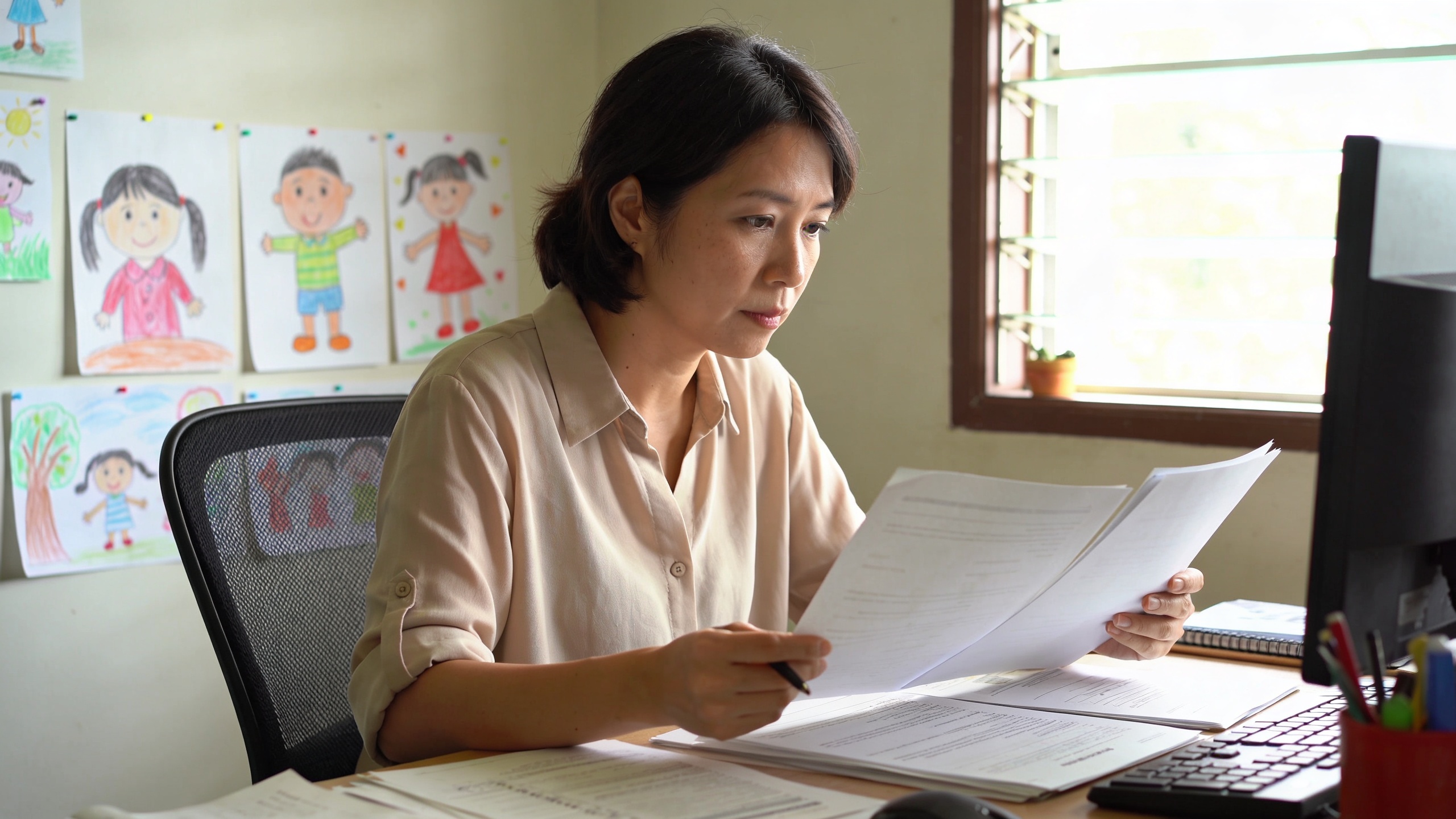
Have You Ever Thought About Pulling Out?
Hello, I'm Saori. It's been three and a half years since we moved to Penang, Malaysia.
Today, I want to dive a little deeper. The topic is: "How to decide on an exit line when considering education migration."
Most articles about migration focus on "how to succeed." But I believe every strategy needs an exit line.
Especially with education migration, your child's future is at stake. There are situations where "it'll work out somehow" just doesn't cut it.
Why You Need an Exit Line
When our family came to Penang, our eldest daughter Hikari was 5, and our eldest son Zen was 3. Now Hikari is 8, Zen is 6, and our youngest daughter Yukari is 1.5 years old and not yet in school.
We didn't move because we were dissatisfied with Japanese education. In fact, I still believe the Japanese education system is high quality.
However, from the perspective of "Japan's structural risks," we chose Malaysia to broaden our children's future options.
But whether this decision is right or not, we won't know until we try. That's exactly why it's crucial to set an exit line in advance.
Concrete Examples of Exit Lines
We have set three exit lines.
First is our "child's mental health." If our child doesn't want to go to school, has more night terrors, or eats less—if these signs persist for more than three months, we believe it's time to change the environment.
Second is "household financial sustainability." International school tuition in Malaysia ranges from approximately $5,000 to $10,000 USD per year. Add living expenses on top of that. With the current exchange rate (1 MYR = 40.21 JPY as of April 27, 2026), a weaker yen increases the burden in Japanese yen terms.
Third is "parents' careers." Both my husband and I run corporations in Malaysia. If our income becomes unstable, we plan to return to Japan or consider another country.
Pulling Out Is Not "Failure"
Many people think "pulling out = failure," but I don't see it that way.
In fact, the bigger risk is drifting along without an exit line, thinking "it'll work out." Children's growth doesn't wait. The golden age for language acquisition is said to be between ages 3 and 12.
Even if we do end up pulling out, the experience in Malaysia will surely be an asset for our children. English skills, multicultural understanding, and the sense of "having options"—these are things you can't get by staying in Japan.
Key Points for Setting an Exit Line
When setting our exit lines, we focused on "quantifiable criteria."
For example, instead of "if school doesn't fit, we pull out," we set a specific number: "if the child resists going to school more than twice a week for three consecutive months, we reassess."
On the financial side, we also set a benchmark: "if annual education costs plus living expenses exceed 1.5 times the cost of a comparable lifestyle in Japan, we reassess."
Think About Your Exit Strategy Before You Move
When considering education migration, many people focus on "how to go." But "how to return" is just as important.
Before we moved, we simulated what it would be like to return to Japan. Where would the children go to school? Where would we live? What about work?
Especially for the children's schooling, we gathered information in advance about international schools and private schools in Japan. So we wouldn't panic if we needed to pull out.
Share the Exit Decision with Your Spouse
It's important to share the exit line with your spouse.
In our household, we hold an "exit meeting" every six months. We check on the children's well-being, the household budget, and work progress.
When we confirm at these meetings that "we're still okay for now," it actually gives us peace of mind. Because we have an exit line, we can focus on our current life.
Education Migration Is Part of a "Family Strategy"
Education migration isn't just about your child's education. It needs to be considered as part of the entire family's strategy.
Overseas Chinese choose cities for education. Jewish people choose countries for education. Education is the very culture of a "family line."
We also see this migration as an "investment in the next generation." Whether we pull out or continue, having clear criteria for that decision, I believe, leads to the whole family's well-being.
In Closing
There is no "right answer" for education migration. We still don't know if our choice is the right one.
But by setting an exit line, we can move forward without being paralyzed by uncertainty.
If you're considering education migration, I encourage you to think about your exit line as well. In the end, it should lead to a better migration experience.