Relating to Maomi Yuuki: The Reality of 10 Months
Hello everyone, I’m Saori.
The other day, I read an article about talent Maomi Yuuki, who moved to Malaysia with her two daughters (a second-grader and a kindergartener) for education 10 months ago. Her husband remains in Japan—a “solo expatriation” arrangement.
Our family is similar; my husband frequently travels between Japan and Malaysia for work. We don’t live together full-time. That’s why this article resonated deeply with me.
Yuuki’s words, “Our family bond has grown stronger,” ring completely true for me as well.
The Solo Expatriation Option
When you hear “education migration,” you might imagine the whole family moving together. But in reality, busy entrepreneurs and office workers can’t always relocate their jobs immediately.
In Yuuki’s case, her husband stays in Japan and travels between Malaysia and Japan. Our situation is similar—my husband works as a management consultant, commuting between the two countries.
This “solo expatriation” has several advantages.
First, it allows you to change your child’s educational environment. For families uncomfortable with Japan’s cramming education and uniform system, international schools in Malaysia offer a great alternative.
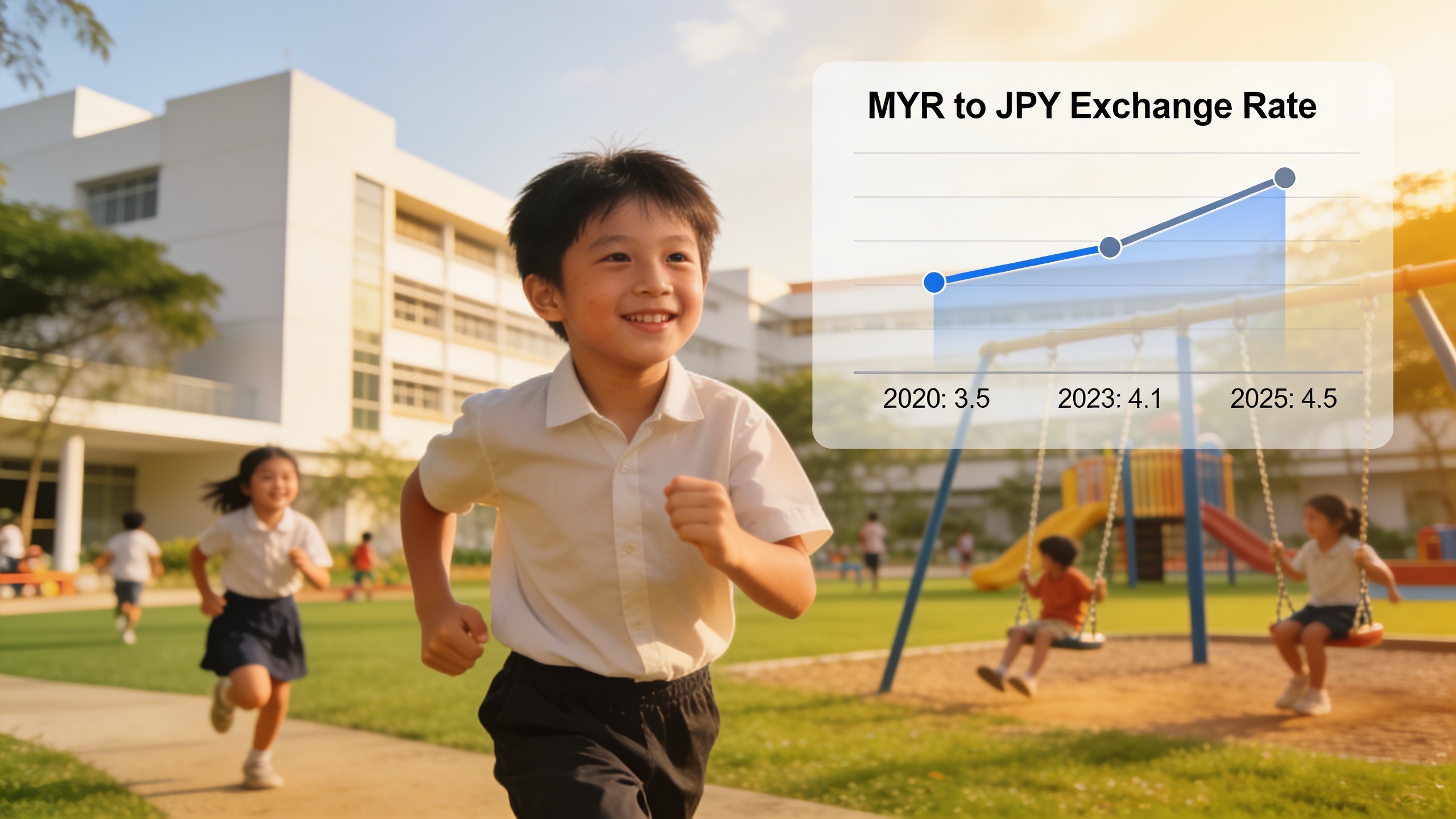
Second, it helps reduce living costs. Living expenses in Malaysia are said to be about half of Japan’s. At the latest exchange rate (1 MYR = 39.00 JPY as of June 21, 2026), rent and food are much cheaper than in Japanese cities, even with the weak yen.
Third, earning income in yen while spending in Malaysian ringgit creates a financial structure less affected by the yen’s depreciation—a major strength.
Parenting Gets Harder, But…
Of course, the burden of solo parenting increases. Yuuki admitted, “I was anxious at first.” I also have to handle everything myself when my husband is away.
School drop-offs and pickups for Hikari (born 2018, attending international school) and Zen (born 2020, attending international school), arranging extracurriculars, homework support, and caring for Yukari (born August 2024, 1.5 years old, not yet in school). Doing it all alone is honestly tough.
But the key difference from Japan’s solo parenting is the environment. In Malaysia, there are many Japanese mothers in the same solo expatriation situation. Having a community to help each other in times of need is reassuring.
Yuuki also said, “Making mom friends has been a great support.” I’ve been helped countless times by friends I’ve met in Penang.
The Benefits for Children
The biggest advantage of solo expatriation is for the children.
Since Hikari started international school, her English has improved dramatically. She could only speak simple words at first, but now she laughs with friends in English. Zen is also absorbing English, not wanting to be left behind.
Freed from the pressure of “having to be the same as everyone else” that she felt in Japanese schools, she’s able to develop her individuality freely.
And watching their father travel between Japan and Malaysia, they seem to naturally learn that “even if we’re not together, our bond remains unbroken.”
Yuuki’s statement that “our family bond has grown stronger” is exactly right. Because of the time apart, the quality of time spent together increases.
3 Tips for Successful Solo Expatriation
Based on my own experience, here are the keys to making this arrangement work.
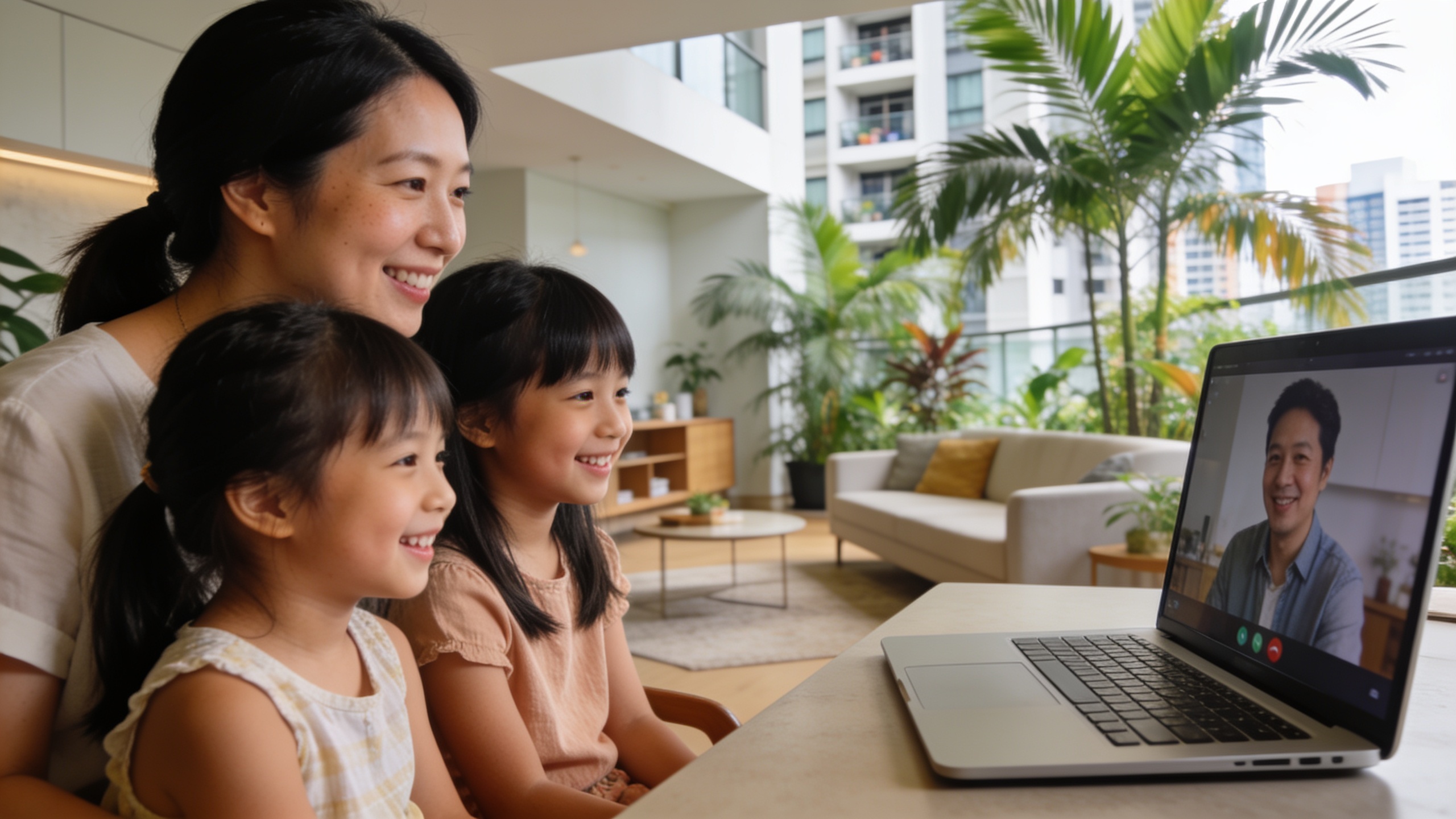
First, establish a system for regular communication. In our family, we have a video call at the same time every evening. The time when the kids talk about what happened at school is my husband’s greatest joy.
Second, maintain bases in both Japan and Malaysia. If your husband stays in Japan like Yuuki’s, make it easy to visit home. Malaysia is a 6-7 hour flight from Japan, making weekend visits possible.
Third, actively participate in the local community. Connecting with mothers in similar situations allows for information exchange and reduces the risk of feeling lonely.
Education Migration Is About Choosing Your Family’s Shape
Some may have a negative image of “solo expatriation.” But education migration is about choosing how your family wants to live.
Breaking free from Japanese norms and finding a family style that works for you—I believe this is the first step in raising children who can thrive in a global society.
Maomi Yuuki’s choice, I think, gives courage to many families. If you’re considering education migration, please keep “solo expatriation” as an option.
Our family will continue with this arrangement, watching our children grow.
Comments