Hello everyone, I’m Saori.
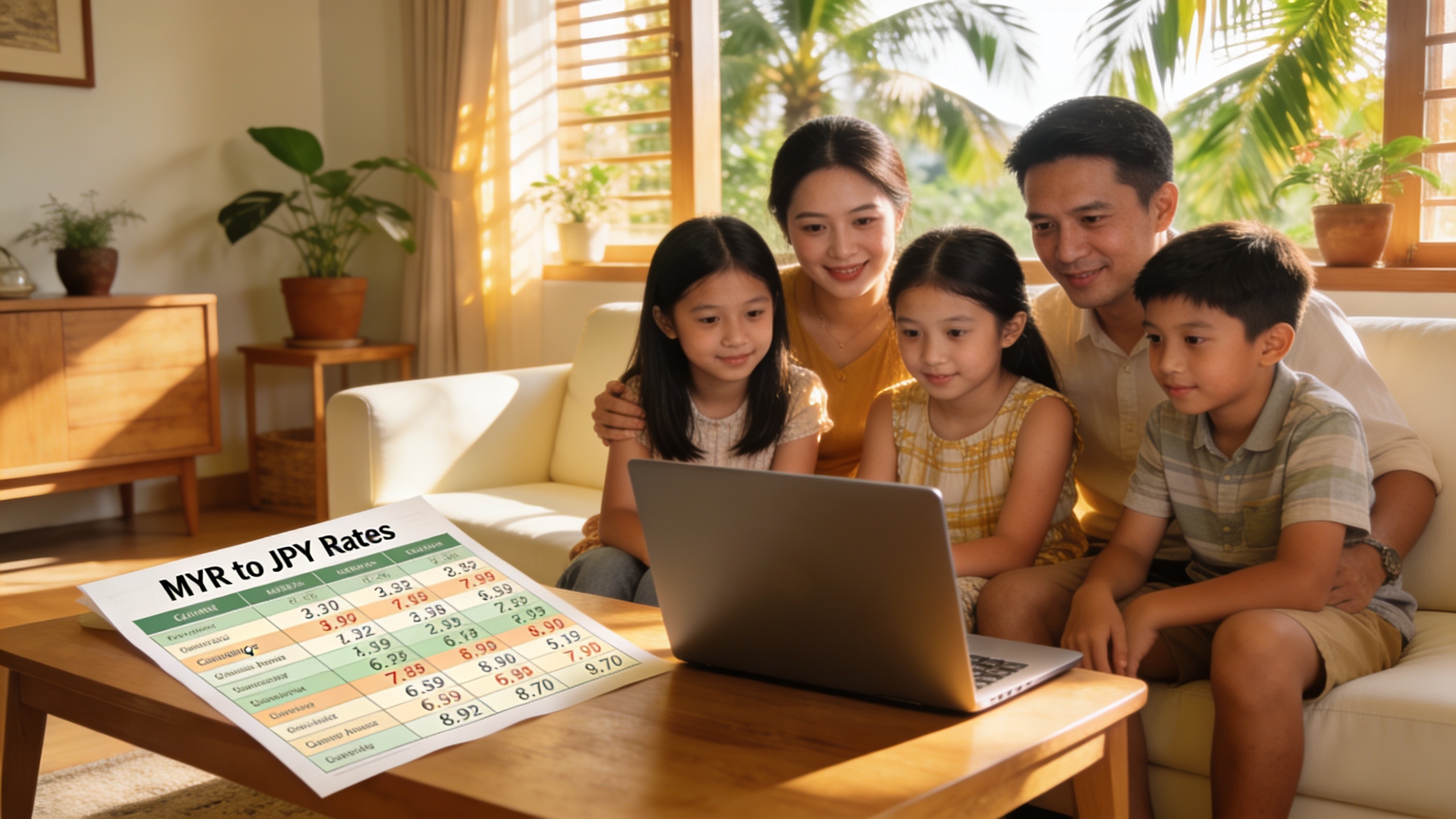
The yen has been weakening rapidly lately. As of June 4, 2026, 1 Malaysian ringgit equals 40.31 yen. Compared to when I moved to Malaysia three and a half years ago, the yen’s purchasing power has definitely dropped.
“Isn’t an education move too risky at a time like this?” Some of you might think that. But I see it differently. I believe the weak yen is actually a chance to seriously reconsider the quality and cost-effectiveness of education investments.
The Real Impact of the Yen’s Decline on Education Costs
Annual tuition at international schools in Malaysia varies by school, but generally ranges from 50,000 to 120,000 ringgit. At 1 MYR = 40.31 JPY, that’s about 2 million to 4.8 million yen (approximately $14,000 to $34,000 USD).
In Japan, international school tuition typically ranges from 2 million to 3.5 million yen annually. At first glance, these figures seem similar, but in Malaysia, living costs are often two-thirds to half of what they are in Japan, on top of the tuition.
In our case, with Hikari and Zen both attending school, our total expenses—including tuition and living costs—are about 70% of what we spent in Japan. Even accounting for the weak yen, I feel we’re getting the same quality of education at a more reasonable price.
Three Perspectives to Turn Currency Risk into an Advantage
Some might worry, “If the yen keeps weakening, isn’t moving now more expensive?” But from a long-term perspective, I believe now is actually a great opportunity.
Malaysia’s Growth Offsets the Risk
Malaysia’s GDP growth rate is 4-6%, far exceeding Japan’s 0-1%. This means that if you can earn income locally, you can offset the impact of currency fluctuations.
In fact, our family runs a business in Malaysia and generates income in ringgit. This strategy minimizes the damage from the yen’s decline.
Compare by “Quality per Unit Cost”
If you’re paying the same tuition, I feel Malaysian international schools offer a higher “quality per unit cost” than Japanese ones.
For example, IB schools like Uplands and ISKL have many native English-speaking teachers, small class sizes with individual attention, and a wide range of extracurricular activities. Hikari is into swimming, and Zen is passionate about soccer.
In Japan, even with the same tuition, it’s hard to find such an environment. I’ve come to realize that instead of simply comparing costs based on the exchange rate, we should look at the return on investment.
Our Family’s Cost Optimization Strategies
That said, an education move does require a significant investment. That’s why it’s essential to cut waste and manage finances wisely.
Start with Penang for Housing
International schools in KL tend to have higher tuition and rent. In contrast, Penang offers the same quality of life at 70-80% of KL’s cost.
Our family started in Penang, and we’re taking a phased approach: we check our children’s adjustment and school quality before considering the next step. This strategy reduces both risk and cost compared to aiming for KL or Singapore from the start.
Use Local Resources for Extracurriculars
There’s no need to spend tens of thousands of yen per month on extracurriculars like in Japan. In Malaysia, local sports clubs and community centers offer high-quality programs at very low prices.
The soccer club Zen attends costs about 100 ringgit (around 4,000 yen, or $28 USD) per month. In Japan, similar activities would cost over 10,000 yen. These small savings add up and make a big difference in annual education expenses.
An Education Move is Not “Escape” but an “Offensive” Investment
It’s a waste to think, “I can’t move now because of the weak yen.” Considering Japan’s structural risks—long-term stagnation, declining birthrate, and the “Galapagosization” of education—delaying investment in your child’s future is a much bigger risk.
When I first decided to move, I was full of anxiety, wondering, “Is this really okay?” But after actually living here, I’ve seen my children adapt surprisingly quickly, and their English skills are growing rapidly.
Yukari is only 1.5 years old and not yet in school, but by the time she enters elementary school, the environment will be even better. I’ve come to realize that an education move should be viewed as a family-wide strategy.
Of course, I also keep an exit strategy in mind. If a school doesn’t fit, we have the option to move to another school or country. The key to smart education investment in this era of a weak yen is to stay flexible, not aim for perfection.
Today, Hikari and Zen came home from school, their eyes sparkling as they told me, “I learned this today!” Every time I see that, I’m convinced we made the right choice.
There’s no “right answer” for an education move. But with information and determination, you can minimize risks and provide your child with the best possible environment. I encourage you to take that first step.

Comments