Well-Being Life - Education Migration / Blog
Tokyo's Public Commercial High School Adopts IB: A Major Turning Point for Public Education
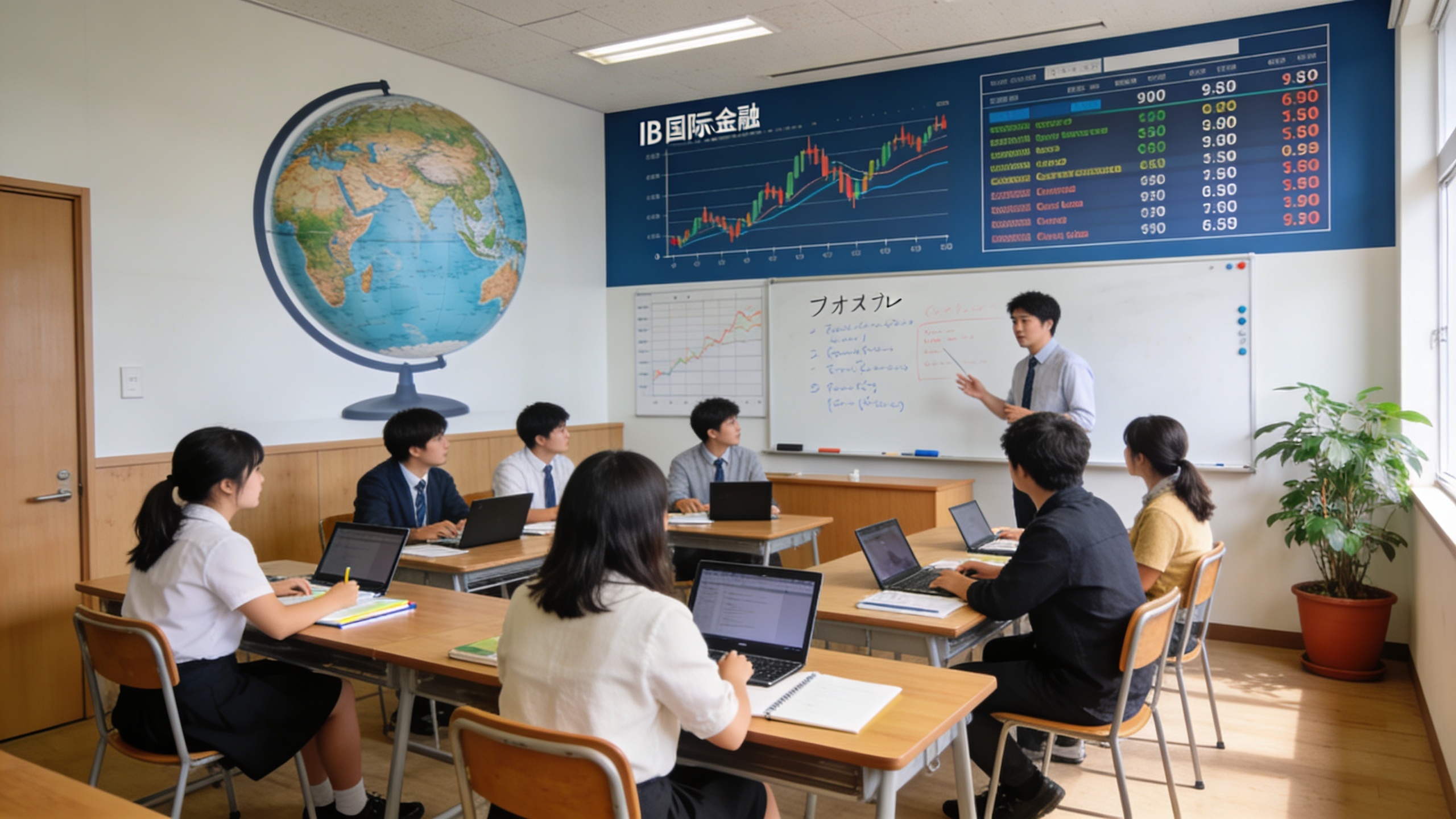
Tokyo's Public Commercial High School Merges IB with International Finance, Creating a New General Course
Recently, a piece of news caught my eye: Tokyo's First Commercial High School is being restructured into a general course that combines international finance with the International Baccalaureate (IB).
When you think of a "commercial high school," you might picture a focus on bookkeeping and business practices. But now, they're integrating IB and international finance. This feels like a major turning point for public education.
According to an article in the education press, the Tokyo Metropolitan Board of Education made this decision to cultivate talent that can thrive in a global society. Offering financial literacy and international learning simultaneously—this truly captures the needs of our times.
Our International School Life and the Reality of IB
In our family, our eldest daughter Hikari (age 7) and eldest son Zen (age 5) attend an international school in Penang. The school uses the IB (PYP) curriculum, where daily learning revolves around "inquiry."
The other day, Hikari asked me, "How does money move around the world?" It turns out her class had a unit on "the cycle of resources." She's only seven, but I can already see her developing the ability to think about things from a global perspective.
IB isn't about rote memorization; it's a curriculum that fosters critical thinking and curiosity. The idea of a public commercial high school combining IB with finance feels like a genuine effort to provide "living, breathing education."
What the Adoption of IB in Public Schools Signals
In reality, the introduction of IB in Tokyo's public high schools has been gradually expanding over the past few years. Schools like Tokyo Metropolitan Kokusai High School and Hakuo High School are already IB-certified or candidate schools. What's new about the restructuring of First Commercial High School is the addition of "finance" as a specialized focus.
The growing number of public schools in Japan where you can study IB is a change we, as a family considering education migration, can't ignore. The era of "you can only study IB overseas" may be coming to an end.
However, IB isn't just about the curriculum itself; it also demands high-quality teachers and strong school management. As a former elementary school teacher and now a parent observing daily learning at an international school, I know that implementing IB "in name only" would halve its effectiveness.
It will be interesting to see how much preparation time Tokyo's First Commercial High School takes and what kind of teaching staff they assemble before starting. I'll be keeping an eye on their progress.
The Importance of Both Financial Literacy and a Global Mindset
One of the reasons our family moved to Malaysia for education was the desire to naturally instill "financial literacy" in our children. Malaysia is a multi-ethnic nation, and it's common for Chinese and Indian families to talk about money from a young age.
In fact, I've heard that some of Hikari's classmates are already investing their allowance in mutual funds. At seven years old! That might be unthinkable in Japan, but here it's perfectly normal.
The decision by Tokyo's First Commercial High School to put "international finance" front and center is likely a recognition of this global trend. Combining IB's inquiry-based learning with financial education would allow students to deeply understand "the relationship between money and society" from a young age.
According to the latest exchange rates, 1 MYR = 40.24 JPY (as of June 3, 2026). With the yen weakening, the cost of studying abroad is rising, but that makes the value of "what you learn" even more important.
Insights for Families Considering Education Migration
This news offers several insights for those of us considering education migration.
First, the fact that "options are expanding in Japan too." If more public schools offer IB, some families may not need to go abroad at all.
Second, the combination of "specialization x international perspective" will be key to future education. Just knowing English isn't enough. We're in an era where both knowledge in a specific field—like finance, technology, or medicine—and the ability to think globally are essential.
Our family plans to continue living in Penang for now, but I want to keep a close watch on educational trends in Japan. After all, there's always a chance our children might choose to study in Japan in the future.
Summary
The restructuring of Tokyo's First Commercial High School is a sign that Japan's public education system is beginning to change significantly. A curriculum combining IB and international finance is a truly cutting-edge endeavor.
When considering education migration, knowing "what's happening in Japan right now" can help you make more informed decisions. Overseas isn't always the right answer, and Japan is offering more excellent options. It's important to have a perspective that takes both into account.
The inquiry-based learning and financial literacy our children are gaining at their international school through the IB program overlap significantly with the direction Tokyo's First Commercial High School is aiming for. This news felt particularly interesting and relevant to us.