- Educational Migration Success Hinges on Managing Housing Issues
- Global Norms Are the Opposite of Japan’s
- Why a Leak Becomes a Major Incident
- The Risks of Condominiums Over 10 Years Old
- Three Major Causes of Conflict with Landlords
- The Ideal Landlord Profile
- Practical Criteria for Choosing a Trouble-Free Home
- Reliable First Steps When Trouble Strikes
- When Paying for Repairs Yourself is the Smart Choice
- Housing Issues Are Something to Be Managed
Educational Migration Success Hinges on Managing Housing Issues
For affluent families undertaking education migration, the real drain isn’t language barriers or paperwork. It’s the unexpected housing troubles and conflicts with landlords. This isn’t just bad luck; it’s a “foreseeable risk” stemming from fundamental differences in design philosophy. Let’s explore the core issues and how to manage them effectively.
Global Norms Are the Opposite of Japan’s
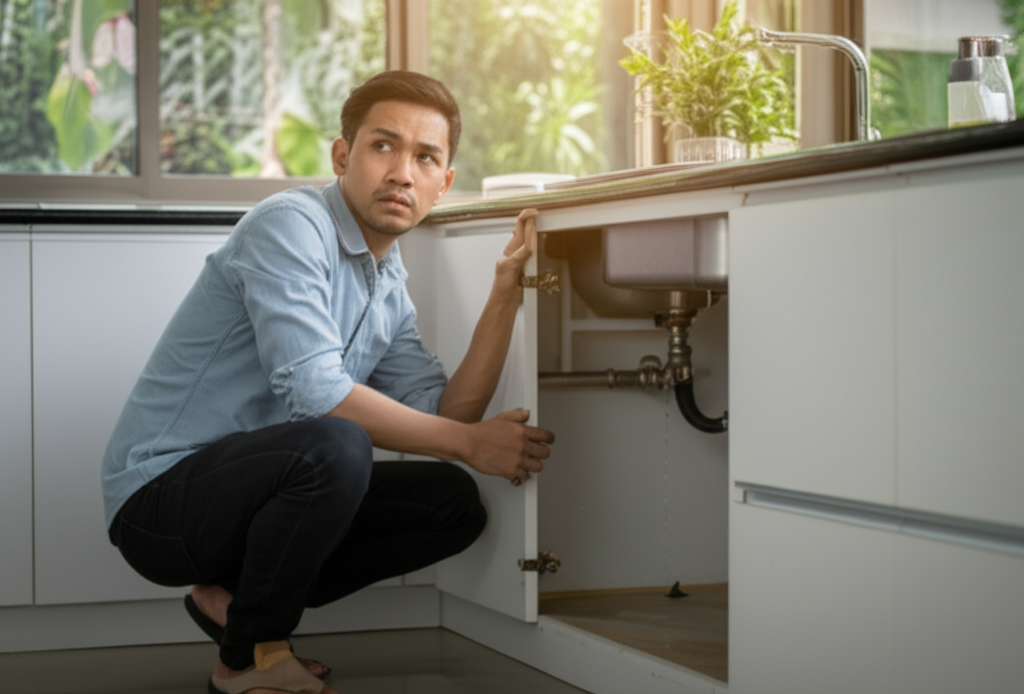
Japanese housing is designed with regular inspections and repairs in mind. Access panels for plumbing are standard. However, this is a unique design philosophy globally. In many countries, pipes are completely embedded within walls and floors. Consequently, repairs often require breaking concrete. A water leak isn’t a simple fix; it becomes a minor construction project.
Why a Leak Becomes a Major Incident
A leak that might be fixed with a washer replacement in half a day in Japan becomes a completely different situation overseas. Identifying the cause can take days, and the repair work involving breaking walls can stretch for weeks. Landlords often balk at the high cost, leading to a tendency for temporary fixes or delays. This is the breeding ground for serious conflict with tenants.
The Risks of Condominiums Over 10 Years Old
In countries like Malaysia, plumbing issues surge in buildings over a decade old. Typical problems include ceiling stains, leaks from upstairs units, and clogged drains. The causes are material aging and insufficient maintenance. This phenomenon isn’t limited to Southeast Asia; it’s seen in Europe and the Middle East too. Few countries have plumbing as stable as Japan’s.
Three Major Causes of Conflict with Landlords
First, repairs are “expensive and invasive.” Landlords often view wall-breaking work as diminishing their property’s value. Second, differing assumptions in the contract. Rules for repair responsibilities are frequently unclear, leading to blame-shifting. Third, landlords are not in the “service industry.” Most are investors who prioritize cost minimization above all.
The Ideal Landlord Profile
Based on experience, landlords from Western backgrounds tend to handle issues more smoothly. They consider stable plumbing a given and are more inclined to opt for fundamental repairs. Properties originally built for the owner’s own residence also tend to be of higher quality. There’s often a shared understanding that repairs maintain asset value. Choosing a property is essentially about choosing the landlord.
Practical Criteria for Choosing a Trouble-Free Home
Your top priority should be the building’s age. Aim for properties under 5 years old, or at most under 10. Properties managed by a professional management company are also a safer bet. If possible, check the repair history for plumbing issues. Furthermore, consider if the landlord was a former resident or has lived in a developed country—these are important factors.
Reliable First Steps When Trouble Strikes
First, secure evidence. Take photos and videos, noting the date and time. Next, communicate the facts concisely. Clearly state the damage and the risks of leaving it unaddressed. Always involve an intermediary. Communicate through the management company or your agent; avoid direct confrontation with the landlord.
When Paying for Repairs Yourself is the Smart Choice
During an education migration, it’s often wise to pay for minor repairs out of pocket. The value of maintaining your child’s stable routine and preventing parental mental exhaustion far outweighs the minor financial loss. The disruption from housing troubles damages the educational environment more than you might think. Sometimes, you need to calculate cost-effectiveness from a managerial perspective.
Housing Issues Are Something to Be Managed
When moving abroad, expecting Japanese-level plumbing reliability is unrealistic. The key isn’t to “avoid” trouble but to “manage” it. Operate on the premise that repairs will be major and landlords will be cautious. With this mindset, problems won’t become fatal. When choosing a home for education migration, prioritize “whether the structure allows for manageable repairs when things break” over looks or price. This is the best strategy to safeguard your family’s peace of mind and your child’s educational environment.

Comments