How the Yen’s Decline Has Changed the Way We View Education Costs
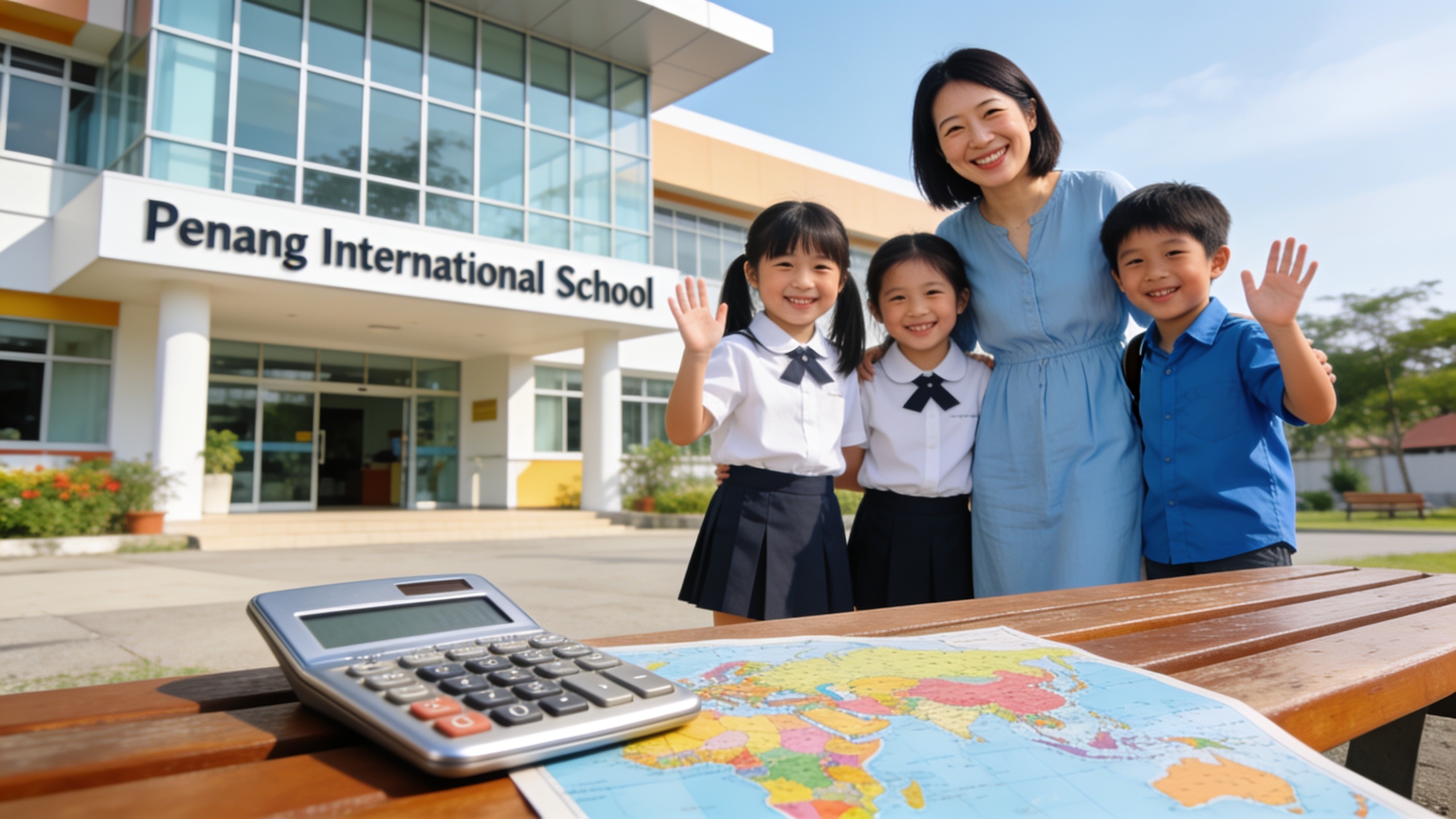
Hello, I’m Saori. It’s been three and a half years since we moved to Penang, Malaysia. My eldest daughter Hikari (8) and eldest son Zen (6) attend a local international school, while my youngest daughter Yukari (1.5) enjoys a relaxed life at home.
Lately, I’ve been getting a lot of questions from business owners considering an education migration, such as, “With the yen weakening so much, isn’t overseas schooling too expensive now?” I completely understand the concern—when the exchange rate exceeds 160 yen to the dollar and 39 yen to the Malaysian ringgit (as of June 20, 2026), a simple cost comparison can feel unsettling.
But hold on a moment. To measure the “true cost” of education, looking only at exchange rates means missing something important. Today, I’d like to share the right way to compare education costs in this yen-weakening era, drawing from our family’s real-life experience.
Tokyo vs. Penang: Differences That Tuition Alone Can’t Capture
Let’s start with a straightforward tuition comparison. In Tokyo, annual tuition at an international school for elementary students typically ranges from 2.5 million to 3.5 million yen. Meanwhile, at Uplands, one of Penang’s top schools, annual tuition is roughly 80,000 to 100,000 ringgit. At the latest exchange rate (1 MYR = 39.14 JPY), that’s about 3.13 million to 3.91 million yen.
“Wait, that’s almost the same!” you might think. And you’re right. With the yen so weak, converting to yen shows that tuition in Tokyo and Penang is nearly identical. But here’s where the real story begins.
The Staggering Difference in Living Costs
In our case, living expenses in Penang are about half of what they were in Tokyo. Rent for a 3-bedroom condo with a pool is around 3,000 ringgit per month (about $2,500 USD). A comparable property in Tokyo would easily cost $2,000 USD or more.
Food costs are also significantly lower—local fruits and vegetables are much cheaper. A weekend hotel buffet for our family of four costs around $10 per person. With a strong dining-out culture, we’ve also cut down on home cooking.
Healthcare costs are nothing to sneeze at either. A visit to a private hospital clinic costs about 50 ringgit (around $11 USD). Many doctors are ethnic Chinese with experience studying abroad in the West, and even without Japanese language skills, the Chinese characters in medical records offer a reassuring sense of familiarity.
Cost-Effectiveness Through the Lens of Educational “Content”
This is the key point I want business owners considering education migration to understand.
The Cost of Acquiring English Proficiency
In Tokyo, sending a child to English conversation classes or an international school can cost 30,000 to 50,000 yen per month for twice-weekly lessons, or 100,000 to 150,000 yen per month for preschool. Even then, it’s said to take 5 to 10 years to reach conversational fluency.
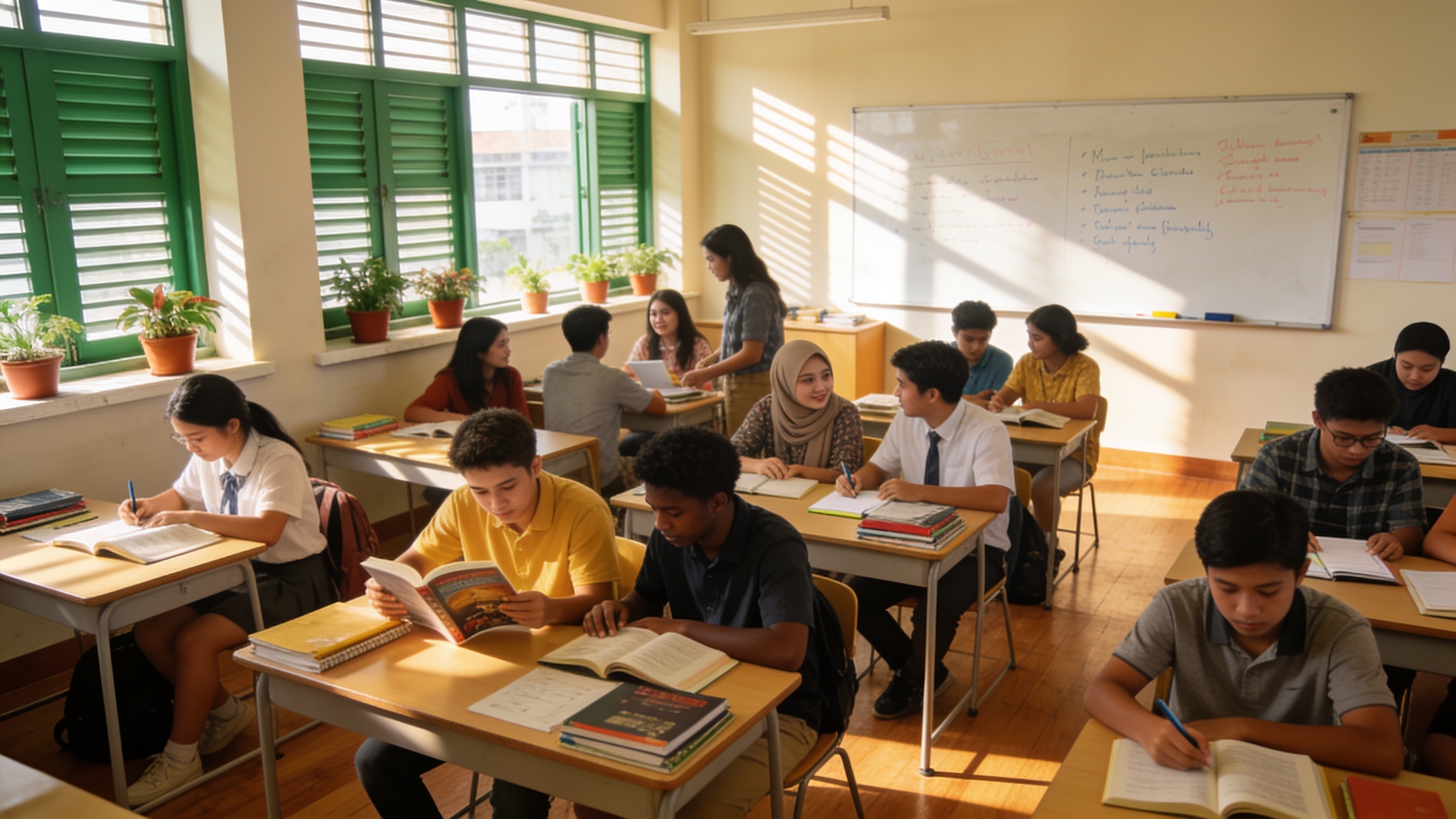
In contrast, Hikari and Zen, attending international school in Penang, experience English in every aspect of school life—not just in class, but also chatting with friends during breaks. Within a year of moving, both had acquired near-native pronunciation and natural phrasing.
Multicultural Adaptability as an Asset
Hikari’s classmates include Malay, Chinese, Indian, Korean, and Japanese children. She’s naturally learning how to navigate friendships across three cultures. This is a “living textbook” for future success in global business.
How to Properly Understand Exchange Rate Risk
“But what if the yen weakens even further?” That’s a valid concern. However, what we need to consider here is the risk of thinking entirely in yen.
Education Migration as a Diversified Investment
As business owners know, concentrating assets in a single currency is risky. Education migration is also an investment that transforms your child’s future from “yen-denominated assets” into “global human capital.”
In our family, we manage part of our living expenses in Malaysia in ringgit. Since tuition is also paid locally, the direct impact of yen fluctuations is limited to the moment we transfer money from Japan. If we can generate income locally, we can diversify the risk even further.
Long-Term ROI
If you view education costs as an “investment” rather than “consumption,” you should evaluate them based on ROI (return on investment). According to our calculations, the total cost of education in Penang (tuition plus the difference in living expenses) is more than 30% cheaper than receiving the same level of education in Tokyo. Moreover, the value of the English proficiency and multicultural adaptability gained can be expected to yield returns many times over when converted into lifetime earnings.
The Reality of Choosing Penang
Finally, let me share the real picture of life in Penang. It’s true that not everything is perfect. It can’t match Japan’s convenience (the abundance of convenience stores and the precision of delivery services). There are also differences in food preferences.
However, the environment where children can grow freely, a school life where English is naturally acquired, and above all, the ability to enjoy the choice of “investing in education” as a family lifestyle—this, I believe, is the greatest value of education migration.
The yen’s decline is certainly a blow, but from a different perspective, we’re also in an era where “receiving an education overseas is more rational than staying in Japan.” Why not think about education costs not in terms of “how much it costs,” but “what you gain”?
Our Yukari will soon turn two. In a few years, she’ll start her international school journey too. Watching how my three children will shape their futures is my greatest joy right now.
Comments