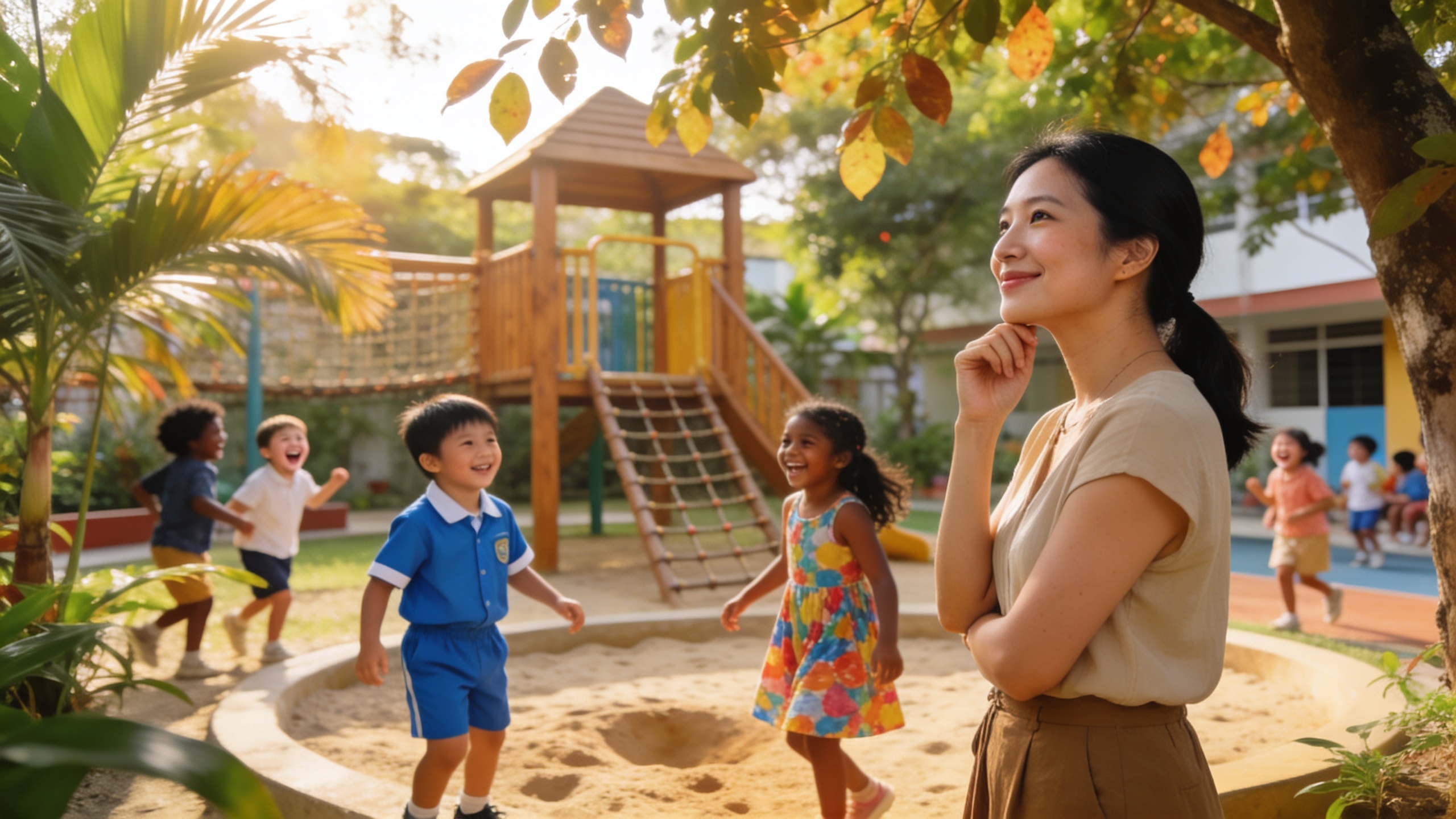
Hello, I’m Saori, navigating the challenges of raising three children in Penang, Malaysia. Recently, an intriguing news article caught my eye. It was framed around the concept of a “country where school refusal rarely becomes severe.” That phrase struck me. I felt it encapsulated what many families considering education migration are subconsciously seeking. It’s not merely about “making a child go to school,” but rather the very social system that prevents a child from “losing their place to belong.”
The Different Weight of the Term “School Refusal”
The news analyzed the characteristics of countries where school refusal is “less likely to become severe.” In Japan, school refusal is often perceived as a “problem” of the individual or the family. However, in societies where diverse educational options are commonplace, a single school or environment not being a good fit isn’t such a special occurrence. Having options means the risk of a child being “completely rejected” can be dispersed.
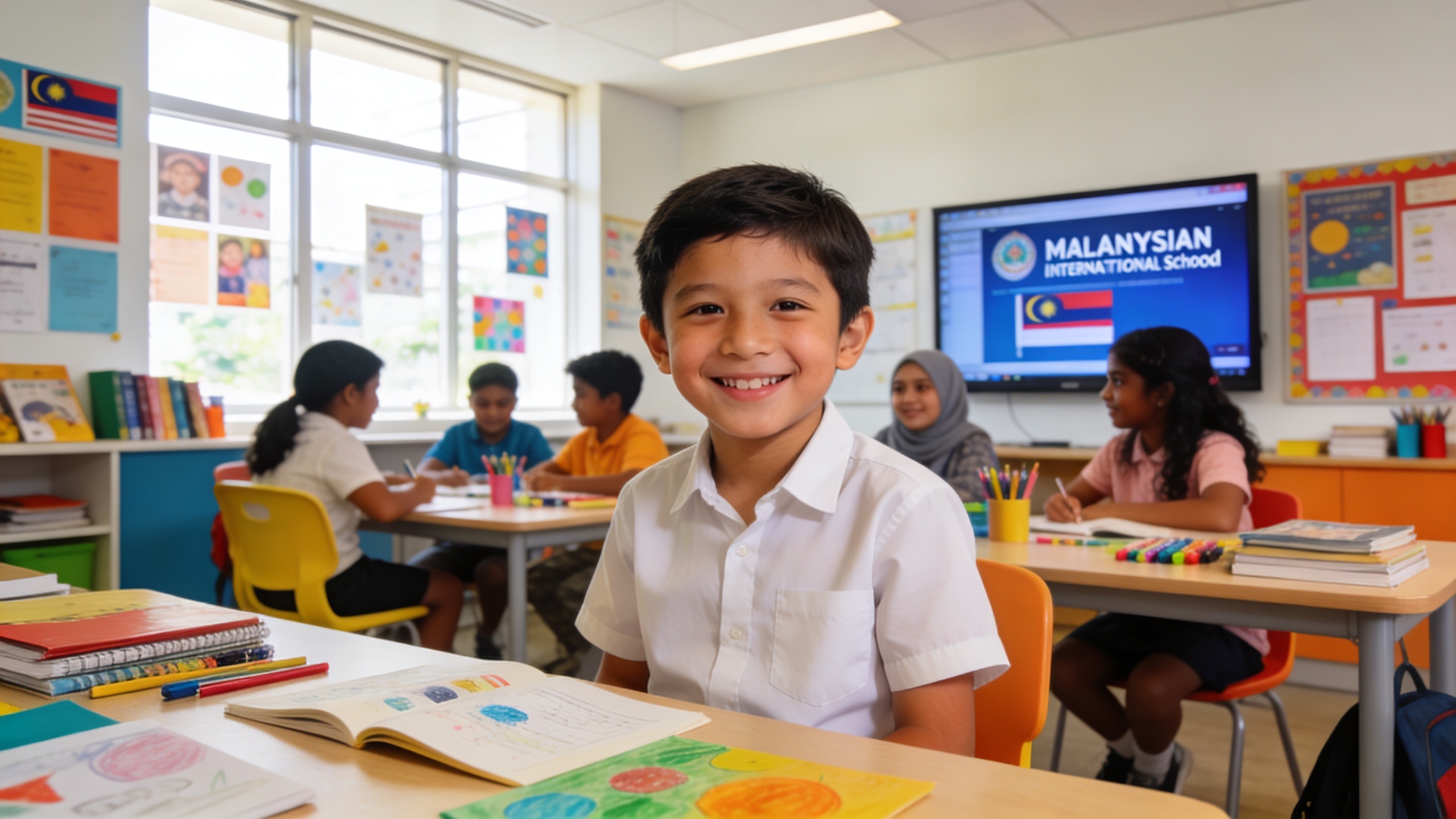
The backgrounds of my eldest daughter Hikari’s classmates at her international school are incredibly diverse. One day, I learned that one of her friends had attended a different international school until the previous semester. When I asked why, the answer was a very natural, “Because we moved due to my mom’s job.” Changing schools itself doesn’t become a label for the child. Isn’t it precisely this “environment where choice and movement are part of everyday life” that liberates children from the pressure of betting everything on one place?
The Safety Net of “Diversity” Inherent in Malaysia
Malaysia is a multi-ethnic nation. Malay, Chinese, and Indian communities coexist, each with their own cultures, languages, and educational perspectives. This societal diversity is directly linked to a diversity of educational choices. Local public schools, private schools affiliated with various ethnic groups, and numerous international schools coexist.
Even here in Penang, just looking at international schools, the curricula are wide-ranging: British, American, Canadian, Australian, and International Baccalaureate (IB), among others. The recent news about “Global Leap International School being authorized as an IB PYP candidate school” is another example of this expanding choice. In this environment, the very notion that “this school is everything” struggles to take hold. If my child were to feel a significant misfit with their current environment, it wouldn’t be seen as “the end of the world,” but rather as a “signal to look for the next option.”
This is fundamentally the same thinking that affluent individuals and business owners constantly apply in their own ventures: “risk diversification” and “portfolio building.” It is perhaps because they instinctively sense the risk of concentrating their most important asset—their child’s education—in one country, one system, one school, that the option of education migration emerges.
The Paradigm Shift in “Assessment” Shown by the International Baccalaureate
Another piece of news, “What has the International Baccalaureate changed?” is also suggestive. What IB emphasizes is not rote memorization of knowledge, but inquiry skills and critical thinking. As seen in the example of Shikaoi Town in Hokkaido, this changes the very nature of assessment. In a world where uniform test scores are not the sole benchmark, how a child’s “strengths” and “weaknesses” are perceived is completely different.
My eldest son Zen shows a strong interest in numbers and shapes. On the other hand, he is still a bit hesitant to speak his mind in front of a large group. Measured against Japan’s uniform assessment axis, the latter might be seen as a “point for improvement.” However, at his school with an IB framework, while his logical thinking is valued, opportunities are provided to gradually develop his communication skills in various forms (small group presentations, project work, portfolios). Not measuring all abilities with the same ruler at the same time. This “diversity of assessment” becomes a powerful buffer protecting children from the label of “falling behind.”
Education Migration as Insurance Against “Losing One’s Place”
So, how exactly does education migration to Malaysia function as “insurance”? Let’s consider it from our family’s actual experience.
Financial Cost: Calculating Including Withdrawal
First, let’s look at the sobering numbers. Tuition fees for international schools in Penang, depending on the grade level, typically range from about 30,000 to 60,000 Malaysian Ringgit per year.
According to the latest exchange rate information (as of April 23, 2026), 1 Malaysian Ringgit = 40.23 Japanese Yen. This means annual tuition is approximately 1.2 million to 2.4 million yen (approx. $7,700 – $15,400 USD). Compared to some private or international schools in Japan, the cost-performance is very high. This “easy-to-try” cost perception is crucial. The withdrawal cost (both financial and psychological) is relatively low if one judges the environment unsuitable. This helps families hesitating before a big decision to take a realistic first step.
The Existence of Linguistic and Cultural “Escape Routes”
In Malaysia, while English is widely used as a common language, Mandarin (like Putonghua or Hokkien) is used in Chinese communities, and in some areas, there are quite a few Japanese speakers. When a child gets temporarily tired of the English environment at school, having family or a community nearby where they can vent their feelings in Japanese. The existence of this “escape route” or “refuge” has immeasurable value for a child’s mental stability. They don’t have to fight everything in a second language all the time.
A Social Structure Conducive to “Second Chances”
Malaysia is a developing country, a society with a fast pace of change. This means there are many opportunities for new schools to open, new courses to be established, and new educational services to emerge. Even if something doesn’t work out initially, it’s highly likely that the situation will change in six months or a year, bringing another chance. This “fluidity” reduces the risk of getting stuck in a rigid system.
What Parents Can Do to Not Miss Their Child’s SOS
Finally, I want to share the most important perspective. That is, education migration itself must not become the goal. Migration is merely a means. The goal is to secure an environment where the child can learn and grow as themselves.
We parents tend to inadvertently put silent pressure on our children with thoughts like, “We’re paying high tuition, so…” or “We came all the way overseas, so…” I myself went through a period of anxiety when Hikari or Zen had days where they didn’t talk much about school, wondering, “Is there a problem?”
However, shouldn’t the question we ask ourselves be about our own assumption that “the child must perfectly adapt to the school”? Rather, after preparing a diverse environment, it’s about whether the family can have the flexibility to catch the small SOS signals a child sends—”I want to take a day off today,” “I’m not good at this subject,” “It’s hard to interact with this friend”—before they develop into major problems, and gently adjust the options. I believe the true value of education migration lies in the ability to secure this “margin for flexibility within the family,” both economically and environmentally.
A “country where school refusal rarely becomes severe” is a country with a system where the risk of a child “losing their place to go” is dispersed and absorbed by society as a whole. Choosing an education migration destination like Malaysia is nothing other than the act of proactively building this “safety net” as one’s own family strategy. It may be the most realistic and profound form of love for a child’s future.

Comments