- Beyond the News: “Why Truancy is Less Likely to Become Severe in Malaysia”
- What an Environment Where “Changing Schools” is Normal Fosters
- The Calm Cost Calculation Behind the “Flexibility”
- Choosing a School is Creating a Family “Constitution”
- Beyond “Truancy Countermeasures,” Towards Proactive Environmental Design
Beyond the News: “Why Truancy is Less Likely to Become Severe in Malaysia”
Hello. I’m Saori, raising three children in Penang, Malaysia.
Recently, an interesting news article was published.
It was titled “Why Truancy is Less Likely to Become Severe in Malaysia.”
It analyzed how the flexibility and abundance of school options differ from Japan.
Reading this news, I felt a sense of discomfort.
The focus is too much on the “problem of truancy.”
What we, affluent parents and entrepreneur-generation, should consider is what lies beyond that.
It’s the strategic value inherent in the very “freedom of school choice.”
My eldest daughter Hikari and eldest son Zen attend an international school in Penang.
My youngest daughter Yukari is only one and a half and does not go to school yet.
We must not reduce education migration to merely a “countermeasure for a child’s truancy.”
It is a proactive environmental choice to optimize the human capital of the entire family lineage.
The “abundance of choices” pointed out by the news is not just a matter of convenience.
It is a strategic resource that enables risk diversification and the maximization of growth opportunities.
What an Environment Where “Changing Schools” is Normal Fosters
In Japan, once you enter elementary school, you are basically in the same environment for six years.
The environment only changes at the milestones of advancing to junior high and high school.
If a school doesn’t suit a child, it often becomes a binary choice between “enduring” or “becoming truant.”
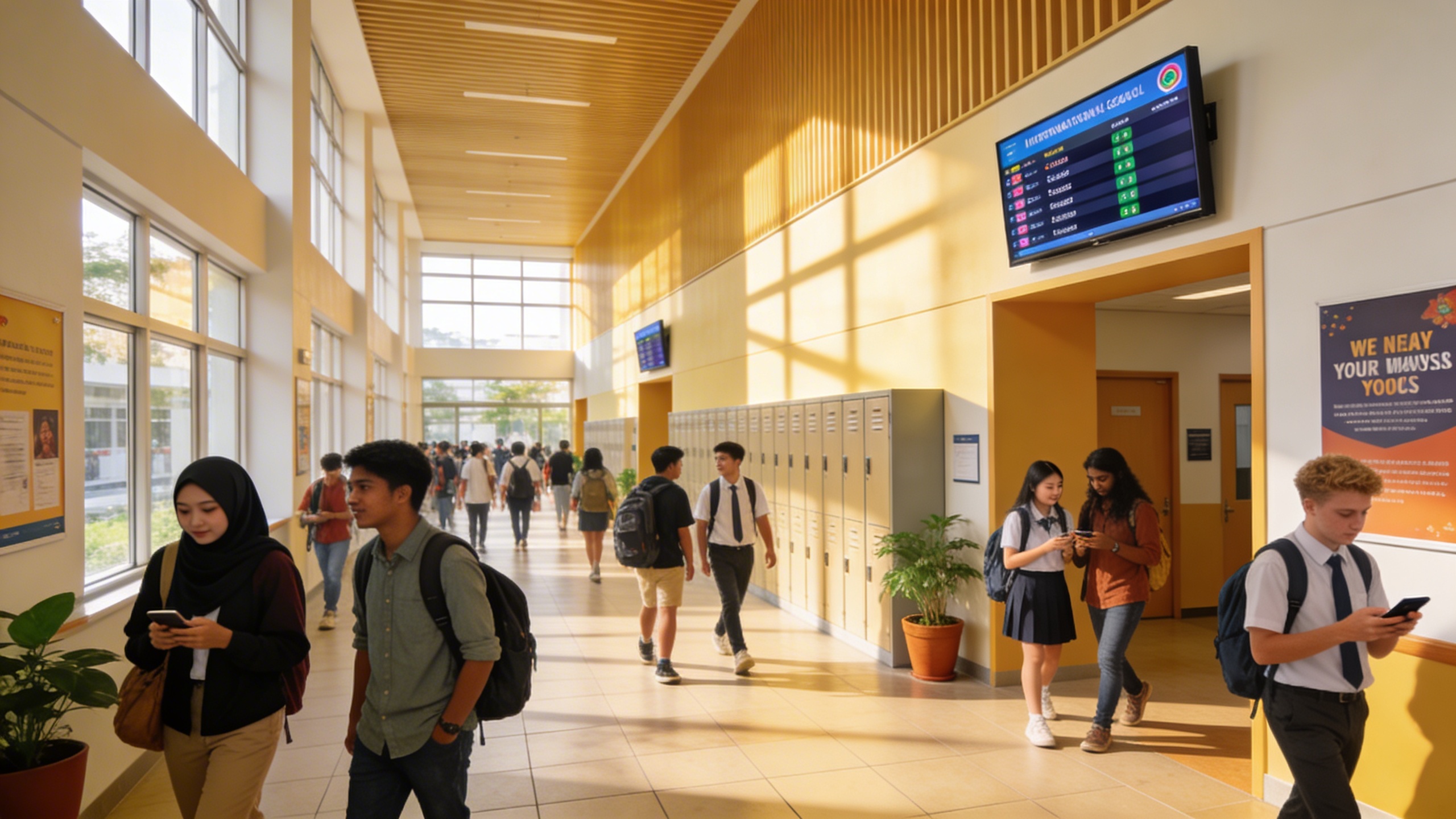
In Malaysia, especially in urban areas where international schools are concentrated, the situation is different.
Changing schools is a perfectly natural option, aligned with family careers and a child’s growth.
Even around me, such cases are not uncommon.
A father gets transferred from KL to Penang for work, and the child changes schools.
Or, switching from a British Curriculum school to an IB school at a key middle school stage.
Feeling that “this school’s approach doesn’t suit my child,” and moving to another school mid-semester.
These are not seen as “problems,” but are recognized as part of an “optimization process.”
The impact this environment has on children is immeasurable.
At Hikari and Zen’s school too, new students arrive almost every semester.
Children naturally learn that “people move” and “environments can be changed.”
The skill of making new friends, the adaptability to different educational styles.
These become the foundational resilience for living in a highly uncertain future.
They can physically learn from a young age the freedom of thought that “one is not bound to a single place for life.”
An Abundance of Choices Updates Parents’ “Educational Philosophy”
Being exposed to many choices is also a learning experience for parents themselves.
When I was in Japan, I had a certain image of what “good education” was.
However, coming to Malaysia shattered those preconceptions to pieces.
One school is very academically rigorous, with lots of homework.
Another school emphasizes inquiry-based learning, valuing the process over test scores.
Yet another school has a curriculum specialized in sports and arts.
It’s not about “which one is correct,” but “which one is optimal for our family’s values and our child’s characteristics.”
We are required to constantly consider this question and continue making choices.
Isn’t this a familiar way of thinking for entrepreneurs?
Assessing market needs, your company’s strengths, and resources to formulate strategy.
Raising children is also management: identifying the characteristics of your human resources (children),
investing (enrolling) in the optimal environment (school), and maximizing outcomes (growth).
Malaysia provides a wealth of options for practicing this “education management.”
The Calm Cost Calculation Behind the “Flexibility”
Of course, this “freedom of choice” comes with a cost.
Tuition fees for international schools vary greatly depending on the school.
In Penang, the standard range is roughly $13,000 to $26,000 USD per year.
For top schools in KL, it’s not uncommon for fees to exceed $33,000 USD annually.
According to the latest exchange rate information (as of April 12, 2026), 1 MYR = 40.12 JPY.
A school with annual fees of 50,000 MYR would be approximately 2 million JPY (around $13,000 USD).
The key divergence in considering education migration is whether you view this cost as “consumption” or as an “investment in human capital.”
I myself think this way when considering my children’s tuition:
“How much will this investment expand my children’s future options?”
“How will the value of their human capital change compared to being educated only in Japan?”
It’s not just about reaching a level where they can speak English.
A network of friends with diverse backgrounds.
An environment that repeatedly hones self-determination and adaptability.
These are assets whose value, while not easily measured in numbers, is undoubtedly real.
The Option to Withdraw is Also Part of the Strategy
When discussing education migration, I’m often asked, “What if it fails?”
This is a very important perspective.
An environment with “freedom of choice” is also an environment that guarantees “freedom of withdrawal.”
If you decide that life or education in Malaysia isn’t a good fit.
You have the option to transfer to an international school in another country.
Or, there is the path of utilizing international schools in Japan or returnee student admission systems.
The psychological pressure of “once decided, there’s no turning back” is smaller.
This is also excellent for household risk management.
Do not concentrate all assets in one country or one educational approach.
You can diversify and reallocate your investments (educational environments) in response to changing circumstances.
This very “liquidity” is a smart household strategy in today’s uncertain world.
Choosing a School is Creating a Family “Constitution”
So, how should you actually go about choosing a school?
The news points out there are “many choices,” but too many can be confusing.
What I practice is creating a “family education constitution” first.
First, my husband and I listed three core values our family seeks in education:
1. To foster the ability to formulate one’s own questions and explore.
2. To cultivate a heart that learns from and respects diversity.
3. To support balanced growth based on physical and mental health.
Using this “constitution” as a benchmark, we visit schools and examine their curricula.
A school where only academic grades are outstanding does not meet our criteria.
Conversely, we also exclude schools that are too relaxed and neglect the basics of learning.
The deciding factor in choosing the school Hikari and Zen attend
was solely how closely it aligned with this “constitution.”
Entrepreneurs will understand.
If a corporate philosophy wavers, employees become lost and strategy becomes unfocused.
Child-rearing and education are the same.
If the family’s philosophy of “what we value” is clear,
even with a vast amount of information, you can make choices without wavering.
Beyond “Truancy Countermeasures,” Towards Proactive Environmental Design
The news at the beginning conveys one aspect of Malaysia’s educational environment.
However, what we, the affluent parenting generation, should aim for is further ahead.
It is not a passive stance of choosing an “environment where problems are less likely to occur.”
It is the proactive stance of designing an “environment that maximizes the family’s human capital.”
The “freedom of school choice” that Malaysia provides is a powerful tool for that.
You can optimize the environment according to the child’s growth stage and the family’s situation.
A single choice does not decide everything; it is always updatable.
This flexibility reduces the risk of long-term educational investment.
When considering education migration, do not remain solely with passive reasons like “I’m worried about truancy.”
Start with this proactive question: “Where is the optimal environment to maximize my child’s potential?”
Malaysia’s diverse educational environment presents a wealth of options to answer that question.
It is not merely a change of location.
It is the first step of the most important strategic investment in your family’s future.

Comments