Well-Being Life - Education Migration / Blog
What a Lecture on Myanmar’s Economy Reveals About the Value of Southeast Asian Education
Hello, I’m Saori. It’s been over three and a half years since we moved to Penang, Malaysia, and I see my children growing more every day.
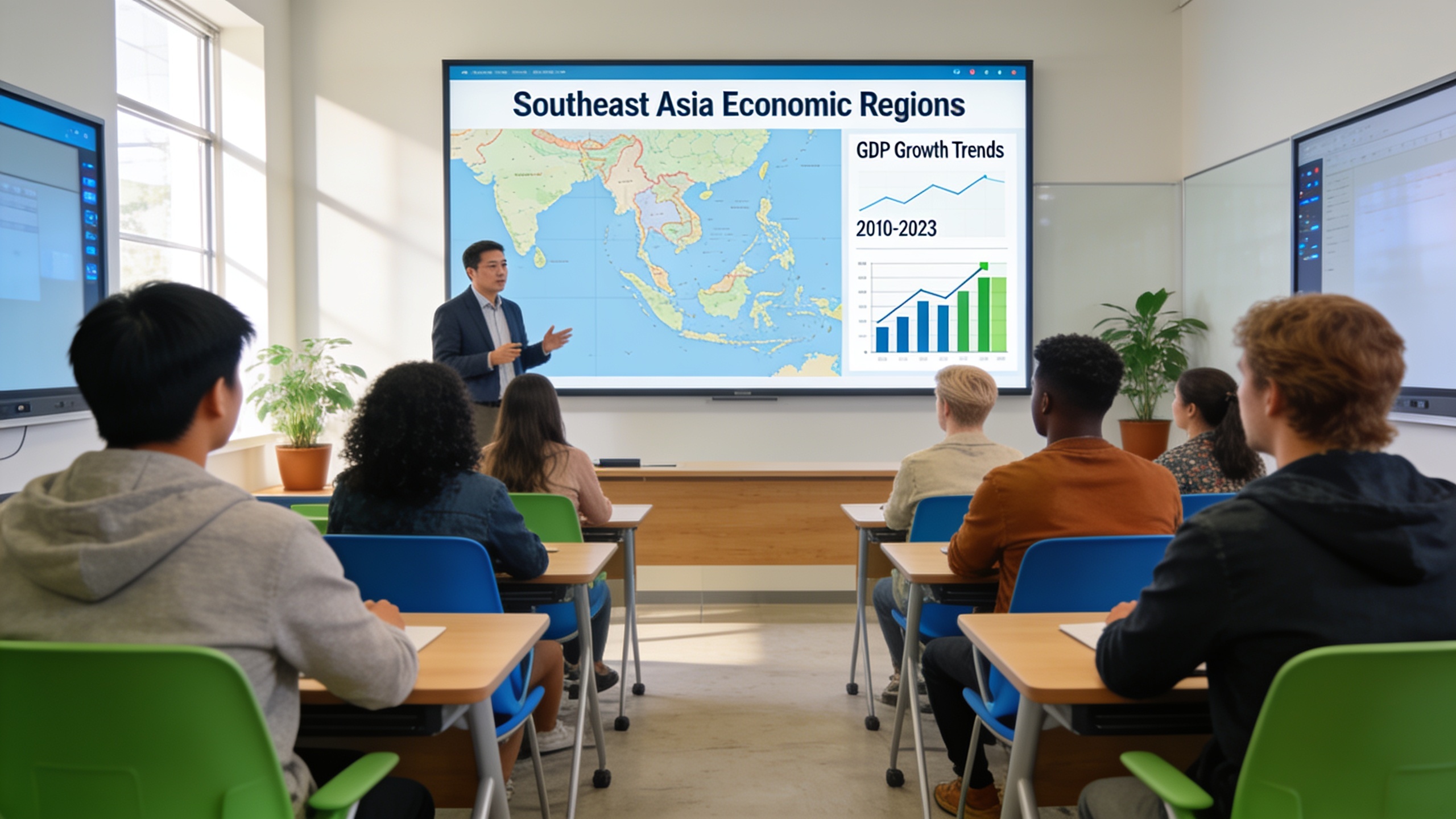
The other day, I came across news about a special lecture on Myanmar’s economy held at a Japanese university as part of a course on “Southeast Asian Economics.” Reading this, I felt strongly that “Japanese education is starting to change.”
The Meaning of Studying Southeast Asian Economics
This special lecture took place at the Faculty of Economics of Seinan Gakuin University. The theme was Myanmar’s economy. At first glance, it might seem like a story about a faraway country.
But in reality, this is exactly the perspective we need for the future.
Since moving to Malaysia, I’ve come to realize that relying only on information and values from within Japan makes it hard to see global trends. Southeast Asia, in particular, boasts GDP growth rates of 4–6%, far outpacing Japan’s 0–1%.
Understanding this region’s economy is a major advantage, whether in business or education.
Myanmar as a Case Study
Myanmar, despite its political challenges, is a country rich in natural resources and with a young population. It’s a key player to consider when thinking about Southeast Asia’s overall growth.
In this lecture, discussions reportedly drew on concrete data about the local economic situation and business environment. It’s heartening to see such learning opportunities increasing at Japanese universities.
The “Southeast Asian Mindset” I Want My Kids to Develop
One of the main reasons I decided to move to Malaysia was to give my children a “Southeast Asian mindset.”
Hikari (first grade) and Zen (kindergarten) attend an international school in Penang. Their classmates are a truly multinational mix: Malay, Chinese, Indian, Japanese, Korean, and more.
They grow up daily surrounded by different cultures and values.
For example, they had a lesson about “ASEAN countries” in school. Hikari happily told me, “The kid next to me is from Thailand, and they taught me about Thai food!”
These experiences are a living, breathing international awareness that textbooks alone can’t provide.
Changes in Japanese University Education
What stands out in this news is that Japanese universities are beginning to treat “Southeast Asian Economics” as a specialized field. This reflects the accelerating expansion of Japanese companies into Southeast Asia.
In fact, my husband, who works as a management consultant, is seeing more and more projects related to Southeast Asia. As Japan’s domestic market shrinks, many companies are looking to this growing region for new opportunities.
I believe the value of professionals who understand Southeast Asian economies will only increase in the years to come.
The Future of Children Growing Up in Malaysia
International schools in Malaysia commonly offer global curricula like the IB (International Baccalaureate) and IGCSE. These programs delve deeply into Asian economics and politics.
For instance, IB geography and economics classes cover topics like ASEAN economic integration and China’s Belt and Road Initiative. Children naturally come to understand Southeast Asia’s role in the world.
This is a perspective that’s hard to gain in Japanese schools.
The Reality of Exchange Rates and Education Costs
Of course, an education move comes with costs. The recent weakness of the yen has had a major impact on us expats.
At the latest exchange rate, 1 MYR = 39.55 JPY (as of June 17, 2026). Compared to when we moved three and a half years ago, the yen has lost significant value.
Annual tuition at an international school in Penang for elementary school is around 800,000 to 1.5 million yen (roughly 20,000 to 38,000 MYR). What used to cost about 600,000 to 1 million yen now feels heavier due to the weak yen.
Still, compared to international schools in Singapore (2.5 to 3.5 million yen annually), Malaysia offers better cost performance.
Criteria for Deciding on an Education Move
What I want to convey from this news is that the “value of learning about Southeast Asia” is starting to be recognized even in Japan.
Some of you considering an education move might wonder, “Isn’t Japanese education enough?” It’s true that Japanese education has many strengths.
But to thrive in a global society, understanding Southeast Asian economies and cultures is just as important as English skills. I’ve come to feel that this kind of awareness is something you can only truly develop by living and studying in the region.
If you’re unsure about your child’s educational environment, I encourage you to come see Southeast Asian schools for yourself. In Penang, there are even school tour programs for Japanese families.
When thinking about your child’s future, “what they learn now” is incredibly important. In this era of continued Southeast Asian economic growth, what kind of environment can we provide for our children? I’m reminded once again that our choices as parents will greatly shape their futures.
Until next time!