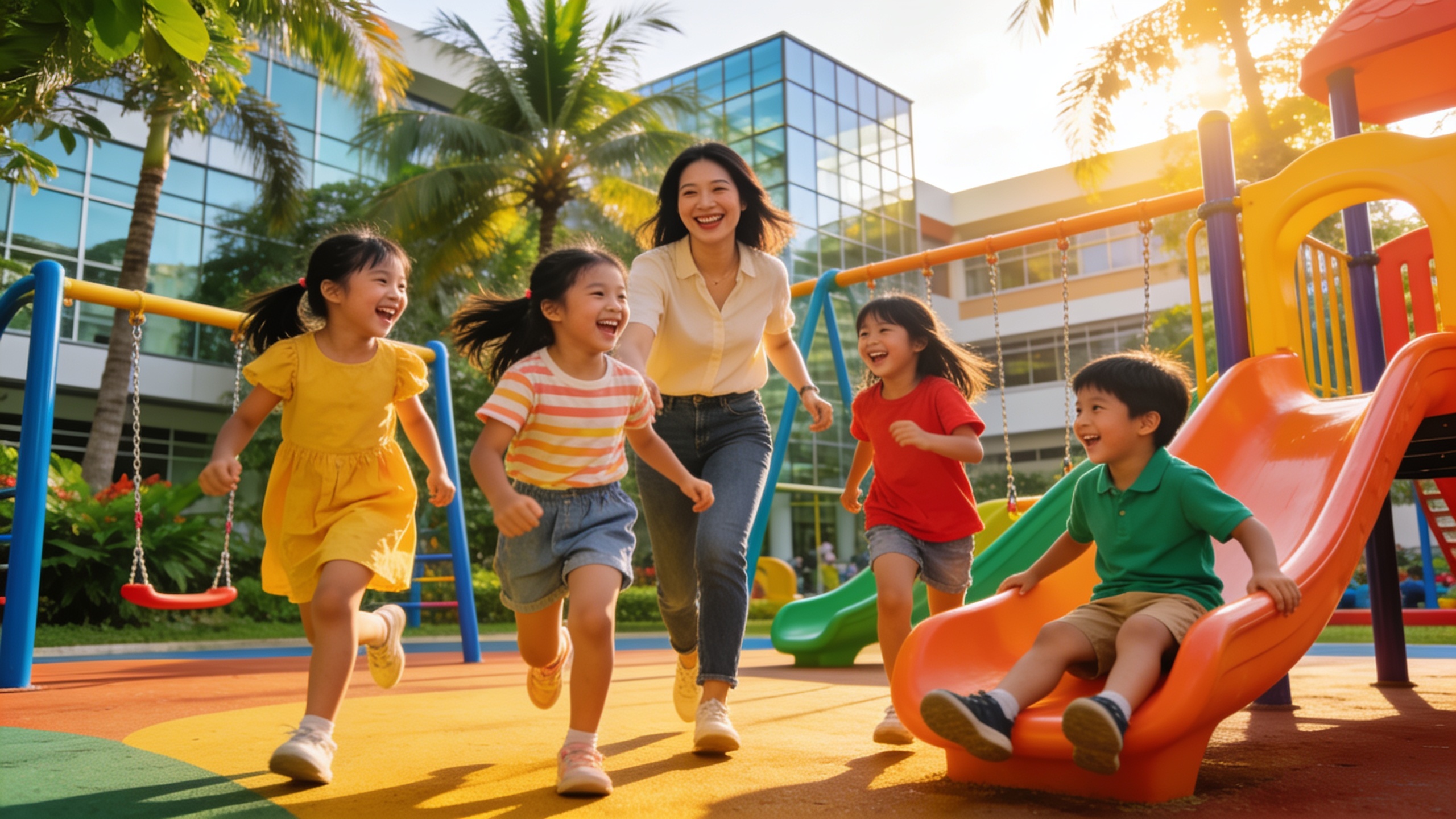
When the Environment Changes, So Do Children
Hello, I’m Saori.
It’s been three and a half years since we moved to Penang, Malaysia. My eldest daughter Hikari is almost 8, and my son Zen is 5. My youngest, Yukari, is 1.5 years old and still spends her days at home.
Lately, I’ve been struck by how children’s adaptability is far more flexible and resilient than we parents tend to think.
Moments of Growth Seen Through School Life
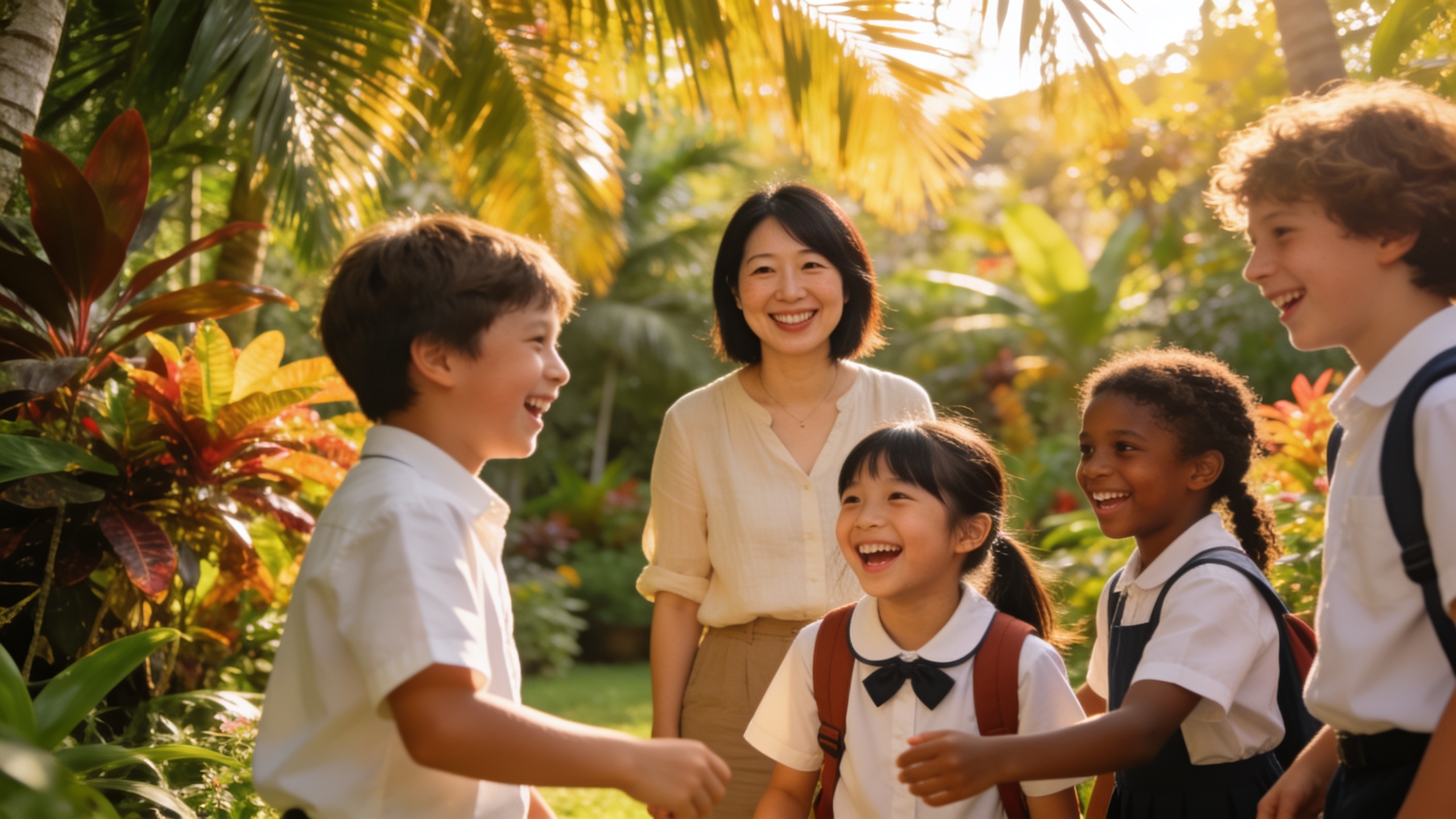
Hikari started at an international school at an age when she could barely speak Japanese. I was worried about the English-only environment, but now she laughs with friends in English and even mixes in Malay words sometimes.
The other day, Hikari gave a school presentation on “My Favorite Country.” She chose Malaysia. When she explained her reason—”Because I have friends from many cultures”—I realized how much her environment is broadening her worldview.
Zen isn’t far behind. Born in 2020, he spent his early childhood during the pandemic. Back in Japan, he was very shy around strangers, but now he can approach new friends and start conversations on his own.
A Parent’s Role Is to “Set the Stage”
To help my children develop adaptability, I consciously try not to be overprotective.
If something goes wrong at school, I don’t immediately contact the teacher. Instead, I let them try to solve it themselves first. Of course, I’m watching from a distance, but they’re building the habit of thinking and acting on their own.
Hikari, in particular, has grown in her ability to ask teachers questions and seek help from friends when she doesn’t understand something. In Japan’s educational environment, this might have taken a bit longer.
How We Overcame the Language Barrier
For our family, where English isn’t our first language, the language barrier was the initial hurdle.
But children learn incredibly fast. Within three months of starting school, Hikari could handle everyday conversations without any trouble. Zen is progressing at the same pace.
At home, we also value Japanese. We mainly read Japanese picture books, and on weekends, we make time to watch Japanese anime. There’s no single right way to raise bilingual children, but we keep it up without pushing too hard.
The Foundation of Adaptability Is a “Sense of Security”
What I believe is most important for boosting a child’s adaptability is having a safe place to come back to.
Trying new things at school involves taking risks. They might fail, things might not go well. But if they know they’ll be warmly welcomed when they come home, that sense of security gives them the courage to try again.
In our family, we make it a habit to talk about what happened at school during dinner every day. We listen to both the good and the bad without judgment. I feel that this daily practice builds a stable emotional foundation for our children.
The Benefits of Penang as an Environment
I truly feel that Penang is an ideal place for a first step into education migration.
The cost of living is about one-third to half of what it is in Japan. With an exchange rate of 1 MYR = 39.75 JPY (as of June 8, 2026), the burden of rent and food costs is significantly reduced. (Approximately 1 MYR = 0.21 USD)
Penang is also a multi-ethnic, multicultural city. Malay, Chinese, and Indian communities coexist, with English as the common language. Our children are naturally learning to embrace diversity.
What We Prioritized When Choosing a School
When selecting a school for Hikari and Zen, what I valued most was “balance.”
The academic load shouldn’t be too heavy, but not too light either. Extracurricular activities should be rich, offering exposure to sports and arts. And above all, the relationship between teachers and students should be close.
Uplands fit these criteria. It has a long history as an IB school, and the quality of its curriculum is stable.
Parents Must Keep Adapting Too
To nurture children’s adaptability, parents also need to change.
I myself worked as an elementary school teacher in Japan, but in Malaysia, I’ve built an entirely new career. I’ve even experienced business negotiations and contract discussions in English as a company director.
Just telling children to “challenge yourself” isn’t convincing. I believe the best education is showing them that you, as a parent, can jump into a new environment and adapt.
In Summary
Education migration provides an environment that naturally fosters children’s adaptability.
Of course, not everything goes smoothly. There are language barriers, cultural differences, and sometimes homesickness. But I believe that the process of overcoming these challenges is exactly what helps children grow.
Yukari will start school in about two years. By then, we might be seeing a different view. As a family, we want to enjoy our life here in Penang and take it one step at a time.

Comments