How Exchange Rates Changed the “Economics of Education Migration”
Hello, I’m Saori. It’s been three and a half years since I moved to Penang, Malaysia.
Lately, I’ve been getting a lot of questions from Japan: “With the yen so weak, is moving to Malaysia still worth it?”
It’s true—compared to three years ago when I decided to move, the yen’s value has shifted dramatically.
As of April 29, 2026, the exchange rate is 1 MYR = 40.29 JPY.
Back when I moved, it was around 28 yen per ringgit, meaning the yen has weakened by over 40%.
That’s a number you can’t ignore when considering education migration.
But jumping to the conclusion that “the yen is weak, so migration is no longer worth it” might be a bit hasty.
Today, I’d like to explore the “real value” of education migration to Malaysia, taking this exchange rate environment into account.
Changes in “Invisible Costs” Beyond Tuition
First, let’s talk about the most pressing concern: tuition.
Annual tuition at international schools in Penang generally ranges from 50,000 to 80,000 ringgit.
At the current rate, that’s roughly 2 million to 3.2 million yen (approx. $13,500 to $21,600 USD).
“Wait, isn’t that about the same as Tokyo international schools?” some of you might think.
Indeed, compared to Tokyo international schools, which cost 2 to 3 million yen annually, the gap has narrowed.
However, what’s often overlooked is the difference in “associated costs.”
To get the same quality of education in Tokyo, you’d face expenses beyond tuition, such as:
First, housing. To attend an international school in Tokyo, you’d need to live in the city center.
A 3-bedroom family apartment easily costs 300,000 to 500,000 yen per month.
In Penang, the same conditions would run 5,000 to 8,000 ringgit (approx. 200,000 to 320,000 yen, or $1,350 to $2,160 USD).
Over a year, that’s a difference of over 1 million yen (approx. $6,750 USD).
Extracurricular activities also differ significantly in cost.
My eldest daughter, Hikari (age 7), takes swimming three times a week and piano lessons once a week at school.
These are either included in tuition or cost an additional 500 ringgit (approx. 20,000 yen, or $135 USD) per month.
To get the same in Tokyo, you’d easily spend over 50,000 yen per month.
The True Value of Education Investment Measured by “Quality”
But what I really want to emphasize isn’t just about cost.
The essence of education migration is an “investment,” and its returns can’t be measured solely in money.
My eldest son, Zen (age 5), started serious reading and writing in English this year.
His class includes children of Chinese, Indian, Malay, and Japanese backgrounds.
Spending time daily with friends from diverse cultural backgrounds naturally fosters an “ability to accept differences.”
This is an experience hard to gain in Japan’s more uniform educational environment.
Also, many international schools in Malaysia adopt the IB (International Baccalaureate) curriculum.
IB focuses not on rote memorization but on developing critical thinking and curiosity.
This educational approach offers a huge advantage when aiming for top universities worldwide.
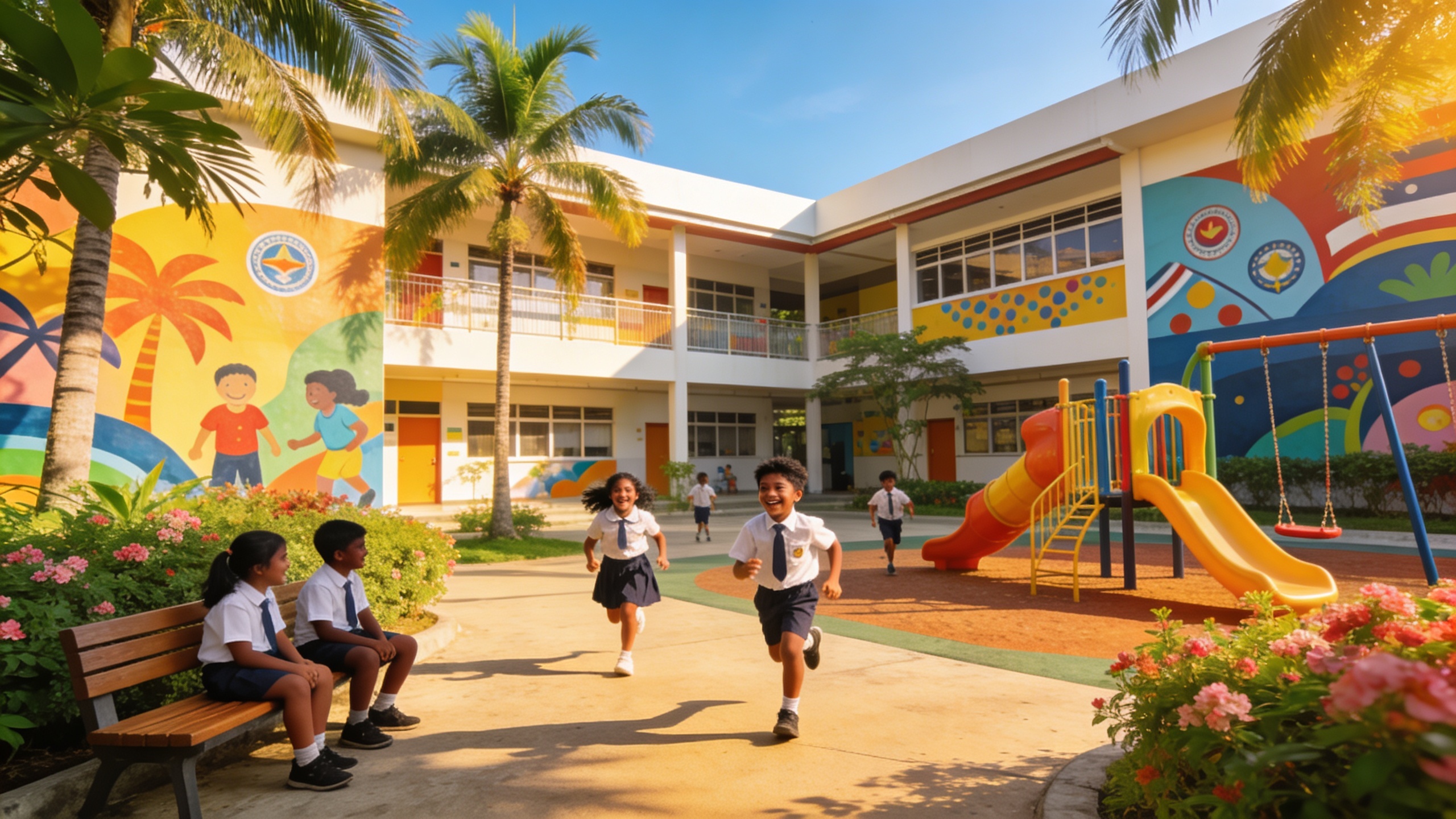
And above all, seeing my children go to school with smiles every day, saying “school is fun,” is the greatest return for me.
Smart Migration Strategies in a Weak Yen Era
That said, with the yen weakening, a key theme for those considering migration now is “how to keep costs down.”
What I recommend is the idea of “phased migration.”
Instead of aiming for a top school in KL from the start, first keep living costs low in Penang while gauging your child’s adjustment.
Penang is said to be 20-30% cheaper than KL in both tuition and living expenses.
In fact, the annual tuition at my children’s school is about 60,000 ringgit (approx. 2.42 million yen, or $16,300 USD).
Considering top KL schools (like ISKL) cost 100,000 to 120,000 ringgit annually (approx. 4.03 to 4.84 million yen, or $27,200 to $32,700 USD), the difference is significant.
Rent in Penang for a spacious condominium typically runs 4,000 to 6,000 ringgit per month (approx. 160,000 to 240,000 yen, or $1,080 to $1,620 USD).
Under the same conditions in KL, it could be 8,000 to 12,000 ringgit (approx. 320,000 to 480,000 yen, or $2,160 to $3,240 USD).
Calculating that difference over three years adds up to a substantial amount.
You could then channel those savings into your child’s future education or the next step (e.g., university in Europe or the US).
Turning “Exchange Rate Risk” into an Advantage
Finally, let’s talk about how to approach exchange rate risk.
Yes, the yen is weak now, but exchange rates are always fluctuating.
If the yen strengthens in the future, living costs in Malaysia will become relatively cheaper.
In other words, over the long term, there’s a possibility of cycling through “moving during a weak yen and living during a strong yen.”
Also, while you can’t use Japanese yen directly in Malaysia, holding part of your assets in ringgit or dollars is worth considering to diversify exchange rate risk.
Education migration is an investment in your child’s future.
I believe it’s a waste to make that decision based solely on “the current exchange rate.”
Of course, cost is an important factor. But I feel that the vision of “what kind of environment do I want to raise my child in?” ultimately determines the success of migration.
Today, Hikari and Zen came home from school and happily told me about their day, mixing English and Japanese.
For me, that everyday moment is the ultimate “return.”
If you’re interested in education migration, I encourage you to come and feel the local atmosphere for yourself.
You’ll see the real value that goes beyond the numbers on the exchange rate.


Comments