- The Overlooked Factor in Calculating Education Migration Costs
- Viewing Education Migration as a “Time Asset” Reallocation Strategy
The Overlooked Factor in Calculating Education Migration Costs
When considering education migration, many people first calculate tuition and rent. Indeed, tuition fees at international schools in Malaysia are attractive compared to those in Japan or Singapore. However, through over three and a half years of living here, I’ve realized there is a “hidden cost” more important than financial expenses: the value of the “time” itself for parents who are entrepreneurs or high-net-worth individuals.
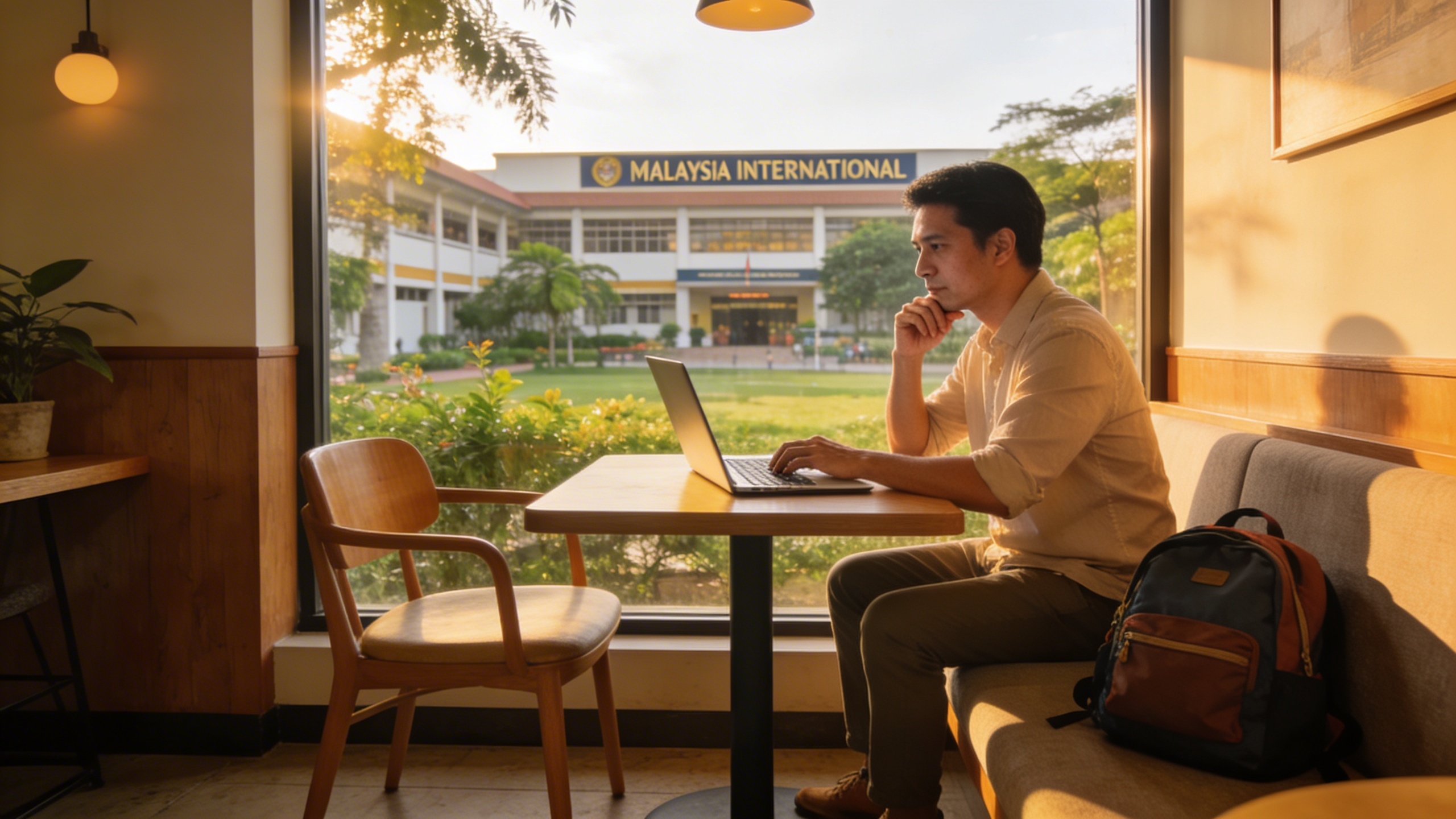
The biggest change our family felt after moving to Penang was a fundamental shift in how we use our time. In Japan, precious time was eroded by commuting, school runs, accompanying children to extracurriculars, and the enormous volume of school communications and PTA activities. In Malaysia, it’s a 10-minute drive from home to school, and my husband’s office is also within a 10-minute radius. The breathing room created by this “geographic compression of time” offers value beyond mere convenience.
How to Use a Parent’s Time Worth “Tens of Thousands of Yen per Hour”
Many of our readers are likely entrepreneurs or professionals. Let’s consider an hourly rate of 10,000 JPY (approx. $65 USD). If you spent 10 hours a week on school-related chores and transportation in Japan, that’s a monthly investment of 40 hours, valued at 400,000 JPY. Annually, that calculates to 480 hours, or 4.8 million JPY worth of time being “consumed.”
If moving to Malaysia compresses this time to 5 hours a week, you gain 20 hours per month, or 240 hours per year. It would be a waste to use this “gained time” just for rest. I allocate this time into three major investments.
1. Direct Investment in Children’s “Non-Cognitive Skills”
I use part of the gained time for dialogue and collaborative work with my children. This is time spent researching or discussing project-based learning themes that my eldest daughter, Hikari (born 2018), brings home from her international school. Recently, while helping with a research project on “sustainable cities,” we talked about real-world business sustainability strategies. This is valuable homeschooling time that connects the school curriculum with real-world issues.
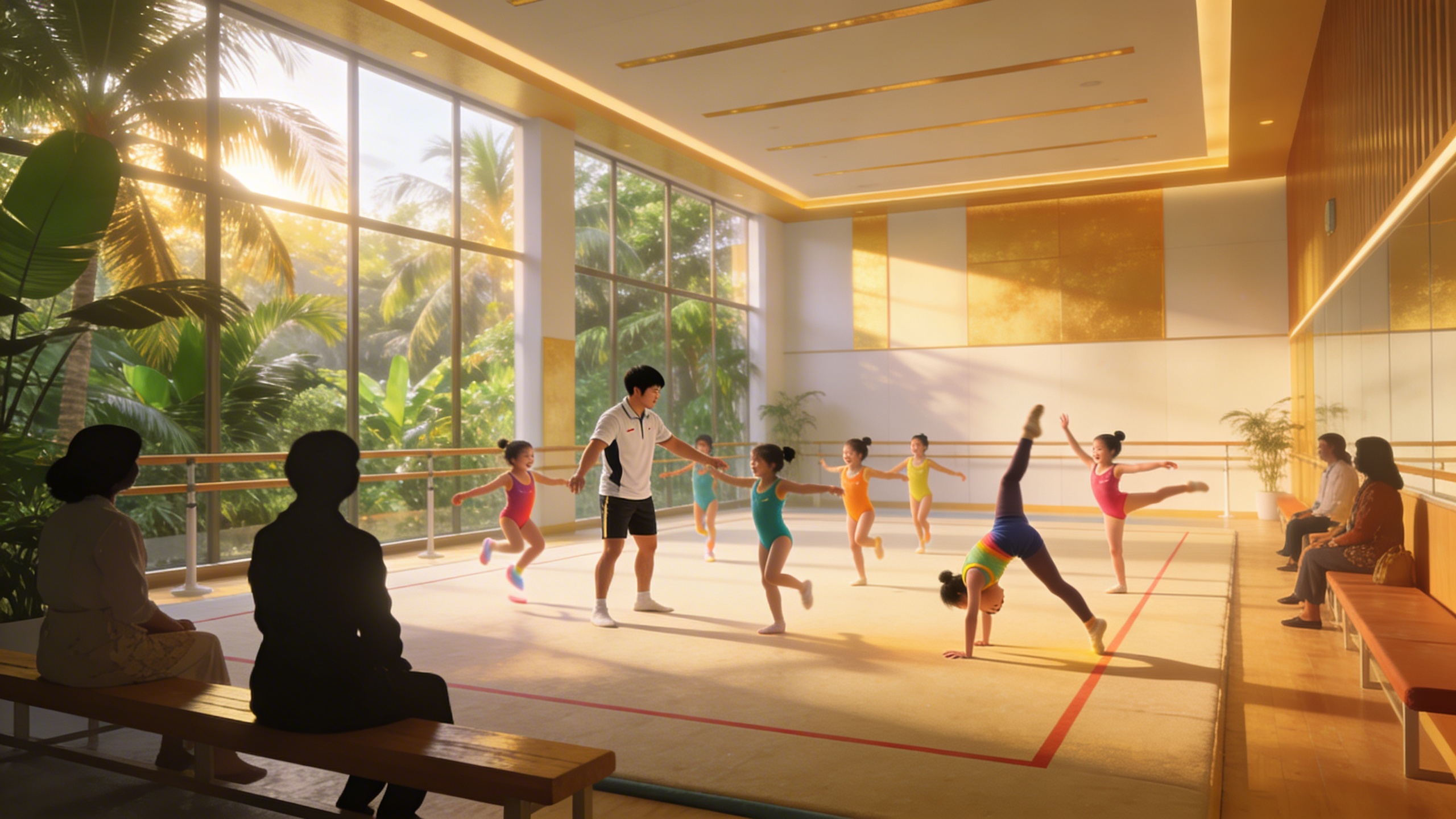
My eldest son, Zen (born 2020), loves sports. We can now easily go to parks or the beach on weekday afternoons, whereas before we could only go on weekends. Investing in physical activity and interaction with nature is essential for a child’s healthy development. My youngest daughter, Yukari (born August 2024), is only one and a half, but I definitely have more time to read picture books to her slowly between dropping off and picking up the older children.
2. Reinvestment in One’s Own Career and Skills
I established and run a company in Malaysia. Another use of the gained time is for growing this business and upskilling myself. English business negotiations and contract discussions were a significant burden initially. However, by immersing myself in an English environment daily and investing the secured learning time, I can now handle them at a business level.
I also hone skills like video editing and content creation using this “margin time.” I feel that being able to effectively use the gaps between parenting and work was a major factor in achieving 6 million views on my educational content on TikTok. This is not just a hobby; it’s an investment in personal branding and new business opportunities.
3. Family Well-being and Network Building
Having more time creates mental space. I get less irritable and snap at the children less, and the quality of conversation with my husband has improved. Furthermore, I can now allocate time to interact with other families who have also migrated for education and with local business owners. This human network holds value beyond mere socializing. It serves as infrastructure for obtaining diverse information and support, such as school information, business opportunities, and troubleshooting daily life issues.
Simulating Living Costs in Malaysia vs. the Value of Time
Let’s think in concrete numbers. Suppose an entrepreneur household was “consuming” 4.8 million JPY worth of time annually on chores and transportation in Japan. After moving to Malaysia, assume this time consumption is halved to 2.4 million JPY worth, and the saved 2.4 million JPY worth of time is redirected to the three investments mentioned above.
On the other hand, what about living and education costs in Malaysia? Tuition fees at international schools in Penang vary by grade but generally range from about 2 to 4 million JPY per year. Even when combined with rent and living expenses, there is often a cost advantage compared to a similar standard of living in major metropolitan areas of Japan.
The key here is the perspective of comparing the “time value” of saved hours against the additional costs associated with migration. It’s not just about “living costs being cheaper in Malaysia,” but rather the mindset that “the high-value time being lost in Japan can be reinvested into family and personal growth in Malaysia.” With the latest exchange rate of 1 MYR = 39.90 JPY (as of March 6, 2026), cost management locally can be referenced against this rate.
“Optimal Time Allocation” Influences Children’s Educational Outcomes
Education at international schools heavily relies on a child’s autonomy and curiosity. Enriching project-based learning and extracurricular activities requires parental support and the “temporal and mental margin” for children to immerse themselves. If parents themselves are time-pressed and lack breathing room, even sending children to a school with the best curriculum will halve its effectiveness.
Observing my own children, Hikari and Zen, there is a clear difference in the depth of what they gain from school between times when I, as a parent, can calmly listen to their stories and think together with them, and times when I cannot. I strongly feel that the success of education migration is not determined solely by school choice or tuition fees, but by how well parents can build an environment where they can share high-quality time with their children.
Viewing Education Migration as a “Time Asset” Reallocation Strategy
For affluent families considering education migration going forward, I hope they will incorporate this “value of time” perspective alongside traditional cost comparisons. Try simulating by converting the value of your own hour into a number, seeing how it is currently “consumed” in your present life, and how it could be “reinvested” after migration.
A place like Malaysia holds the potential not only for financial cost efficiency but also for dramatically improving the allocation efficiency of our most precious resource: time. This is an investment that connects directly not only to children’s educational outcomes but also to a second entrepreneurial phase for parents themselves and an improvement in the quality of life (QOL) for the entire family.
Education migration is not just about changing a family’s physical location. It is an ambitious life design project that re-engineers the flow of time for the entire family and the meaning infused into that time. Why not start by placing “a parent’s value of time” at the center of that blueprint?

Comments