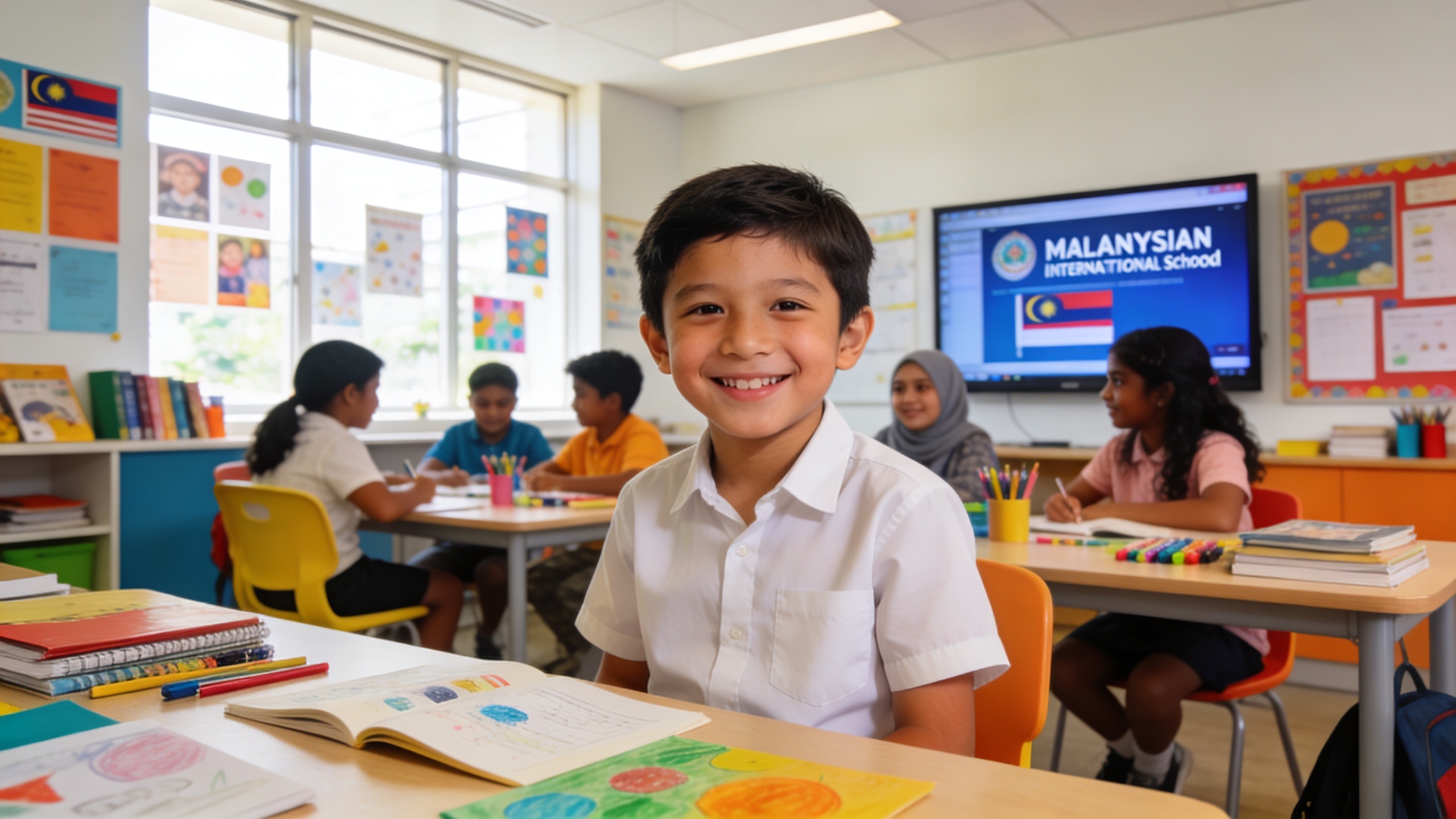
Seeking an Education That Fits: Our Move to Malaysia
Recently, I came across a news article about a family who chose Malaysia for their child’s education in the third grade, seeking an environment that suited their unique traits. Reading it, I felt a strong connection—it mirrored many of our own family’s choices.
I’m Saori, and I’ve been living in Penang, Malaysia, for over three and a half years. My eldest daughter, Hikari (born 2018), and my eldest son, Zen (born 2020), attend an international school. Our youngest, Yukari (born August 2024), is still a toddler at home.
Today, inspired by that news, I want to talk about choosing a school that fits your child’s unique traits. The experience of that family, who made the decision to move when their child was in third grade, is full of valuable insights.
Why Third Grade Is a Critical Time
The family in the news moved when their child was in third grade. This timing is often called the “golden age” for educational migration.
The critical period for language acquisition is said to be between ages 3 and 12. Third grade (ages 8-9) is a sweet spot: a child’s native language is fairly established, yet their ability to absorb a second language is still high. Hikari came to Malaysia at age 5, and now she laughs and chats with friends in English.
Also, having built a foundation in basic subjects like math in Japanese elementary school gives children an advantage. Zen moved here when he was in kindergarten, but I believe his Japanese study habits helped him adapt smoothly.
The family in the news emphasized finding an education that matched their child’s traits. While the article didn’t specify those traits, international schools generally offer a more nurturing environment for individuality compared to Japan’s more uniform system.
Global Leap Becomes an IB Candidate School: Expanding Options
Another piece of news caught my eye: Global Leap International School was certified as an International Baccalaureate (IB) PYP candidate school.
The IB is a globally respected educational program. The PYP (Primary Years Programme) is for children aged 3 to 12. The number of IB schools in Malaysia is growing, which means more choices for families.
Currently, major IB schools in Malaysia include Uplands in Penang, and ISKL and Alice Smith in KL. With new candidate schools like Global Leap emerging, more families can find a school that truly fits their needs.
A key feature of the IB is its focus on inquiry-based learning, not rote memorization. It emphasizes a process where children ask questions, research, and present their findings. This is a huge draw for families seeking an education tailored to their child’s unique traits.
Our School Search: How We Assessed Our Children’s Needs
We also struggled with choosing a school. Hikari is active and social, while Zen is cautious and enjoys playing alone. Even within the same international school, what works for one child may not work for another.
We visited several schools, observing the teachers’ atmosphere and teaching styles. What we prioritized were small class sizes and the support system for students with special needs.
International schools in Malaysia generally have more teachers per student than Japanese public schools, allowing for more individual attention. At Hikari’s school, there’s a weekly one-on-one meeting time, so even small changes in her behavior are noticed.
Many schools are also flexible with children who have conditions like ADHD or sensory sensitivities—what’s often called “developmental unevenness.” The reduced pressure to conform to a “one-size-fits-all” standard is a major advantage compared to Japan.
Costs and Exchange Rates: Stay Updated
Cost is an unavoidable topic in educational migration. Tuition fees at international schools in Malaysia typically range from 800,000 to 1,500,000 JPY per year (approximately $5,300 to $10,000 USD). While cheaper than international schools in Japan, it’s still a significant expense.
And the impact of exchange rates can’t be ignored. Here’s the latest rate:
1 MYR = 40.31 JPY (as of April 24, 2026)
At this rate, annual tuition of 1,000,000 MYR would be about 40,310,000 JPY (approximately $268,000 USD). A weak yen increases the burden in Japanese yen terms. When considering a move, you need a financial plan that accounts for exchange rate risk.
Since our family has a company in Malaysia, we earn income in ringgit. But those who only have income in yen need to be especially careful.
“Fitting Your Traits” Means Letting Your Child Decide
Finally, I want to share something important. An education that fits your child’s traits isn’t something parents decide—it’s something the child feels for themselves.
The family in the news visited schools together with their child, and ultimately, the child chose the school, saying, “This is the one.” We did the same with Hikari, asking, “Which school do you like?” and respecting her opinion.
In Malaysia, children from diverse backgrounds come together. Spending time with friends who are Japanese, Chinese, Indian, or Western naturally fosters a culture of mutual respect for individuality.
Educational migration is never an easy decision. But taking action to find an environment that suits your child’s unique traits is a huge investment in their future. If you’re even slightly interested, I encourage you to visit a school in Malaysia. You’re sure to discover something new.
Until next time!


Comments