The Essence of Education Migration Seen Through a Celebrity’s Choice
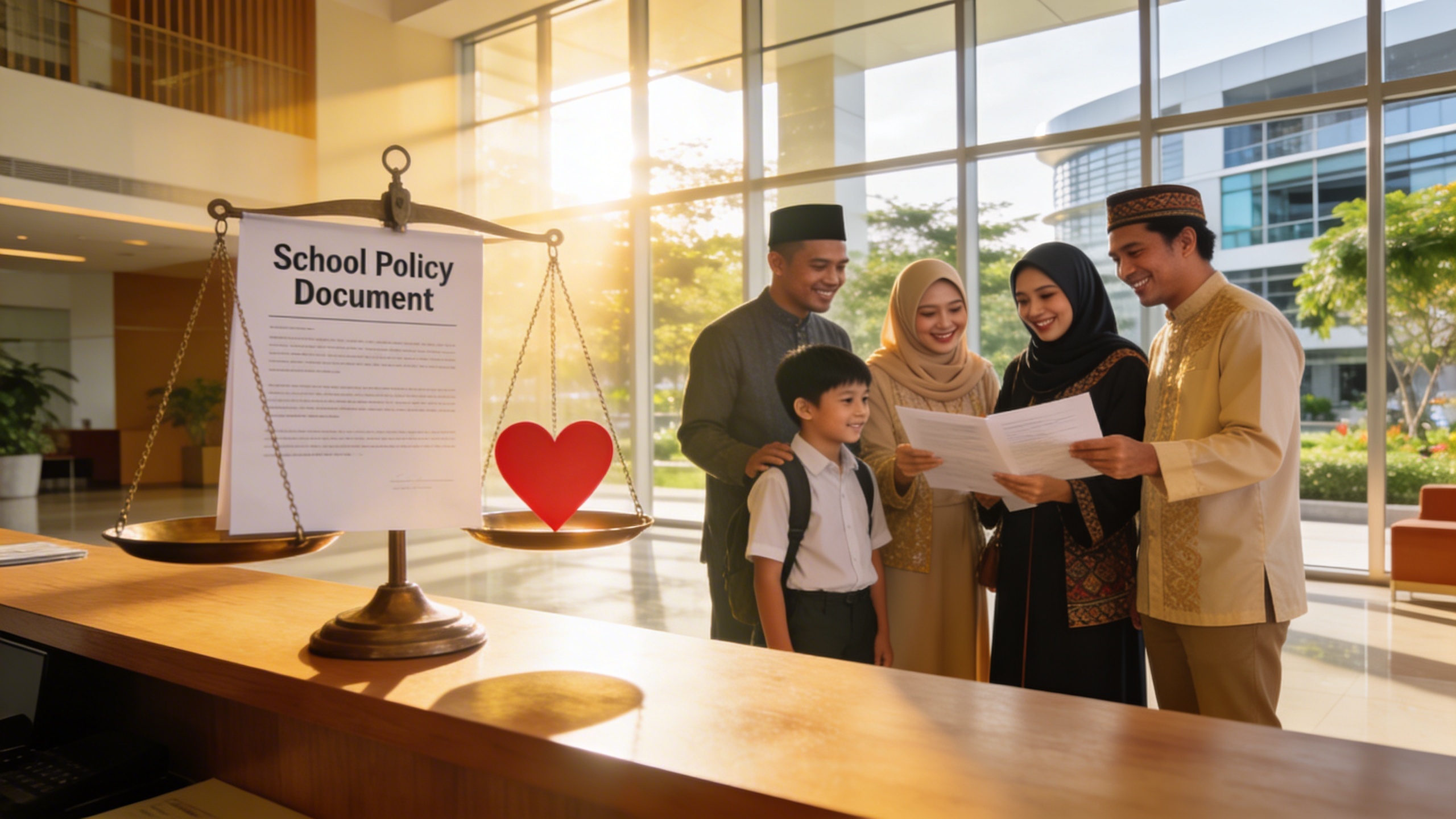
Model and talent Maomi Yuki recently spoke about her education migration to Malaysia. Her words resonate with points that many of us in the parenting generation, including entrepreneurs and affluent families, can relate to. What was particularly impressive was her emphasis on valuing both the “educational philosophy” and “parental intuition” when selecting a school.
This is precisely the core of successful education migration. It’s about not being swayed solely by information or rankings, but identifying the environment that truly fits your child. That process itself is the most important investment in your child’s future. I, Saori, have been living in Penang, Malaysia with my husband and three children for three and a half years now. I truly struggled with choosing a school.
The Power of an Education That “Questions the Norm”
In another piece of news, Barbie spoke about the importance of “questioning the norm,” learned through her daughter’s experience in an international school during their travels abroad. This highlights a significant difference from the Japanese educational environment.
Japanese education excels at cultivating the ability to efficiently complete given tasks. However, what is demanded of individuals who thrive on the global stage is the ability to formulate their own questions and seek answers amidst diverse values. Daily life at an international school is a continuous training ground for exactly that. At the school my children attend, discussions and project-based learning are central. The children enjoy tackling questions that don’t have a single correct answer.
3 Key Points to Decipher an Educational Philosophy
So, regarding the “educational philosophy” that Maomi Yuki valued, what should you actually look for when choosing a school? The three points I personally prioritized are as follows.
First is the “Curriculum.” Is it the IB (International Baccalaureate), the British Cambridge system, or the American system? This directly impacts university options and the learning approach. Next is the “School Culture.” Is it an environment that fosters competition, or one that values individual growth? It’s important to observe the actual demeanor of current students, not just rely on the words on a website. Finally, the “Language Support System.” Is the EAL (English as an Additional Language) support for non-native English speakers robust? This can make or break a child’s initial adaptation.
School Visit Strategies to Sharpen Your Parental “Intuition”
So, how can you sharpen that “parental intuition”? It lies in planned school visits. When you tour, be sure to go with your child. Then, try observing the following points.
Are the school buildings and classroom displays overflowing with children’s work? Do the students you pass in the hallways have lively expressions? Are the conversations between teachers and students natural and warm? Also, during meetings with the principal or admissions staff, ask directly about their educational philosophy. The answer to the question, “What value does this school hold most dear?” reveals the school’s essence.
When I decided on my eldest daughter Hikari’s school, the final deciding factors were the principal’s words, “This is a place where children can challenge themselves without fear of failure,” and a single comment from my eldest son Zen during the tour: “This looks like fun.” The atmosphere, which can’t be measured by numbers or information alone, is crucial.
The Reality of the International School Environment in Malaysia
Malaysia, especially Kuala Lumpur and Penang, has a diverse range of international schools. Tuition fees also vary widely, from approximately $5,300 to $16,600 USD per year (exchange rate: 1 MYR = approx. 40 JPY, as of Feb 26, 2026). Compared to international schools in Tokyo, this offers very high cost performance.
Furthermore, international schools in Malaysia boast exceptionally high nationality diversity. Students gather from all over the world: Europe, America, various Asian countries, the Middle East, and more. This environment gives children a tangible sense that “the world is wide” and fosters a natural adaptability to different cultures. My eldest daughter Hikari’s friends span over 10 countries, and weekend home parties felt like mini international exchange events.
An Action Plan for “Education Research” Before Migration
If you are considering education migration, I recommend proceeding with information gathering in the following steps.
First, narrow down the area and budget online and list 3 to 5 candidate schools. Next, if possible, plan a short inspection trip. Tours almost always require appointments, so contact each school well in advance. While on-site, check not only the schools but also the surrounding residential environment. Finally, share what the family felt and discuss priorities. Respect your child’s opinion as well, according to their age.
The Parental Mindset for Supporting a Child’s Adaptation
Even after finding the ideal school and deciding to move, that’s where the real journey begins. Especially in the initial period, being attuned to changes in your child’s emotional state is paramount. The frustration from language barriers and anxiety about making friends are experiences that come to every child.
In our family too, we were on edge watching our children’s expressions for the first few months. During such times, we focused on making our home a secure base. We didn’t force English, created ample time for them to relax and be pampered in Japanese, and celebrated every small achievement together. Maintaining close contact with school teachers and sharing how the children were at home also made it easier to gain support from the school.
The experiences shared by celebrities like Maomi Yuki and Barbie are valuable role models. However, ultimately, you need to make decisions based on your own family’s values and your child’s individuality. Education migration is a grand adventure that the entire family steps into together. Fortifying the rationale for that decision with both the rationality of “educational philosophy” and the sensibility of “intuition.” That becomes the sure first step towards your child’s shining future.


Comments