
- ―― How to Prevent the Most Draining Problem in Education Migration from Becoming Fatal
- Japanese Housing is “Exceptionally Good” by Global Standards
- The Construction Premise in Malaysia (and Many Other Countries Outside Japan)
- Why Plumbing Issues Skyrocket in Condominiums Over 10 Years Old
- Why It Often Escalates into Conflict with the Owner
- Reason ①: Repairs are Expensive and Invasive
- Reason ②: The Contract’s Assumptions Differ from Japan’s
- Reason ③: The Owner is Not in the “Service Industry”
- Why the Case with a “British Owner” Went Smoothly
- Reason ①: Shared “Common Sense” Based on Developed Country Standards
- Reason ②: A Home Built with the Intention of Living There
- Reason ③: The Recognition that Repair = Protecting Asset Value
- The Structural Reason Why Agents Often Don’t Function
- Why Even “Your Own Agent” May Not Protect You
- The Structural Weakness of Foreign Tenants
- The Key Figure Needed Here: The “Lawyer”
- What Changes When a Lawyer is Involved
- “Looking for a Lawyer After a Problem Occurs” is Too Late
- The Correct Design: Having a System to Rely on a Lawyer Regularly
- The Necessary “Practical Compromise” Nonetheless
- Conclusion: Housing Issues are Not to be “Avoided” but “Managed”
―― How to Prevent the Most Draining Problem in Education Migration from Becoming Fatal
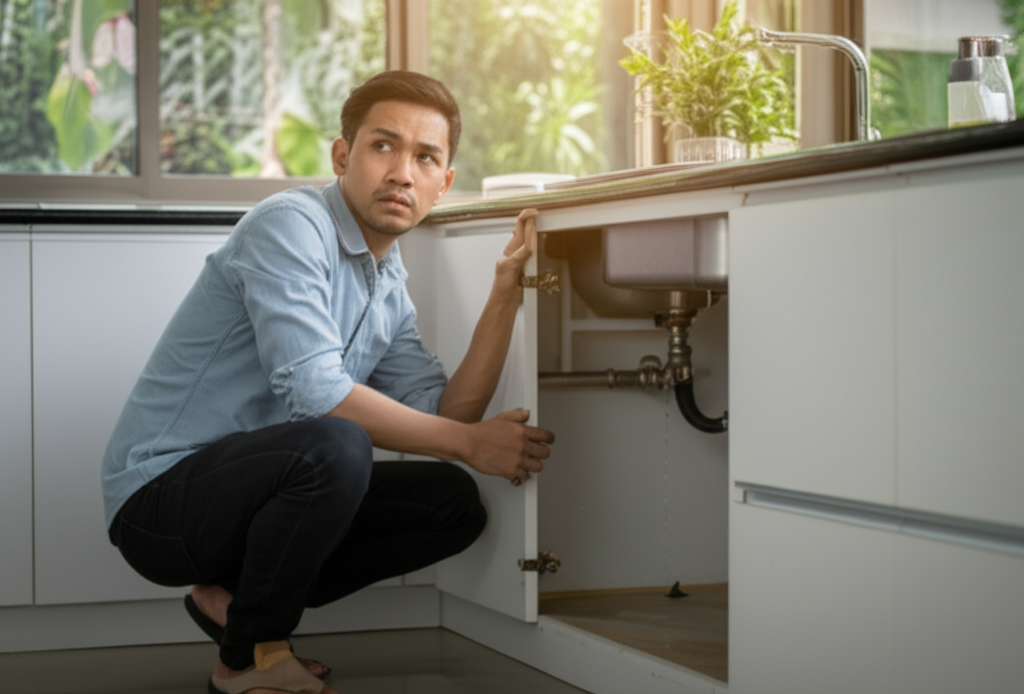
In education migration, the issues that drain a family’s energy the most are not school selection or learning English. What can become fatal are “living infrastructure problems”—a chain reaction starting with housing leaks or faulty fixtures, leading to conflict with the owner, agent dysfunction, and the negotiation weaknesses of being a foreigner. This is not a random occurrence; it is a reproducible risk with a high probability of occurring if you do not understand the local structure.
Japanese Housing is “Exceptionally Good” by Global Standards
First, let’s establish a premise. Japanese housing is designed from the start with future repairs, regular maintenance, and partial replacements in mind. Features like access panels, accessible piping, and structures that can be fixed without destruction are taken for granted in Japan, but globally, this is actually a rather unique design philosophy.
The Construction Premise in Malaysia (and Many Other Countries Outside Japan)
In Malaysia and many other countries, it is common practice to pour concrete and completely embed pipes within walls, floors, and ceilings. As a result, identifying pipe issues takes time, and repairs require breaking open walls or floors. This leads to noise, dust, and long construction periods. A leak often becomes a “destructive construction project” rather than a minor repair. It’s more accurate to say that Japan’s housing standards are exceptionally high, rather than Malaysia being unique.
Why Plumbing Issues Skyrocket in Condominiums Over 10 Years Old
Practically speaking, there is an extremely important fact. In Malaysia, once a condominium passes the 10-year mark, the incidence of plumbing issues increases significantly. Common symptoms include:
- Seepage from ceilings/walls
- Leaks from upper-floor pipes
- Clogged drains
- Low water pressure
- Mold/Bad odors
The causes are aging pipe materials, variations in initial construction quality, and a design that does not assume regular maintenance. This reality shows that almost no other country has plumbing as stable as Japan’s.
Why It Often Escalates into Conflict with the Owner
Reason ①: Repairs are Expensive and Invasive
Major construction work involving breaking walls and tearing up floors also takes a long time. Therefore, owners tend to think, “Is it really necessary to go that far?” or “Can’t we just manage with a temporary fix?”
Reason ②: The Contract’s Assumptions Differ from Japan’s
In Japan, unwritten common sense fills in the gaps, but overseas, anything not written down becomes a matter for negotiation. If the division of repair costs, cost ceilings, or authority in emergencies are ambiguous, the blame game begins.
Reason ③: The Owner is Not in the “Service Industry”
Overseas, especially in Malaysia, owners are often investors or asset managers. They tend to prioritize cost minimization over tenant satisfaction and do not necessarily have the service mentality of a “landlord.”
Why the Case with a “British Owner” Went Smoothly
In my experience, the case that went most smoothly was when the owner was originally from the UK. This was no coincidence.
Reason ①: Shared “Common Sense” Based on Developed Country Standards
The shared assumption was that plumbing should be stable, and if broken, it should be properly fixed—disliking temporary patches. This is a shared sensibility in Japan, the UK, and Europe.
Reason ②: A Home Built with the Intention of Living There
The property was not just an investment; it was the owner’s original design. There was attention to detail in the piping and plumbing, resulting in fundamentally higher stability.
Reason ③: The Recognition that Repair = Protecting Asset Value
The owner understood that neglecting problems leads to a decrease in asset value and prioritized preventing recurrence. Therefore, responses were quick and tended to be fundamental repairs.
The Structural Reason Why Agents Often Don’t Function
In Malaysia, there are often separate agents for the owner and the tenant. However, the crucial point is the structure: both are “local people,” while we, as education migrants, are “foreigners” or “outsiders.”
Why Even “Your Own Agent” May Not Protect You
An agent’s long-term clients are the owners. Tenants who cause trouble are often avoided, and agents bear no legal responsibility. As a result, it’s not uncommon for agents to distance themselves sharply after the contract is signed.
The Structural Weakness of Foreign Tenants
Not being fully fluent in the language, insufficient understanding of local systems, wanting to avoid lawsuits or disputes, desiring a quick resolution—all these are seen as negotiation weaknesses and become factors that put you at a disadvantage.
The Key Figure Needed Here: The “Lawyer”
The key to reversing this structural weakness is involving a lawyer. The important part is not to sue, but to show the other party the fact that you have “legal backing.”
What Changes When a Lawyer is Involved
- Discussions shift from emotional arguments to legal clarification.
- Responsibility becomes clear.
- Response speed increases.
- The attitude of the agent or owner changes.
“Looking for a Lawyer After a Problem Occurs” is Too Late
If you search for a lawyer when you’re desperate, your options are fewer, your negotiation position is weaker, and it takes more time. It’s crucial to set up a preventive line of defense.
The Correct Design: Having a System to Rely on a Lawyer Regularly
The ideal is to identify a local lawyer before moving, and have them review the contract once. Create a situation where you can say, “I’ll check with my lawyer” if anything happens. Even if you don’t actually activate them, being in a state where you *can* is the greatest defense.
The Necessary “Practical Compromise” Nonetheless
In education migration, it is often the most rational choice to pay for minor repairs out-of-pocket for an immediate fix. Considering a child’s sleep, stable daily life, and preventing parental burnout, the cost of continuing an unstable life is higher than a small financial loss.
Conclusion: Housing Issues are Not to be “Avoided” but “Managed”
The first step in countermeasures is accepting the reality that, not just in Malaysia, almost no other country has plumbing as stable as Japan’s. Leaks will happen, repairs are major, agents won’t protect you, foreigners are structurally weak—only families who design their owner selection, property choice, management company, and lawyer system from the start based on these premises can handle housing issues not as fatal blows, but as manageable problems. This is the most practical and reproducible conclusion for successfully achieving education migration to Penang or KL and realizing the stable overseas life sought by many families, including affluent ones.

Comments