Hello. I’m Saori, a mother of three living in Penang, Malaysia.
Discussions about education migration tend to focus heavily on “the children’s education.” Of course, that remains the primary goal. However, what our family has realized after living in Penang for over three and a half years is another significant return. It’s the investment effect on “parents’ healthspan.”
This time, I’d like to talk about this “hidden return,” weaving in our daily life experiences and the latest exchange rate information.
- When the “Quality of Time” Changes, Healthspan Extends
- Malaysian Healthcare Excels in “Prevention” and “Early Detection”
- The “Natural Health Management” Brought by Changes in the Food Environment
- A Society Where an “Active Weekend” is the Default
- Adding “Parental Health” to the ROI Calculation of Education Migration
When the “Quality of Time” Changes, Healthspan Extends
Looking back on my days as a company employee in Japan: rush hour commutes, overtime until the last train, working on holidays. They were days of physical and mental exhaustion. I was constantly juggling my children’s events and work, putting my own health on the back burner. Isn’t this a situation many working parents and business professionals can relate to?
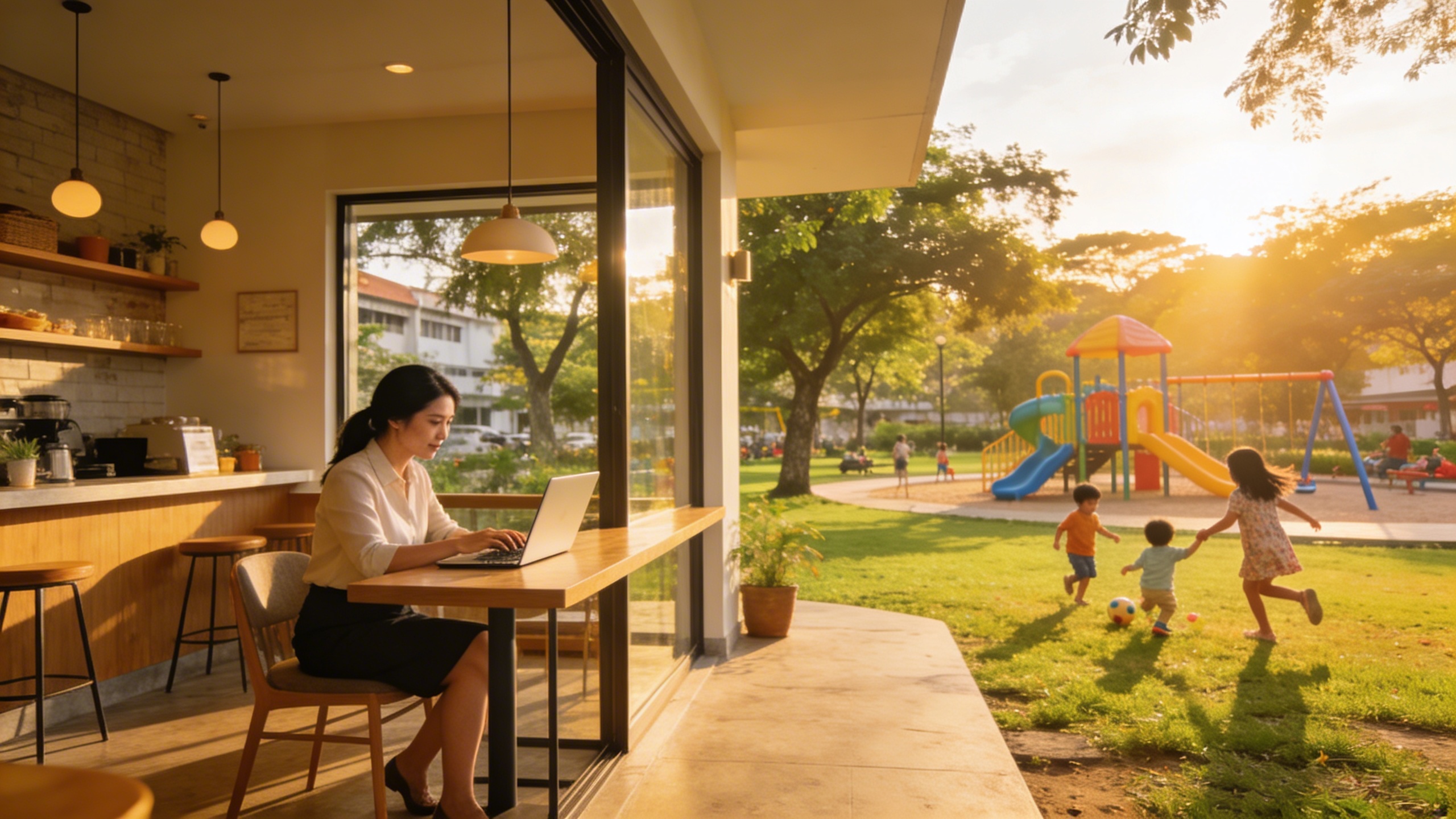
After moving to Malaysia, the first thing that changed was the “quality of time.” My commute time became almost zero. My husband primarily works from home. I balance dropping off and picking up the kids with running our company’s Malaysian branch. The stress from physical movement has drastically decreased.
As a result, the time our family spends together at the dinner table has definitely increased. I can listen leisurely to stories about the kids’ school. On weekends, it’s become normal for the family to go to the beach or a park and get some exercise. The impact of this “normalization of life rhythm” on parents’ health is immeasurable.
Malaysian Healthcare Excels in “Prevention” and “Early Detection”
When Malaysian healthcare is discussed, its advanced level and cost-performance often get attention. It’s true that private hospital facilities are on par with Japan’s. Many doctors have trained in Western countries or Australia, and communication in English is not a problem.
However, what I feel is its greatest strength is the easy access to “preventive medicine” and “early detection.” In Japan, I tended to postpone seeing a doctor, thinking, “I feel a bit off, but I’m busy with work…” In Malaysia, appointments are easier to get, and waiting times are relatively short.
For example, at our regular clinic, we can easily make appointments online. The standard consultation fee is around 150 to 250 Malaysian Ringgit per visit.
Latest Exchange Rate Info (As of March 14, 2026): 1 Ringgit = 40.46 Yen, so that’s approximately 6,000 to 10,000 Yen (approx. $40-$65 USD). Health check-ups (including comprehensive blood tests) also feel more accessible here compared to Japan.
This “low barrier to seeing a doctor” leads to nipping potential illnesses in the bud. For business owners especially, your own health is your greatest asset. Here, there is an environment where you can manage that asset more proactively and with less stress.
The “Natural Health Management” Brought by Changes in the Food Environment
Malaysia is a multi-ethnic nation. You can enjoy Malay, Chinese, and Indian cuisine daily. This culinary diversity actually has health benefits. Compared to Japan, there are many dishes rich in vegetables, fruits, and spices.
At local markets (sometimes called “pasar” or “wet markets”), you can get colorful tropical fruits at low prices. The amount of fruit our family eats has clearly increased compared to when we lived in Japan. Also, even when eating out, you can easily get a balanced plate like Nasi Lemak (coconut milk rice) with cucumber, boiled egg, fried ikan bilis (small fish), and more.
Of course, there is plenty of junk food too. The choice is yours. However, the very environment of having abundant, readily available “healthy options” naturally encourages better eating habits without forcing it.
A Society Where an “Active Weekend” is the Default
Penang is an island. Weekend activities naturally turn outward. We go to the beach as a family; the kids play in the sand while we adults relax looking at the sea. Or, we can easily head out to the small hills suitable for trekking.
Because the climate is warm year-round (though hot), the psychological barrier to moving your body outdoors is low. In Japan, winter cold or rain made me hesitate to go out. Here, we do some kind of outdoor activity almost every weekend. As someone with a physiotherapy qualification, I strongly feel that this accumulation of “regular light exercise” greatly contributes to maintaining health past middle age.
At the schools of our eldest daughter Hikari and eldest son Zen, Sports Day is a full-family event. Both my husband and I rush to cheer them on and sometimes participate in parent-child races. Through our children, we parents also get naturally drawn into an active community.
Adding “Parental Health” to the ROI Calculation of Education Migration
If you view education migration as an investment, you need to calculate its return (ROI). Traditionally, the main evaluation metrics have been children’s academic advancement, the international perspective gained, language skills, etc.
However, as business owners, you understand. The sustainability of a business depends on the health of its leadership. In a family-run endeavor, the physical and mental health of you, the parent, is the foundation for the entire family’s well-being and financial stability.
Life in Malaysia provides an opportunity to step away from the stressful daily grind of Japanese society and fundamentally reassess your life rhythm. Eliminating commute stress, easy access to preventive healthcare, a lifestyle integrated with nature. All of these are factors that extend your “healthspan.”
When calculating your children’s education costs, please consider this once: Isn’t that investment simultaneously covering the “cost of maintaining and improving parental health”? The time, money, and opportunity lost to hospital visits and stress-related illnesses are immeasurable. Placing yourself in an environment that prevents this beforehand. I am convinced this is another crucial return gained from education migration.
Our family watches over our children’s growth in this land, while we, as parents, also lead healthier, more fulfilling days. Education migration is a comprehensive investment in the future of the entire family.

Comments