Well-Being Life - Education Migration / Blog
How Moving to Penang Transforms Your Child’s Self-Esteem
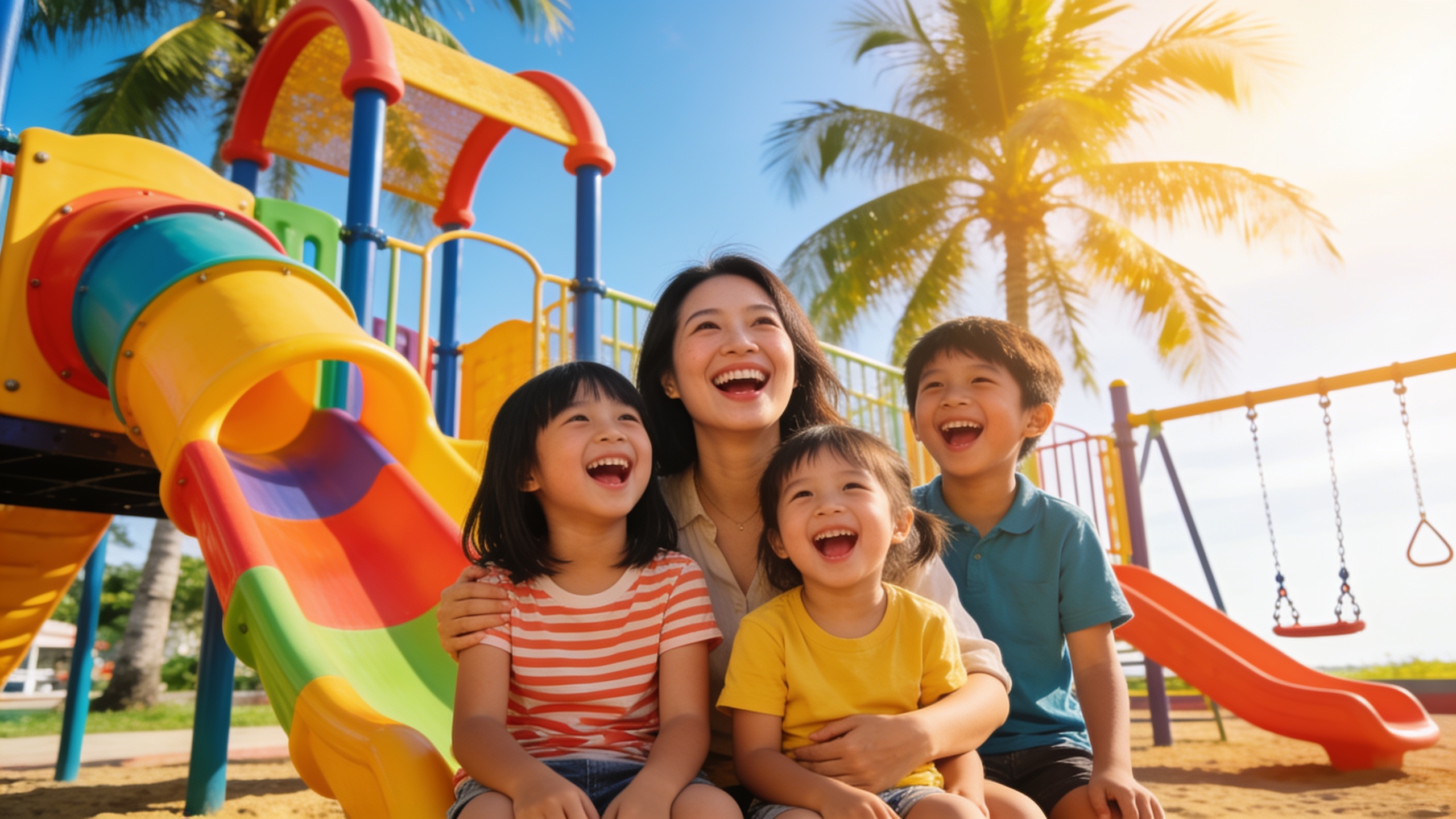
What an Environment That Nurtures Self-Esteem Looks Like
Hi, I’m Saori. It’s been three and a half years since we moved to Penang, Malaysia. My eldest daughter Hikari is in second grade, and my eldest son Zen is in kindergarten. My youngest, Yukari, is one and a half and just starting to enjoy chatting.
Recently, Hikari’s teacher told me, “Hikari is a child who can actively express her opinions in class.” Back in Japan, she was shy about speaking in front of others and always hid behind me. I’m amazed by this change myself.
The Difference Between Japanese and Malaysian Education
As someone who earned a teaching license for elementary school in Japan, I see a key difference between the two countries’ education systems. In Japanese classrooms, children who give the “correct answer quickly” tend to be praised. In contrast, at international schools in Malaysia, having your own thoughts is what’s valued.
At Hikari’s school, every morning during circle time, the teacher asks, “How are you feeling today?” At first, Hikari would answer, “I don’t know.” But the teacher helped her by asking, “What color is your mood?” or “If it were weather, what would it be?” After six months, she could say, “I’m feeling blue today. I’m nervous because we have a math test.” She learned to put her emotions into words.
The Power of Not Fearing Mistakes
There was a memorable moment in Zen’s class, too. During craft time, a child spilled glue all over the table. In a Japanese daycare, the teacher might have scolded, “Use it properly.” But here, the teacher said, “Wow, that’s a big experiment! Let’s think about how to clean it up.”
This response made me pause. Instead of teaching that failure is “bad,” they turn it into a “learning opportunity.” I realized this approach is what builds a child’s self-esteem.
When Parents’ Values Also Change
When we first moved, I was anxious, thinking, “If you can’t speak English, you’re not good enough.” But a teacher at school told me, “Language is a tool, not your identity,” and it woke me up.
Now, watching Hikari and Zen mix English and Japanese as they talk, I understand that language is a “means of communication,” not a “standard for evaluation.” My children speak English confidently, even if it’s not perfect. That confidence is something they never had in Japan.
Changes in Sibling Relationships, Too
Interestingly, the nature of their sibling arguments has changed. In Japan, they often fought over toys. Now, they argue about English words. “The spelling of elephant is e-l-e-p-h-a-n-t,” Zen teaches his sister. “No, it’s e-l-e-f-a-n-t,” Hikari corrects him. These everyday moments naturally become learning experiences.
The Cost and Impact of Education Migration
Education migration does cost money. The annual tuition for Hikari and Zen is about 60,000 ringgit (approximately $13,000 USD at the exchange rate as of June 23, 2026). It’s certainly not cheap. But the “self-esteem” and “ability to embrace diversity” gained from this investment are hard to come by in Japan.
Real Examples of Change
The other day, there was a school presentation. Hikari stood on stage and recited a poem she wrote. The theme was “My Family.” She presented it in both Japanese and English, and even when she made mistakes, she kept going with a smile.
Afterward, she said, “Mom, I was nervous, but it was fun. I want to do it again.” Hearing those words, I truly felt that moving here was the right decision.
In Closing
Education migration isn’t just for the children. As parents, we also grow by encountering new values. I feel that self-esteem is something the whole family nurtures together.
If you’re considering education migration, I recommend starting with a short-term trial enrollment. Our family began with a three-week stay. Seeing your child’s transformation firsthand will make the value of it all clear.